Function
Transfers the acyl group from the sn-1 position of phosphatidylcholine to all-trans retinol, producing all-trans retinyl esters. Retinyl esters are storage forms of vitamin A (Probable). LRAT plays a critical role in vision (Probable).
Biological Context
Subcellular Location: Endoplasmic reticulum membrane (Single-pass membrane protein); Rough endoplasmic reticulum; Endosome, multivesicular body; Cytoplasm, perinuclear region
Tissue Specificity: Hepatic stellate cells and endothelial cells (at protein level). Found at high levels in testis and liver, followed by retinal pigment epithelium, small intestine, prostate, pancreas and colon. Low expression observed in brain. In fetal tissues, expressed in retinal pigment epithelium and liver, and barely in the brain
Disease Association: Leber congenital amaurosis 14 (LCA14) : A severe dystrophy of the retina, typically becoming evident in the first years of life. Visual function is usually poor and often accompanied by nystagmus, sluggish or near-absent pupillary responses, photophobia, high hyperopia and keratoconus. [The disease is caused by variants affecting the gene represented in this entry]
Pathway: Cofactor metabolism; retinol metabolism
Product Specifications
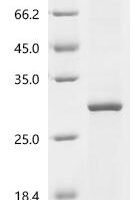
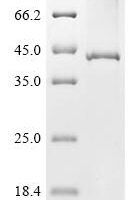
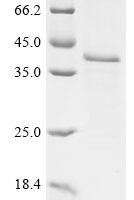
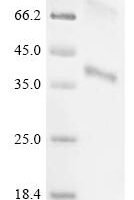
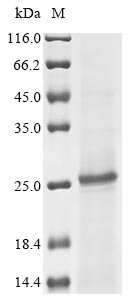
Recombinant Human Lecithin retinol acyltransferase (LRAT) Protein is a recombinant protein from Homo sapiens (Human), expressed in in vitro E.coli expression system, covering amino acids 1-230aa, with Tag-Free tag, molecular weight 25.8kDa, purity Greater than 85% as determined by SDS-PAGE.. Suitable for ELISA and Western Blot applications. Explore more Enzyme proteins →