Recombinant Rat Cannabinoid receptor 1 (CNR1) Protein

Recombinant Rat Cannabinoid receptor 1 (CNR1) Protein — G protein-coupled receptor for cannabinoids, including endocannabinoids (eCBs), such as N-arachidonoylethanolamide (also called anandamide or AEA) and 2-arachidonoylglycerol (2-AG). Purity >90%.

SKU: BCRECP-00262TM Category:

Product Specifications

Uniprot No.P20272
Gene NamesCNR1
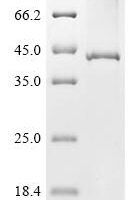
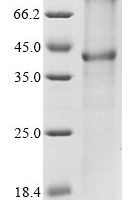
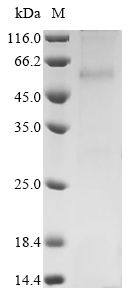
PurityGreater than 90% as determined by SDS-PAGE.
Expression Systemin vitro E.coli expression system
Expression Region1-473aa
SpeciesRattus norvegicus (Rat)
Tag InfoN-terminal 10xHis-tagged
Molecular weight58.9kDa
BufferIf the delivery form is liquid, the default storage buffer is Tris/PBS-based buffer, 5%-50% glycerol.If the delivery form is lyophilized powder, the buffer before lyophilization is Tris/PBS-based buffer, 6% Trehalose.
StorageStore at -20°C/-80°C upon receipt, aliquoting is necessary for mutiple use. Avoid repeated freeze-thaw cycles.

Function

G protein-coupled receptor for cannabinoids, including endocannabinoids (eCBs), such as N-arachidonoylethanolamide (also called anandamide or AEA) and 2-arachidonoylglycerol (2-AG). Mediates many cannabinoid-induced effects, acting, among others, on food intake, memory loss, gastrointestinal motility, catalepsy, ambulatory activity, anxiety, chronic pain. Signaling typically involves reduction in cyclic AMP.

Biological Context

Subcellular Location: Cell membrane (Multi-pass membrane protein); Mitochondrion outer membrane; Cell projection, axon; Presynapse
Tissue Specificity: Expressed in the brain, in the striatum, medial septum, descending arm of the band of Broca, the amygdaloid nucleus, the hippocampus and cortex (at protein level). High levels in the lateral striatum. In rostral brain regions, high expression levels in the dorsal lateral striatum, while in the caudal brain regions, high levels are observed in the ventral lateral striatum. Expressed in monocytes/macrophages (at protein level). Expressed in striated muscles and in vascular smooth muscles cells (at protein level)

Product Specifications

Recombinant Rat Cannabinoid receptor 1 (CNR1) Protein is a recombinant protein from Rattus norvegicus (Rat), expressed in in vitro E.coli expression system, covering amino acids 1-473aa, with N-terminal 10xHis-tagged tag, molecular weight 58.9kDa, purity Greater than 90% as determined by SDS-PAGE.. Suitable for ELISA and Western Blot applications.
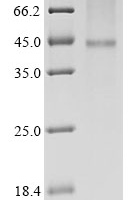
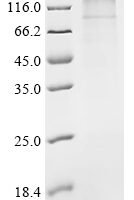
SDS-PAGE: Single band at expected molecular weight confirming purity.

ELISA: Suitable as coating antigen or detection standard.

Western Blot: Compatible with standard Western Blot protocols.

Protein Interaction: Validated for SPR (Surface Plasmon Resonance) and BLI (Bio-Layer Interferometry) studies.

Shipping: Shipped at ambient temperature. Lyophilized protein is stable during transit.

Storage: Store lyophilized protein at -20°C to -80°C. Reconstituted protein should be aliquoted and stored at -80°C. Avoid repeated freeze-thaw cycles.

Shelf Life: 12 months from date of receipt when stored as recommended.

Shipping Time: Orders placed before 2 PM EST ship same day. International orders typically deliver within 5-10 business days.

Protein Biology

Function

G protein-coupled receptor for cannabinoids, including endocannabinoids (eCBs), such as N-arachidonoylethanolamide (also called anandamide or AEA) and 2-arachidonoylglycerol (2-AG) (PubMed:2165569). Mediates many cannabinoid-induced effects, acting, among others, on food intake, memory loss, gastrointestinal motility, catalepsy, ambulatory activity, anxiety, chronic pain. Signaling typically involves reduction in cyclic AMP. In the hypothalamus, may have a dual effect on mitochondrial respiration depending upon the agonist dose and possibly upon the cell type. Increases respiration at low doses, while decreases respiration at high doses. At high doses, CNR1 signal transduction involves G protein alpha-i protein activation and subsequent inhibition of mitochondrial soluble adenylate cyclase, decrease in cyclic AMP concentration, inhibition of protein kinase A (PKA)-dependent phosphorylation of specific subunits of the mitochondrial electron transport system, including NDUFS2. In the hypothalamus, inhibits leptin-induced reactive oxygen species (ROS) formation and mediates cannabinoid-induced increase in SREBF1 and FASN gene expression. In response to cannabinoids, drives the release of orexigenic beta-endorphin, but not that of melanocyte-stimulating hormone alpha/alpha-MSH, from hypothalamic POMC neurons, hence promoting food intake. In the hippocampus, regulates cellular respiration and energy production in response to cannabinoids. Involved in cannabinoid-dependent depolarization-induced suppression of inhibition (DSI), a process in which depolarization of CA1 postsynaptic pyramidal neurons mobilizes eCBs, which retrogradely activate presynaptic CB1 receptors, transiently decreasing GABAergic inhibitory neurotransmission. Also reduces excitatory synaptic transmission (By similarity). In superior cervical ganglions and cerebral vascular smooth muscle cells, inhibits voltage-gated Ca(2+) channels in a constitutive, as well as agonist-dependent manner (By similarity). Induces leptin production in adipocytes and reduces LRP2-mediated leptin clearance in the kidney, hence participating in hyperleptinemia. In adipose tissue, CNR1 signaling leads to increased expression of SREBF1, ACACA and FASN genes. In the liver, activation by endocannabinoids leads to increased de novo lipogenesis and reduced fatty acid catabolism, associated with increased expression of SREBF1/SREBP-1, GCK, ACACA, ACACB and FASN genes. May also affect de novo cholesterol synthesis and HDL-cholesteryl ether uptake (By similarity). Peripherally modulates energy metabolism. In high carbohydrate diet-induced obesity, may decrease the expression of mitochondrial dihydrolipoyl dehydrogenase/DLD in striated muscles, as well as that of selected glucose/ pyruvate metabolic enzymes, hence affecting energy expenditure through mitochondrial metabolism (PubMed:26671069). In response to cannabinoid anandamide, elicits a pro-inflammatory response in macrophages, which involves NLRP3 inflammasome activation and IL1B and IL18 secretion. In macrophages infiltrating pancreatic islets, this process may participate in the progression of type-2 diabetes and associated loss of pancreatic beta-cells (PubMed:23955712)

Subcellular Location

Cell membrane (Multi-pass membrane protein); Mitochondrion outer membrane; Cell projection, axon; Presynapse

Tissue Specificity

Expressed in the brain, in the striatum, medial septum, descending arm of the band of Broca, the amygdaloid nucleus, the hippocampus and cortex (at protein level). High levels in the lateral striatum. In rostral brain regions, high expression levels in the dorsal lateral striatum, while in the caudal brain regions, high levels are observed in the ventral lateral striatum (PubMed:10362691, PubMed:10891614, PubMed:16033894, PubMed:2165569). Expressed in monocytes/macrophages (at protein level) (PubMed:23955712). Expressed in striated muscles and in vascular smooth muscles cells (at protein level) (PubMed:10362691, PubMed:26671069)

Subunit

Interacts (via C-terminus) with CNRIP1 (PubMed:17895407). Associates with G protein alpha subunits, including G(i) alpha-1/GNAI1, G(i) alpha-2/GNAI2, G(i) alpha-3/GNAI3 and G(o)-alpha/GNAO1; palmitoylation is important for interaction with GNAI3 and GNAO1 (PubMed:21895628)

Gene: Cnr1  |  Organism: Rattus norvegicus  |  Synonyms: Brain-type cannabinoid receptor
Key Publications

Frequently Asked Questions

How do I order or inquire about this product?

Fill out the Online Inquiry form with your required quantity and specifications. You can also email sales@biocrestsci.com. Our team typically responds within 4 business hours with a quote and availability confirmation.

What is the shipping and delivery time?

Orders placed before 2 PM EST ship the same day. Domestic (US) delivery typically takes 2-3 business days. International orders deliver within 5-10 business days. All products are shipped at ambient temperature with appropriate packaging to ensure stability.

How should I store this recombinant protein?

Lyophilized proteins should be stored at -20°C to -80°C upon receipt. After reconstitution, aliquot and store at -80°C. Avoid repeated freeze-thaw cycles. Shelf life is 12 months from date of receipt when stored as recommended.

What quality controls are performed on your products?

Each product undergoes SDS-PAGE purity analysis (typically >85-95%), endotoxin testing, and bioactivity validation. Products are validated for ELISA, Western Blot, and SPR/BLI applications as specified on this product page. A Certificate of Analysis (CoA) is available upon request.

Shopping Cart
Scroll to Top