Recombinant Human Cytochrome P450 3A4 (CYP3A4) Protein

Recombinant Human Cytochrome P450 3A4 (CYP3A4) Protein — A cytochrome P450 monooxygenase involved in the metabolism of sterols, steroid hormones, retinoids and fatty acids. Purity >85%.

SKU: BCRECP-00279TM Category:

Product Specifications

Uniprot No.P08684
Gene NamesCYP3A4
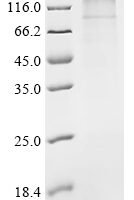
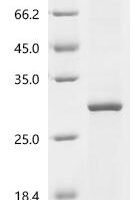
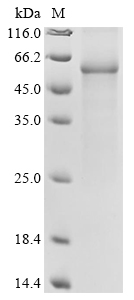
PurityGreater than 85% as determined by SDS-PAGE.
Expression Systemin vitro E.coli expression system
Expression Region2-503aa
SpeciesHomo sapiens (Human)
Tag InfoN-terminal 10xHis-tagged
Molecular weight63.3kDa
BufferIf the delivery form is liquid, the default storage buffer is Tris/PBS-based buffer, 5%-50% glycerol.If the delivery form is lyophilized powder, the buffer before lyophilization is Tris/PBS-based buffer, 6% Trehalose.
StorageStore at -20°C/-80°C upon receipt, aliquoting is necessary for mutiple use. Avoid repeated freeze-thaw cycles.

Function

A cytochrome P450 monooxygenase involved in the metabolism of sterols, steroid hormones, retinoids and fatty acids. Mechanistically, uses molecular oxygen inserting one oxygen atom into a substrate, and reducing the second into a water molecule, with two electrons provided by NADPH via cytochrome P450 reductase (NADPH–hemoprotein reductase). Catalyzes the hydroxylation of carbon-hydrogen bonds.

Biological Context

Subcellular Location: Endoplasmic reticulum membrane (Single-pass membrane protein); Microsome membrane (Single-pass membrane protein)
Tissue Specificity: Expressed in prostate and liver. According to some authors, it is not expressed in brain. According to others, weak levels of expression are measured in some brain locations. Also expressed in epithelium of the small intestine and large intestine, bile duct, nasal mucosa, kidney, adrenal cortex, epithelium of the gastric mucosa with intestinal metaplasia, gallbladder, intercalated ducts of the pancreas, chief cells of the parathyroid and the corpus luteum of the ovary (at protein level)
Disease Association: Vitamin D-dependent rickets 3 (VDDR3) : An autosomal dominant disorder of vitamin D metabolism resulting in early-onset rickets, reduced serum levels of the vitamin D metabolites 25-hydroxyvitamin D and 1,25-dihydroxyvitamin D, and deficient responsiveness to parent and activated forms of vitamin D. [The gene represented in this entry is involved in disease pathogenesis]
Pathway: Lipid metabolism; fatty acid metabolism

Product Specifications

Recombinant Human Cytochrome P450 3A4 (CYP3A4) Protein is a recombinant protein from Homo sapiens (Human), expressed in in vitro E.coli expression system, covering amino acids 2-503aa, with N-terminal 10xHis-tagged tag, molecular weight 63.3kDa, purity Greater than 85% as determined by SDS-PAGE.. Suitable for ELISA and Western Blot applications.
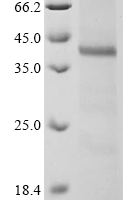
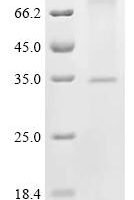
SDS-PAGE: Single band at expected molecular weight confirming purity.

ELISA: Suitable as coating antigen or detection standard.

Western Blot: Compatible with standard Western Blot protocols.

Protein Interaction: Validated for SPR (Surface Plasmon Resonance) and BLI (Bio-Layer Interferometry) studies.

Shipping: Shipped at ambient temperature. Lyophilized protein is stable during transit.

Storage: Store lyophilized protein at -20°C to -80°C. Reconstituted protein should be aliquoted and stored at -80°C. Avoid repeated freeze-thaw cycles.

Shelf Life: 12 months from date of receipt when stored as recommended.

Shipping Time: Orders placed before 2 PM EST ship same day. International orders typically deliver within 5-10 business days.

Protein Biology

Function

A cytochrome P450 monooxygenase involved in the metabolism of sterols, steroid hormones, retinoids and fatty acids (PubMed:10681376, PubMed:11093772, PubMed:11555828, PubMed:12865317, PubMed:14559847, PubMed:15373842, PubMed:15764715, PubMed:19965576, PubMed:20702771, PubMed:21490593, PubMed:21576599). Mechanistically, uses molecular oxygen inserting one oxygen atom into a substrate, and reducing the second into a water molecule, with two electrons provided by NADPH via cytochrome P450 reductase (NADPH--hemoprotein reductase). Catalyzes the hydroxylation of carbon-hydrogen bonds (PubMed:12865317, PubMed:14559847, PubMed:15373842, PubMed:15764715, PubMed:21490593, PubMed:21576599, PubMed:2732228). Exhibits high catalytic activity for the formation of hydroxyestrogens from estrone (E1) and 17beta-estradiol (E2), namely 2-hydroxy E1 and E2, as well as D-ring hydroxylated E1 and E2 at the C-16 position (PubMed:11555828, PubMed:12865317, PubMed:14559847). Plays a role in the metabolism of androgens, particularly in oxidative deactivation of testosterone (PubMed:15373842, PubMed:15764715, PubMed:22773874, PubMed:2732228). Metabolizes testosterone to less biologically active 2beta- and 6beta-hydroxytestosterones (PubMed:15373842, PubMed:15764715, PubMed:2732228). Contributes to the formation of hydroxycholesterols (oxysterols), particularly A-ring hydroxylated cholesterol at the C-4beta position, and side chain hydroxylated cholesterol at the C-25 position, likely contributing to cholesterol degradation and bile acid biosynthesis (PubMed:21576599). Catalyzes bisallylic hydroxylation of polyunsaturated fatty acids (PUFA) (PubMed:9435160). Catalyzes the epoxidation of double bonds of PUFA with a preference for the last double bond (PubMed:19965576). Metabolizes endocannabinoid arachidonoylethanolamide (anandamide) to 8,9-, 11,12-, and 14,15-epoxyeicosatrienoic acid ethanolamides (EpETrE-EAs), potentially modulating endocannabinoid system signaling (PubMed:20702771). Plays a role in the metabolism of retinoids. Displays high catalytic activity for oxidation of all-trans-retinol to all-trans-retinal, a rate-limiting step for the biosynthesis of all-trans-retinoic acid (atRA) (PubMed:10681376). Further metabolizes atRA toward 4-hydroxyretinoate and may play a role in hepatic atRA clearance (PubMed:11093772). Responsible for oxidative metabolism of xenobiotics. Acts as a 2-exo-monooxygenase for plant lipid 1,8-cineole (eucalyptol) (PubMed:11159812). Metabolizes the majority of the administered drugs. Catalyzes sulfoxidation of the anthelmintics albendazole and fenbendazole (PubMed:10759686). Hydroxylates antimalarial drug quinine (PubMed:8968357). Acts as a 1,4-cineole 2-exo-monooxygenase (PubMed:11695850). Also involved in vitamin D catabolism and calcium homeostasis. Catalyzes the inactivation of the active hormone calcitriol (1-alpha,25-dihydroxyvitamin D(3)) (PubMed:29461981)

Subcellular Location

Endoplasmic reticulum membrane (Single-pass membrane protein); Microsome membrane (Single-pass membrane protein)

Disease Association

Vitamin D-dependent rickets 3 (VDDR3) : An autosomal dominant disorder of vitamin D metabolism resulting in early-onset rickets, reduced serum levels of the vitamin D metabolites 25-hydroxyvitamin D and 1,25-dihydroxyvitamin D, and deficient responsiveness to parent and activated forms of vitamin D. [The gene represented in this entry is involved in disease pathogenesis]

Tissue Specificity

Expressed in prostate and liver. According to some authors, it is not expressed in brain (PubMed:19094056). According to others, weak levels of expression are measured in some brain locations (PubMed:18545703, PubMed:19359404). Also expressed in epithelium of the small intestine and large intestine, bile duct, nasal mucosa, kidney, adrenal cortex, epithelium of the gastric mucosa with intestinal metaplasia, gallbladder, intercalated ducts of the pancreas, chief cells of the parathyroid and the corpus luteum of the ovary (at protein level)

Subunit

Interacts with PGRMC1; the interaction requires PGRMC1 homodimerization

Pathway

Lipid metabolism; fatty acid metabolism

Gene: CYP3A4  |  Organism: Homo sapiens  |  Synonyms: 1,4-cineole 2-exo-monooxygenase; 1,8-cineole 2-exo-monooxygenase; Albendazole monooxygenase (sulfoxide-forming); Albendazole sulfoxidase; CYPIIIA3; CYPIIIA4; Cholesterol 25-hydroxylase; Cytochrome P450 3A3; Cytochrome P450 HLp; Cytochrome P450 NF-25; Cytochrome P450-PCN1; Nifedipine oxidase; Quinine 3-monooxygenase
Key Publications

Frequently Asked Questions

How do I order or inquire about this product?

Fill out the Online Inquiry form with your required quantity and specifications. You can also email sales@biocrestsci.com. Our team typically responds within 4 business hours with a quote and availability confirmation.

What is the shipping and delivery time?

Orders placed before 2 PM EST ship the same day. Domestic (US) delivery typically takes 2-3 business days. International orders deliver within 5-10 business days. All products are shipped at ambient temperature with appropriate packaging to ensure stability.

How should I store this recombinant protein?

Lyophilized proteins should be stored at -20°C to -80°C upon receipt. After reconstitution, aliquot and store at -80°C. Avoid repeated freeze-thaw cycles. Shelf life is 12 months from date of receipt when stored as recommended.

What quality controls are performed on your products?

Each product undergoes SDS-PAGE purity analysis (typically >85-95%), endotoxin testing, and bioactivity validation. Products are validated for ELISA, Western Blot, and SPR/BLI applications as specified on this product page. A Certificate of Analysis (CoA) is available upon request.

Shopping Cart
Scroll to Top