Function
The H3 subclass of histamine receptors could mediate the histamine signals in CNS and peripheral nervous system. Signals through the inhibition of adenylate cyclase and displays high constitutive activity (spontaneous activity in the absence of agonist). Agonist stimulation of isoform 3 neither modified adenylate cyclase activity nor induced intracellular calcium mobilization.
Biological Context
Subcellular Location: Cell membrane (Multi-pass membrane protein)
Tissue Specificity: Expressed predominantly in the CNS, with the greatest expression in the thalamus and caudate nucleus. The various isoforms are mainly coexpressed in brain, but their relative expression level varies in a region-specific manner. Isoform 3 and isoform 7 are highly expressed in the thalamus, caudate nucleus and cerebellum while isoform 5 and isoform 6 show a poor expression. Isoform 5 and isoform 6 show a high expression in the amygdala, substantia nigra, cerebral cortex and hypothalamus. Isoform 7 is not found in hypothalamus or substantia nigra
Product Specifications
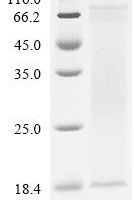
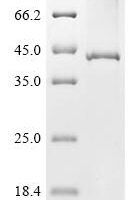
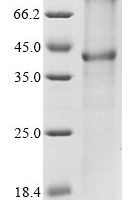
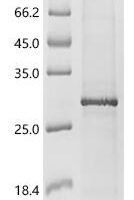
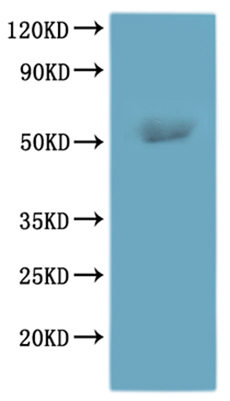
Recombinant Human Histamine H3 receptor (HRH3)-VLPs, Fluorescent Protein is a recombinant protein from Homo sapiens (Human), expressed in Mammalian cell, covering amino acids 1-445aa, with C-terminal EGFP-tagged tag, molecular weight 75.9kDa, purity Greater than 95% as determined by SEC-HPLC.. Suitable for ELISA and Western Blot applications. Explore more VLP Transmembrane proteins →