Function
Component of intercellular desmosome junctions. Plays a role in stratified epithelial integrity and cell-cell adhesion by promoting desmosome assembly. Thereby plays a role in barrier function of the skin against infection.
Biological Context
Subcellular Location: Cell junction, desmosome; Cell membrane (Multi-pass membrane protein); Cytoplasm
Tissue Specificity: Expressed in skin, heart, placental, liver, pancreas, keratinocytes and dermal fibroblasts. May translocate to the intestinal apical epithelial cell surface via sipA and sctB1/sipC-promoted exocytic translocation following infection by S. Typhimurium
Disease Association: Erythrokeratodermia variabilis et progressiva 7 (EKVP7) : A form of erythrokeratodermia variabilis et progressiva, a genodermatosis characterized by the coexistence of two independent skin lesions: transient erythema and hyperkeratosis that is usually localized but occasionally occurs in its generalized form. Clinical presentation varies significantly within a family and from one family to another. Palmoplantar keratoderma is present in around 50% of cases. EKVP7 is an autosomal recessive form characterized by palmoplantar keratoderma that extends to the dorsal surface of the hands and feet, as well as erythematous annular skin lesions. Pruritus, woolly hair, and dystrophic nails may also be present. [The disease is caused by variants affecting the gene represented in this entry] | Olmsted syndrome 2 (OLMS2) : A form of Olmsted syndrome, a rare congenital disorder characterized by bilateral mutilating palmoplantar keratoderma and periorificial keratotic plaques with severe itching at all lesions. Diffuse alopecia, constriction of digits, and onychodystrophy have also been reported. Infections and squamous cell carcinomas can arise on the keratotic areas. The digital constriction may progress to autoamputation of fingers and toes. OLMS2 is an autosomal dominant form with onset in the first months of life or in early childhood. [The disease is caused by variants affecting the gene represented in this entry]
Product Specifications
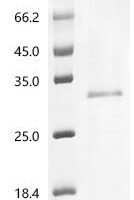
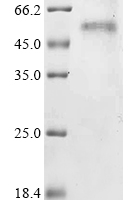
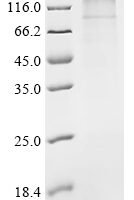
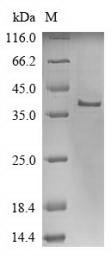
Recombinant Human p53 apoptosis effector related to PMP-22 (PERP) Protein is a recombinant protein from Homo sapiens (Human), expressed in in vitro E.coli expression system, covering amino acids 1-193aa, with N-terminal 10xHis-SUMO-tagged and C-terminal Myc-tagged tag, molecular weight 41.4kDa, purity Greater than 85% as determined by SDS-PAGE.. Suitable for ELISA and Western Blot applications.