Function
Pulmonary surfactant-associated proteins promote alveolar stability by lowering the surface tension at the air-liquid interface in the peripheral air spaces. SP-B increases the collapse pressure of palmitic acid to nearly 70 millinewtons per meter.
Biological Context
Subcellular Location: Secreted, extracellular space, surface film
Disease Association: Pulmonary surfactant metabolism dysfunction 1 (SMDP1) : A rare lung disorder due to impaired surfactant homeostasis. It is characterized by alveolar filling with floccular material that stains positive using the periodic acid-Schiff method and is derived from surfactant phospholipids and protein components. Excessive lipoproteins accumulation in the alveoli results in severe respiratory distress. [The disease is caused by variants affecting the gene represented in this entry] | Respiratory distress syndrome in premature infants (RDS) : A lung disease affecting usually premature newborn infants. It is characterized by deficient gas exchange, diffuse atelectasis, high-permeability lung edema and fibrin-rich alveolar deposits called 'hyaline membranes'. [Disease susceptibility may be associated with variants affecting the gene represented in this entry. A variation Ile to Thr at position 131 influences the association between specific alleles of SFTPA1 and respiratory distress syndrome in premature infants]
Product Specifications
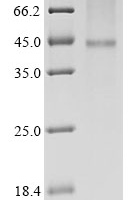
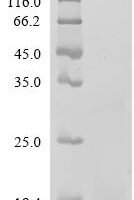
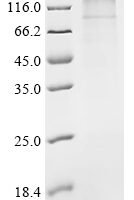
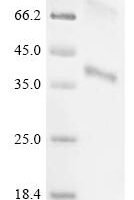
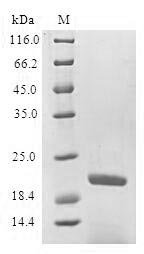
Recombinant Human Pulmonary surfactant-associated protein B (SFTPB) Protein is a recombinant protein from Homo sapiens(Human), expressed in in vitro E.coli expression system, covering amino acids 201-279aa, with N-terminal 6xHis-SUMO-tagged tag, molecular weight 24.7kDa, purity Greater than 90% as determined by SDS-PAGE.Greater than 90% as determined by SEC-HPLC.. Suitable for ELISA and Western Blot applications.