Recombinant Human Intermediate conductance calcium-activated potassium channel protein 4 (KCNN4) Protein

Recombinant Human Intermediate conductance calcium-activated potassium channel protein 4 (KCNN4) Protein — Intermediate conductance calcium-activated potassium channel that mediates the voltage-independent transmembrane transfer of potassium across the cell membrane through a constitutive interac…

SKU: BCRECP-00733TM Category:

Product Specifications

Uniprot No.O15554
Gene NamesKCNN4
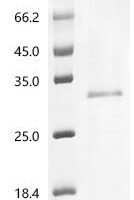
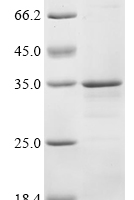
PurityGreater than 85% as determined by SDS-PAGE.
Expression Systemin vitro E.coli expression system
Expression Region1-427 aa
SpeciesHomo sapiens (Human)
Tag InfoN-terminal 10xHis-tagged
Molecular weight59.1kDa
BufferIf the delivery form is liquid, the default storage buffer is Tris/PBS-based buffer, 5%-50% glycerol.If the delivery form is lyophilized powder, the buffer before lyophilization is Tris/PBS-based buffer, 6% Trehalose.
StorageStore at -20°C/-80°C upon receipt, aliquoting is necessary for mutiple use. Avoid repeated freeze-thaw cycles.

Function

Intermediate conductance calcium-activated potassium channel that mediates the voltage-independent transmembrane transfer of potassium across the cell membrane through a constitutive interaction with calmodulin which binds the intracellular calcium allowing its opening. The current is characterized by a voltage-independent activation, an intracellular calcium concentration increase-dependent activation and a single-channel conductance of about 25 picosiemens. Also presents an inwardly rectifying current, thus reducing its already small outward conductance of potassium ions, which is particularly the case when the membrane potential displays positive values, above + 20 mV.

Biological Context

Subcellular Location: Cell membrane (Multi-pass membrane protein); Cell projection, ruffle membrane
Tissue Specificity: Widely expressed in non-excitable tissues
Disease Association: Dehydrated hereditary stomatocytosis 2 (DHS2) : An autosomal dominant hemolytic anemia characterized by primary erythrocyte dehydration. Erythrocytes exhibit decreased total cation and potassium content that are not accompanied by a proportional net gain of sodium and water. Affected individuals typically manifest mild to moderate compensated hemolytic anemia, with an increased erythrocyte mean corpuscular hemoglobin concentration and a decreased osmotic fragility, both of which reflect cellular dehydration. Their red cells exhibit a panel of various shape abnormalities such as elliptocytes, hemighosts, schizocytes, and very rare stomatocytic cells. Complications such as splenomegaly and cholelithiasis, resulting from increased red cell trapping in the spleen and elevated bilirubin levels, respectively, may occur. [The disease is caused by variants affecting the gene represented in this entry]

Product Specifications

Recombinant Human Intermediate conductance calcium-activated potassium channel protein 4 (KCNN4) Protein is a recombinant protein from Homo sapiens (Human), expressed in in vitro E.coli expression system, covering amino acids 1-427 aa, with N-terminal 10xHis-tagged tag, molecular weight 59.1kDa, purity Greater than 85% as determined by SDS-PAGE.. Suitable for ELISA and Western Blot applications.
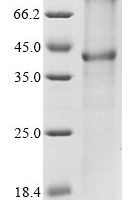
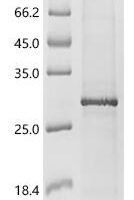
SDS-PAGE: Single band at expected molecular weight confirming purity.

ELISA: Suitable as coating antigen or detection standard.

Western Blot: Compatible with standard Western Blot protocols.

Protein Interaction: Validated for SPR (Surface Plasmon Resonance) and BLI (Bio-Layer Interferometry) studies.

Shipping: Shipped at ambient temperature. Lyophilized protein is stable during transit.

Storage: Store lyophilized protein at -20°C to -80°C. Reconstituted protein should be aliquoted and stored at -80°C. Avoid repeated freeze-thaw cycles.

Shelf Life: 12 months from date of receipt when stored as recommended.

Shipping Time: Orders placed before 2 PM EST ship same day. International orders typically deliver within 5-10 business days.

Protein Biology

Function

Intermediate conductance calcium-activated potassium channel that mediates the voltage-independent transmembrane transfer of potassium across the cell membrane through a constitutive interaction with calmodulin which binds the intracellular calcium allowing its opening (PubMed:10026195, PubMed:10961988, PubMed:11425865, PubMed:15831468, PubMed:17157250, PubMed:18796614, PubMed:26148990, PubMed:9326665, PubMed:9380751, PubMed:9407042). The current is characterized by a voltage-independent activation, an intracellular calcium concentration increase-dependent activation and a single-channel conductance of about 25 picosiemens (PubMed:9326665, PubMed:9380751, PubMed:9407042). Also presents an inwardly rectifying current, thus reducing its already small outward conductance of potassium ions, which is particularly the case when the membrane potential displays positive values, above + 20 mV (PubMed:9326665, PubMed:9380751, PubMed:9407042). Controls calcium influx during vascular contractility by being responsible of membrane hyperpolarization induced by vasoactive factors in proliferative vascular smooth muscle cell types (By similarity). Following calcium influx, the consecutive activation of KCNN4 channel leads to a hyperpolarization of the cell membrane potential and hence an increase of the electrical driving force for further calcium influx promoting sustained calcium entry in response to stimulation with chemotactic peptides (PubMed:26418693). Required for maximal calcium influx and proliferation during the reactivation of naive T-cells (PubMed:17157250, PubMed:18796614). Plays a role in the late stages of EGF-induced macropinocytosis through activation by PI(3)P (PubMed:24591580)

Subcellular Location

Cell membrane (Multi-pass membrane protein); Cell projection, ruffle membrane

Disease Association

Dehydrated hereditary stomatocytosis 2 (DHS2) : An autosomal dominant hemolytic anemia characterized by primary erythrocyte dehydration. Erythrocytes exhibit decreased total cation and potassium content that are not accompanied by a proportional net gain of sodium and water. Affected individuals typically manifest mild to moderate compensated hemolytic anemia, with an increased erythrocyte mean corpuscular hemoglobin concentration and a decreased osmotic fragility, both of which reflect cellular dehydration. Their red cells exhibit a panel of various shape abnormalities such as elliptocytes, hemighosts, schizocytes, and very rare stomatocytic cells. Complications such as splenomegaly and cholelithiasis, resulting from increased red cell trapping in the spleen and elevated bilirubin levels, respectively, may occur. [The disease is caused by variants affecting the gene represented in this entry]

Tissue Specificity

Widely expressed in non-excitable tissues

Subunit

Homodimer (PubMed:29953543). Homotetramer (PubMed:29724949). Heterotetramer of potassium channel proteins (Probable). Interacts with MTMR6; this interaction leads to selective dephosphorylation of PI(3)P in a lipid microdomain adjacent to KCNN4, resulting in a decrease of intermediate conductance calcium-activated potassium channel activity (PubMed:15831468). Interacts (via the C-tail domain) with CALM1; the calmodulin binding is constitutive, does not require calcium and mediates calcium-dependent gating and four calmodulin molecules bind to one channel tetramer (PubMed:10026195)

Gene: KCNN4  |  Organism: Homo sapiens  |  Synonyms: Gardos channel; IKCa1; KCa3.1; Putative Gardos channel; hKCa4
Key Publications

Frequently Asked Questions

How do I order or inquire about this product?

Fill out the Online Inquiry form with your required quantity and specifications. You can also email sales@biocrestsci.com. Our team typically responds within 4 business hours with a quote and availability confirmation.

What is the shipping and delivery time?

Orders placed before 2 PM EST ship the same day. Domestic (US) delivery typically takes 2-3 business days. International orders deliver within 5-10 business days. All products are shipped at ambient temperature with appropriate packaging to ensure stability.

How should I store this recombinant protein?

Lyophilized proteins should be stored at -20°C to -80°C upon receipt. After reconstitution, aliquot and store at -80°C. Avoid repeated freeze-thaw cycles. Shelf life is 12 months from date of receipt when stored as recommended.

What quality controls are performed on your products?

Each product undergoes SDS-PAGE purity analysis (typically >85-95%), endotoxin testing, and bioactivity validation. Products are validated for ELISA, Western Blot, and SPR/BLI applications as specified on this product page. A Certificate of Analysis (CoA) is available upon request.

Shopping Cart
Scroll to Top