,

Recombinant Macaca fascicularis Mas-related G-protein coupled receptor member X2 (MRGPRX2)-VLPs Protein

Recombinant Macaca fascicularis Mas-related G-protein coupled receptor member X2 (MRGPRX2)-VLPs Protein — Mast cell-specific G protein-coupled receptor for basic secretagogues, which regulates mast cell degranulation and itch-related hypersensitivity reactions. Purity >90%.

SKU: BCRECP-00743TM Categories: ,

Product Specifications

Uniprot No.Q5U9D9
Gene NamesMRGPRX2
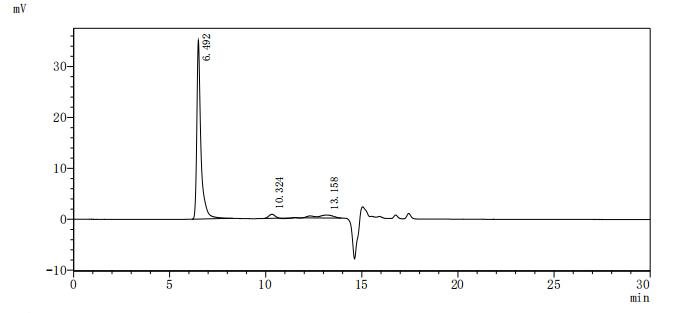
PurityGreater than 90% as determined by SEC-HPLC.
Expression SystemMammalian cell
Expression Region1-330aa
SpeciesMacaca fascicularis (Crab-eating macaque) (Cynomolgus monkey)
Tag InfoC-terminal 10xHis-tagged
Molecular weight38.5kDa
ActivityNot Test
BufferIf the delivery form is liquid, the default storage buffer is Tris/PBS-based buffer, 5%-50% glycerol.If the delivery form is lyophilized powder, the buffer before lyophilization is Tris/PBS-based buffer, 6% Trehalose.
StorageStore at -20°C/-80°C upon receipt, aliquoting is necessary for mutiple use. Avoid repeated freeze-thaw cycles.

Function

Mast cell-specific G protein-coupled receptor for basic secretagogues, which regulates mast cell degranulation and itch-related hypersensitivity reactions. A secretagogue is an agent that promotes the secretion of hormones, neurohormones, chemical neurotransmitters or other compounds synthesized and secreted by cells. Basic secretagogues comprise a set of cationic amphiphilic drugs, as well as endo- or exogenous peptides, consisting of a basic head group and a hydrophobic core.

Biological Context

Subcellular Location: Cell membrane (Multi-pass membrane protein)

Product Specifications

Recombinant Macaca fascicularis Mas-related G-protein coupled receptor member X2 (MRGPRX2)-VLPs Protein is a recombinant protein from Macaca fascicularis (Crab-eating macaque) (Cynomolgus monkey), expressed in Mammalian cell, covering amino acids 1-330aa, with C-terminal 10xHis-tagged tag, molecular weight 38.5kDa, purity Greater than 90% as determined by SEC-HPLC.. Suitable for ELISA and Western Blot applications.

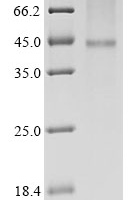
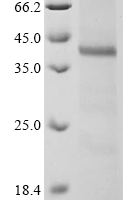
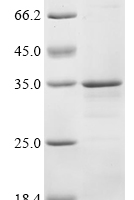
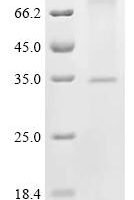
SDS-PAGE: Single band at expected molecular weight confirming purity.

ELISA: Suitable as coating antigen or detection standard.

Western Blot: Compatible with standard Western Blot protocols.

Protein Interaction: Validated for SPR (Surface Plasmon Resonance) and BLI (Bio-Layer Interferometry) studies.

Shipping: Shipped at ambient temperature. Lyophilized protein is stable during transit.

Storage: Store lyophilized protein at -20°C to -80°C. Reconstituted protein should be aliquoted and stored at -80°C. Avoid repeated freeze-thaw cycles.

Shelf Life: 12 months from date of receipt when stored as recommended.

Shipping Time: Orders placed before 2 PM EST ship same day. International orders typically deliver within 5-10 business days.

Protein Biology

Function

Mast cell-specific G protein-coupled receptor for basic secretagogues, which regulates mast cell degranulation and itch-related hypersensitivity reactions. A secretagogue is an agent that promotes the secretion of hormones, neurohormones, chemical neurotransmitters or other compounds synthesized and secreted by cells. Basic secretagogues comprise a set of cationic amphiphilic drugs, as well as endo- or exogenous peptides, consisting of a basic head group and a hydrophobic core. Ligand binding causes a conformation change that triggers signaling via guanine nucleotide-binding proteins (G proteins) and modulates the activity of downstream effectors, such as adenylate cyclase. MRGPRX2 is both coupled to G(q) and G(i) G proteins: G(q) coupling activates phospholipase C-beta, releasing diacylglycerol (DAG) and inositol 1,4,5-trisphosphate (IP3) second messengers, while G(i) coupling mediates inhibition of adenylate cyclase activity (By similarity). Recognizes and binds small molecules containing a cyclized tetrahydroisoquinoline (THIQ), such as non-steroidal neuromuscular blocking drugs (NMBDs), including tubocurarine and atracurium. In response to these compounds, mediates pseudo-allergic reactions characterized by histamine release, inflammation and airway contraction (By similarity). Acts as a receptor for substance P, a basic secretagogue neuropeptide released from the terminals of specific sensory nerves, initiating a signaling that mediates neurogenic inflammation and pain (By similarity). Neurogenic inflammation includes mast cell activation, recruitment of immune cells and release of inflammatory mediators, such as cytokines and chemokines. The inflammatory response can then activate or sensitize nociceptors, promoting pain (By similarity). Acts as a receptor for a number of other ligands, including peptides and alkaloids, such as cortistatin-14, proadrenomedullin peptides PAMP-12 and, at lower extent, PAMP-20, antibacterial protein LL-37, PMX-53 peptide, beta-defensins, complanadine A and CXCL17. Also acts as a receptor for opioids, such as (-)- and (+)-morphine, hydrocodone, sinomenine, dextromethorphan, dynorphin A, dynorphin B, and alpha- and beta-neoendorphin, promoting mast cell degranulation (By similarity)

Subcellular Location

Cell membrane (Multi-pass membrane protein)

Gene: MRGPRX2  |  Organism: Macaca fascicularis

Frequently Asked Questions

How do I order or inquire about this product?

Fill out the Online Inquiry form with your required quantity and specifications. You can also email sales@biocrestsci.com. Our team typically responds within 4 business hours with a quote and availability confirmation.

What is the shipping and delivery time?

Orders placed before 2 PM EST ship the same day. Domestic (US) delivery typically takes 2-3 business days. International orders deliver within 5-10 business days. All products are shipped at ambient temperature with appropriate packaging to ensure stability.

How should I store this recombinant protein?

Lyophilized proteins should be stored at -20°C to -80°C upon receipt. After reconstitution, aliquot and store at -80°C. Avoid repeated freeze-thaw cycles. Shelf life is 12 months from date of receipt when stored as recommended.

What quality controls are performed on your products?

Each product undergoes SDS-PAGE purity analysis (typically >85-95%), endotoxin testing, and bioactivity validation. Products are validated for ELISA, Western Blot, and SPR/BLI applications as specified on this product page. A Certificate of Analysis (CoA) is available upon request.

Shopping Cart
Scroll to Top