Recombinant Human Advanced glycosylation end product-specific receptor (AGER), partial

Recombinant Human Advanced glycosylation end product-specific receptor (AGER), partial — Cell surface pattern recognition receptor that senses endogenous stress signals with a broad ligand repertoire including advanced glycation end products, S100 proteins, high-mobility group box 1 pr… Purity …

SKU: BCRECP-000042 Category:

Product Specifications

Product SkuBCRECP-000042
Product DescriptionRecombinant Human Advanced glycosylation end product-specific receptor (AGER) Protein is expressed from Mammalian cell with C-terminal 6xHis-tagged. It contains 23-344aa. [Accession | Q15109].
Uniprot No.Q15109
Gene NamesAGER
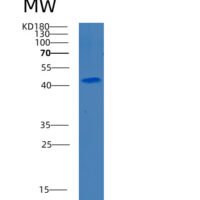
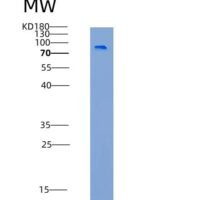
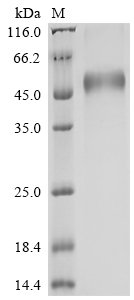
PurityGreater than 90% as determined by SDS-PAGE.
Expression SystemMammalian cell
Expression Region23-344aa
SpeciesHomo sapiens (Human)
Tag InfoC-terminal 6xHis-tagged
Molecular weight36.4kDa
ActivityPlease contact us to obtain bioactivity data.
BufferIf the delivery form is liquid, the default storage buffer is Tris/PBS-based buffer, 5%-50% glycerol. If the delivery form is lyophilized powder, the buffer before lyophilization is Tris/PBS-based buffer, 6% Trehalose.
StorageStore at -20°C/-80°C upon receipt, aliquoting is necessary for mutiple use. Avoid repeated freeze-thaw cycles.
Research AreasImmunology

Function

Cell surface pattern recognition receptor that senses endogenous stress signals with a broad ligand repertoire including advanced glycation end products, S100 proteins, high-mobility group box 1 protein/HMGB1, amyloid beta/APP oligomers, nucleic acids, histones, phospholipids and glycosaminoglycans. Advanced glycation end products (AGEs) are nonenzymatically glycosylated proteins which accumulate in vascular tissue in aging and at an accelerated rate in diabetes. These ligands accumulate at inflammatory sites during the pathogenesis of various diseases including diabetes, vascular complications, neurodegenerative disorders and cancers, and RAGE transduces their binding into pro-inflammatory responses.

Biological Context

Subcellular Location: Cell membrane (Single-pass type I membrane protein)
Tissue Specificity: Endothelial cells. Increased expression in pre-term labor and preeclampsia placentas compared to controls

Product Specifications

Recombinant Human Advanced glycosylation end product-specific receptor (AGER), partial is a recombinant protein from Homo sapiens (Human), expressed in Mammalian cell, covering amino acids 23-344aa, with C-terminal 6xHis-tagged tag, molecular weight 36.4kDa, purity Greater than 90% as determined by SDS-PAGE.. Suitable for ELISA and Western Blot applications.
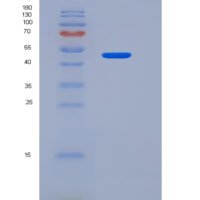
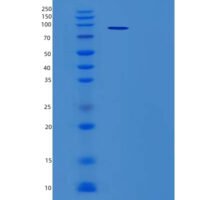
SDS-PAGE: Single band at expected molecular weight confirming purity.

ELISA: Suitable as coating antigen or detection standard.

Western Blot: Compatible with standard Western Blot protocols.

Protein Interaction: Validated for SPR (Surface Plasmon Resonance) and BLI (Bio-Layer Interferometry) studies.

Shipping: Shipped at ambient temperature. Lyophilized protein is stable during transit.

Storage: Store lyophilized protein at -20°C to -80°C. Reconstituted protein should be aliquoted and stored at -80°C. Avoid repeated freeze-thaw cycles.

Shelf Life: 12 months from date of receipt when stored as recommended.

Shipping Time: Orders placed before 2 PM EST ship same day. International orders typically deliver within 5-10 business days.

Protein Biology

Function

Cell surface pattern recognition receptor that senses endogenous stress signals with a broad ligand repertoire including advanced glycation end products, S100 proteins, high-mobility group box 1 protein/HMGB1, amyloid beta/APP oligomers, nucleic acids, histones, phospholipids and glycosaminoglycans (PubMed:27572515, PubMed:28515150, PubMed:34743181, PubMed:35974093, PubMed:24081950). Advanced glycation end products (AGEs) are nonenzymatically glycosylated proteins which accumulate in vascular tissue in aging and at an accelerated rate in diabetes (PubMed:21565706). These ligands accumulate at inflammatory sites during the pathogenesis of various diseases including diabetes, vascular complications, neurodegenerative disorders and cancers, and RAGE transduces their binding into pro-inflammatory responses. Upon ligand binding, uses TIRAP and MYD88 as adapters to transduce the signal ultimately leading to the induction of inflammatory cytokines IL6, IL8 and TNFalpha through activation of NF-kappa-B (PubMed:21829704, PubMed:33436632). Interaction with S100A12 on endothelium, mononuclear phagocytes, and lymphocytes triggers cellular activation, with generation of key pro-inflammatory mediators (PubMed:19386136). Interaction with S100B after myocardial infarction may play a role in myocyte apoptosis by activating ERK1/2 and p53/TP53 signaling (By similarity). Contributes to the translocation of amyloid-beta peptide (ABPP) across the cell membrane from the extracellular to the intracellular space in cortical neurons (PubMed:19906677). ABPP-initiated RAGE signaling, especially stimulation of p38 mitogen-activated protein kinase (MAPK), has the capacity to drive a transport system delivering ABPP as a complex with RAGE to the intraneuronal space. Participates in endothelial albumin transcytosis together with HMGB1 through the RAGE/SRC/Caveolin-1 pathway, leading to endothelial hyperpermeability (PubMed:27572515). Mediates the loading of HMGB1 in extracellular vesicles (EVs) that shuttle HMGB1 to hepatocytes by transferrin-mediated endocytosis and subsequently promote hepatocyte pyroptosis by activating the NLRP3 inflammasome (PubMed:34743181). Binds to DNA and promotes extracellular hypomethylated DNA (CpG DNA) uptake by cells via the endosomal route to activate inflammatory responses (PubMed:24081950, PubMed:28515150). Mediates phagocytosis by non-professional phagocytes (NPP) and this is enhanced by binding to ligands including RNA, DNA, HMGB1 and histones (PubMed:35974093). Promotes NPP-mediated phagocytosis of Saccharomyces cerevisiae spores by binding to RNA attached to the spore wall (PubMed:35974093). Also promotes NPP-mediated phagocytosis of apoptotic cells (PubMed:35974093). Following DNA damage, recruited to DNA double-strand break sites where it colocalizes with the MRN repair complex via interaction with double-strand break repair protein MRE11 (By similarity). Enhances the endonuclease activity of MRE11, promoting the end resection of damaged DNA (By similarity). Promotes DNA damage repair in trophoblasts which enhances trophoblast invasion and contributes to placental development and maintenance (PubMed:33918759). Protects cells from DNA replication stress by localizing to damaged replication forks where it stabilizes the MCM2-7 complex and promotes faithful progression of the replication fork (PubMed:36807739). Mediates the production of reactive oxygen species (ROS) in human endothelial cells (PubMed:25401185)

Subcellular Location

Cell membrane (Single-pass type I membrane protein)

Tissue Specificity

Endothelial cells. Increased expression in pre-term labor and preeclampsia placentas compared to controls (PubMed:33918759)

Subunit

Constitutive homodimer; disulfide-linked (PubMed:24081950). Forms homooligomers (PubMed:24081950). Interacts with S100A1 and APP (By similarity). Interacts with S100B, S100A12 and S100A14. Interacts with TIRAP (PubMed:21829704). Interacts with HMGB1 (PubMed:34743181). Interacts with LGP2; this interaction plays an important role in AGER-mediated pro-inflammatory responses and cytokine release (PubMed:33436632). Interacts with double-strand break repair protein MRE11 which is a core component of the MRN complex (PubMed:33918759). The interaction enhances MRE11 endonuclease activity and promotes DNA repair (By similarity). Interacts with the MCM2-7 complex via interaction with complex member MCM2; the interaction is increased following DNA replication stress and stabilizes the MCM2-7 complex at replication forks (PubMed:36807739). Interacts with longistatin, a protein from the saliva of the tick, Haemaphysalis longicornis; the interaction attenuates AGER-mediated production of reactive oxygen species (ROS), activation of NF-kappa-B and expression of adhesion molecules and cytokines in human endothelial cells (PubMed:25401185)

Gene: AGER  |  Organism: Homo sapiens  |  Synonyms: Advanced glycosylation end product-specific receptor; Receptor for advanced glycation end products; Receptor for advanced glycosylation end products
Key Publications

Frequently Asked Questions

How do I order or inquire about this product?

Fill out the Online Inquiry form with your required quantity and specifications. You can also email sales@biocrestsci.com. Our team typically responds within 4 business hours with a quote and availability confirmation.

What is the shipping and delivery time?

Orders placed before 2 PM EST ship the same day. Domestic (US) delivery typically takes 2-3 business days. International orders deliver within 5-10 business days. All products are shipped at ambient temperature with appropriate packaging to ensure stability.

How should I store this recombinant protein?

Lyophilized proteins should be stored at -20°C to -80°C upon receipt. After reconstitution, aliquot and store at -80°C. Avoid repeated freeze-thaw cycles. Shelf life is 12 months from date of receipt when stored as recommended.

What quality controls are performed on your products?

Each product undergoes SDS-PAGE purity analysis (typically >85-95%), endotoxin testing, and bioactivity validation. Products are validated for ELISA, Western Blot, and SPR/BLI applications as specified on this product page. A Certificate of Analysis (CoA) is available upon request.

Shopping Cart
Scroll to Top