Function
Catalyzes the reversible conversion of beta-D-fructose 1,6-bisphosphate (FBP) into two triose phosphate and plays a key role in glycolysis and gluconeogenesis. In addition, also functions as a scaffolding protein. In response to glucose deprivation, FBP dissociates from aldolase and acts as an adapter that promotes AMP-activated protein kinase (AMPK) activity: mechanistically, associates with transient receptor potential channels TrpV (TRPV1-TRPV4), promoting inhibition of the V-ATPase complex on lysosomes and AMPK activation via the AXIN1-STK11/LKB1 axis.
Biological Context
Subcellular Location: Cytoplasm, myofibril, sarcomere, I band; Cytoplasm, myofibril, sarcomere, M line
Disease Association: Glycogen storage disease 12 (GSD12) : A metabolic disorder associated with increased hepatic glycogen and hemolytic anemia. It may lead to myopathy with exercise intolerance and rhabdomyolysis. [The disease is caused by variants affecting the gene represented in this entry]
Pathway: Carbohydrate degradation; glycolysis; D-glyceraldehyde 3-phosphate and glycerone phosphate from D-glucose: step 4/4
Product Specifications
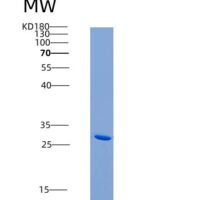
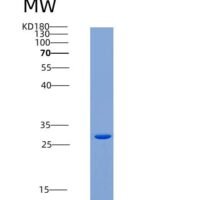
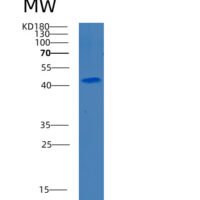
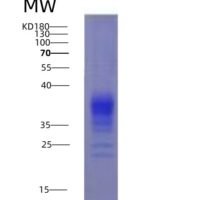
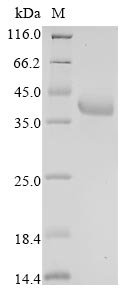
Recombinant Human Fructose-bisphosphate aldolase A (ALDOA) is a recombinant protein from Homo sapiens (Human), expressed in Baculovirus, covering amino acids 2-364aa, with C-terminal 6xHis-tagged tag, molecular weight 40.4kDa, purity Greater than 90% as determined by SDS-PAGE.. Suitable for ELISA and Western Blot applications.