Recombinant Human Caspase-3 (CASP3), partial

Recombinant Human Caspase-3 (CASP3), partial — Thiol protease that acts as a major effector caspase involved in the execution phase of apoptosis. Purity >85% (SDS-PAGE).

SKU: BCRECP-000237 Category:

Product Specifications

Product SkuBCRECP-000237
Product DescriptionRecombinant Human Caspase-3 (CASP3) Protein is expressed from E.coli with N-terminal 6xHis-tagged. It contains 29-175aa. [Accession | P42574].
Uniprot No.P42574
Gene NamesCASP3
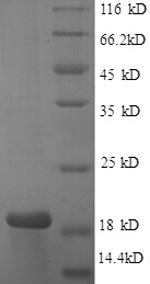
Purity>85% (SDS-PAGE)
Expression SystemE.coli
Expression Region29-175aa
SpeciesHomo sapiens (Human)
Tag InfoN-terminal 6xHis-tagged
Molecular weight20.6kDa
ActivityPlease contact us to obtain bioactivity data.
BufferIf the delivery form is liquid, the default storage buffer is Tris/PBS-based buffer, 5%-50% glycerol. If the delivery form is lyophilized powder, the buffer before lyophilization is Tris/PBS-based buffer, 6% Trehalose.
StorageStore at -20°C/-80°C upon receipt, aliquoting is necessary for mutiple use. Avoid repeated freeze-thaw cycles.
Research AreasApoptosis

Function

Thiol protease that acts as a major effector caspase involved in the execution phase of apoptosis. Following cleavage and activation by initiator caspases (CASP8, CASP9 and/or CASP10), mediates execution of apoptosis by catalyzing cleavage of many proteins. At the onset of apoptosis, it proteolytically cleaves poly(ADP-ribose) polymerase PARP1 at a '216-Asp-|-Gly-217' bond.

Biological Context

Subcellular Location: Cytoplasm
Tissue Specificity: Highly expressed in lung, spleen, heart, liver and kidney. Moderate levels in brain and skeletal muscle, and low in testis. Also found in many cell lines, highest expression in cells of the immune system

Product Specifications

Recombinant Human Caspase-3 (CASP3), partial is a recombinant protein from Homo sapiens (Human), expressed in E.coli, covering amino acids 29-175aa, with N-terminal 6xHis-tagged tag, molecular weight 20.6kDa, purity >85% (SDS-PAGE). Suitable for ELISA and Western Blot applications.
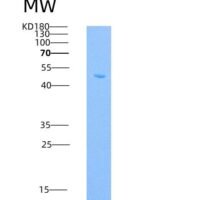
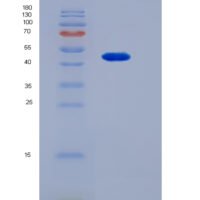
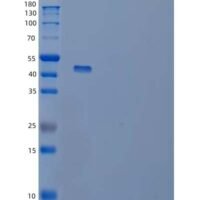
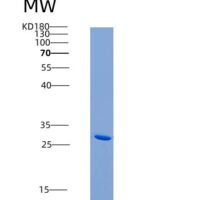
SDS-PAGE: Single band at expected molecular weight confirming purity.

ELISA: Suitable as coating antigen or detection standard.

Western Blot: Compatible with standard Western Blot protocols.

Protein Interaction: Validated for SPR (Surface Plasmon Resonance) and BLI (Bio-Layer Interferometry) studies.

Shipping: Shipped at ambient temperature. Lyophilized protein is stable during transit.

Storage: Store lyophilized protein at -20°C to -80°C. Reconstituted protein should be aliquoted and stored at -80°C. Avoid repeated freeze-thaw cycles.

Shelf Life: 12 months from date of receipt when stored as recommended.

Shipping Time: Orders placed before 2 PM EST ship same day. International orders typically deliver within 5-10 business days.

Protein Biology

Function

Thiol protease that acts as a major effector caspase involved in the execution phase of apoptosis (PubMed:18723680, PubMed:20566630, PubMed:23650375, PubMed:35338844, PubMed:35446120, PubMed:7596430). Following cleavage and activation by initiator caspases (CASP8, CASP9 and/or CASP10), mediates execution of apoptosis by catalyzing cleavage of many proteins (PubMed:18723680, PubMed:20566630, PubMed:23650375, PubMed:7596430). At the onset of apoptosis, it proteolytically cleaves poly(ADP-ribose) polymerase PARP1 at a '216-Asp-|-Gly-217' bond (PubMed:10497198, PubMed:16374543, PubMed:7596430, PubMed:7774019). Cleaves and activates sterol regulatory element binding proteins (SREBPs) between the basic helix-loop-helix leucine zipper domain and the membrane attachment domain (By similarity). Cleaves and activates caspase-6, -7 and -9 (CASP6, CASP7 and CASP9, respectively) (PubMed:7596430). Cleaves and inactivates interleukin-18 (IL18) (PubMed:37993714, PubMed:9334240). Involved in the cleavage of huntingtin (PubMed:8696339). Triggers cell adhesion in sympathetic neurons through RET cleavage (PubMed:21357690). Also involved in axon pruning during brain development (By similarity). Cleaves DSG2 in response to apoptosis resulting in a loss of full length DSG2 at desmosome cell junctions and subsequent loss of cell-cell adhesion (PubMed:17559062). Also cleaves JUP in response to apoptosis (PubMed:17559062). Cleaves and inhibits serine/threonine-protein kinase AKT1 in response to oxidative stress (PubMed:23152800). Acts as an inhibitor of type I interferon production during virus-induced apoptosis by mediating cleavage of antiviral proteins CGAS, IRF3 and MAVS, thereby preventing cytokine overproduction (PubMed:30878284). Also involved in pyroptosis by mediating cleavage and activation of gasdermin-E (GSDME) (PubMed:35338844, PubMed:35446120). Cleaves XRCC4 and phospholipid scramblase proteins XKR4, XKR8 and XKR9, leading to promote phosphatidylserine exposure on apoptotic cell surface (PubMed:23845944, PubMed:33725486). Cleaves BIRC6 following inhibition of BIRC6-caspase binding by DIABLO/SMAC (PubMed:36758104, PubMed:36758106)

Subcellular Location

Cytoplasm

Tissue Specificity

Highly expressed in lung, spleen, heart, liver and kidney. Moderate levels in brain and skeletal muscle, and low in testis. Also found in many cell lines, highest expression in cells of the immune system

Subunit

Heterotetramer that consists of two anti-parallel arranged heterodimers, each one formed by a 17 kDa (p17) and a 12 kDa (p12) subunit. Interacts with BIRC6/bruce

Gene: CASP3  |  Organism: Homo sapiens  |  Synonyms: Apopain; Cysteine protease CPP32; Protein Yama; SREBP cleavage activity 1
Key Publications

Frequently Asked Questions

How do I order or inquire about this product?

Fill out the Online Inquiry form with your required quantity and specifications. You can also email sales@biocrestsci.com. Our team typically responds within 4 business hours with a quote and availability confirmation.

What is the shipping and delivery time?

Orders placed before 2 PM EST ship the same day. Domestic (US) delivery typically takes 2-3 business days. International orders deliver within 5-10 business days. All products are shipped at ambient temperature with appropriate packaging to ensure stability.

How should I store this recombinant protein?

Lyophilized proteins should be stored at -20°C to -80°C upon receipt. After reconstitution, aliquot and store at -80°C. Avoid repeated freeze-thaw cycles. Shelf life is 12 months from date of receipt when stored as recommended.

What quality controls are performed on your products?

Each product undergoes SDS-PAGE purity analysis (typically >85-95%), endotoxin testing, and bioactivity validation. Products are validated for ELISA, Western Blot, and SPR/BLI applications as specified on this product page. A Certificate of Analysis (CoA) is available upon request.

Shopping Cart
Scroll to Top