Function
Involved in the intramitochondrial synthesis of acylcarnitines from accumulated acyl-CoA metabolites. Reconverts acylcarnitines back into the respective acyl-CoA esters that can then undergo beta-oxidation, an essential step for the mitochondrial uptake of long-chain fatty acids and their subsequent beta-oxidation in the mitochondrion. Active with medium (C8-C12) and long-chain (C14-C18) acyl-CoA esters.
Biological Context
Subcellular Location: Mitochondrion inner membrane (Peripheral membrane protein)
Disease Association: Carnitine palmitoyltransferase 2 deficiency, myopathic, stress-induced (CPT2D) : An autosomal recessive disorder of mitochondrial long-chain fatty acid oxidation, characterized by recurrent myoglobinuria, episodes of muscle pain, stiffness, and rhabdomyolysis. These symptoms are exacerbated by prolonged exercise, fasting, cold, or viral infection. CPT2DM affects most frequently children or young adults, and severity of attacks is highly variable. Myoglobinuria can cause kidney failure and death. [The disease is caused by variants affecting the gene represented in this entry] | Carnitine palmitoyltransferase 2 deficiency, infantile (CPT2DI) : An autosomal recessive disorder of mitochondrial long-chain fatty acid oxidation, characterized by hepatic or hepato-cardio-muscular manifestations with onset in infancy. Clinical features include hypoketotic hypoglycemia, lethargy, seizures, hepatomegaly, liver dysfunction, cardiomegaly and dilated cardiomyopathy. [The disease is caused by variants affecting the gene represented in this entry] | Carnitine palmitoyltransferase 2 deficiency, lethal neonatal (CPT2DLN) : An autosomal recessive disorder of mitochondrial long-chain fatty acid oxidation with fatal outcome, presenting shortly after birth. It is characterized by respiratory distress, seizures, altered mental status, hepatomegaly, cardiomegaly, cardiac arrhythmia, and, in many cases, dysmorphic features, renal dysgenesis, and migration defects. recessive. [The disease is caused by variants affecting the gene represented in this entry] | Encephalopathy, acute, infection-induced, 4 (IIAE4) : A severe neurologic complication of an infection. It manifests within days in otherwise healthy children after common viral infections, without evidence of viral infection of the brain or inflammatory cell infiltration. In affected children, high-grade fever is accompanied within 12 to 48 hours by febrile convulsions, often leading to coma, multiple-organ failure, brain edema, and high morbidity and mortality. The infections are usually viral, particularly influenza, although other viruses and even mycoplasma have been found to cause the disorder. [Disease susceptibility is associated with variants affecting the gene represented in this entry. CPT2 polymorphic variants do not cause classical carnitine palmitoyltransferase 2 deficiency, and patients harboring any of them are asymptomatic most of the time. However, they are prone to viral infection (high fever)-related encephalopathy ]
Pathway: Lipid metabolism; fatty acid beta-oxidation
Product Specifications
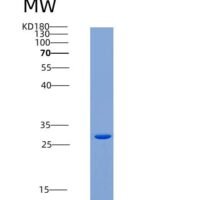
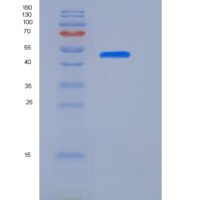
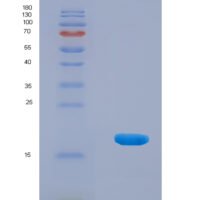
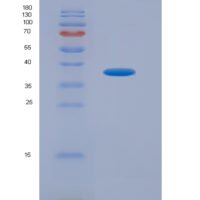
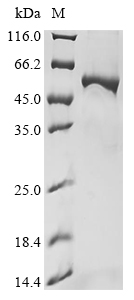
Recombinant Human Carnitine O-palmitoyltransferase 2, mitochondrial (CPT2), partial is a recombinant protein from Homo sapiens (Human), expressed in E.coli, covering amino acids 209-658aa, with N-terminal 10xHis-tagged and C-terminal Myc-tagged tag, molecular weight 57.6kDa, purity Greater than 90% as determined by SDS-PAGE.. Suitable for ELISA and Western Blot applications. Explore more Enzyme proteins →