Function
Stores iron in a soluble, non-toxic, readily available form. Important for iron homeostasis. Iron is taken up in the ferrous form and deposited as ferric hydroxides after oxidation.
Biological Context
Subcellular Location: Cytoplasmic vesicle, autophagosome; Cytoplasm; Autolysosome
Disease Association: Hyperferritinemia with or without cataract (HRFTC) : An autosomal dominant disease characterized by elevated level of ferritin in serum and tissues, and early-onset bilateral cataract. Cataracts may be subclinical in some patients. [The disease is caused by variants affecting the gene represented in this entry] | Neurodegeneration with brain iron accumulation 3 (NBIA3) : A neurodegenerative disorder associated with iron accumulation in the brain, primarily in the basal ganglia. It is characterized by a variety of neurological signs including parkinsonism, ataxia, corticospinal signs, mild non-progressive cognitive deficit and episodic psychosis. It is linked with decreased serum ferritin levels. [The disease is caused by variants affecting the gene represented in this entry] | L-ferritin deficiency (LFTD) : A condition characterized by low levels of ferritin in serum and tissues in the absence of other hematological symptoms. Seizures and mild neuropsychologic impairment may manifest in individuals with complete ferritin deficiency. [The disease is caused by variants affecting the gene represented in this entry]
Product Specifications
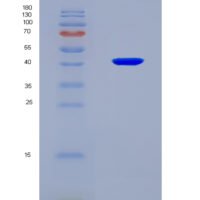
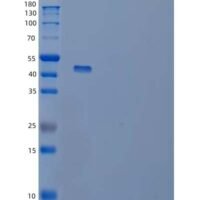
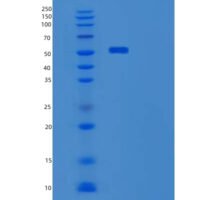
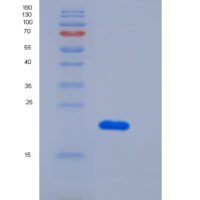
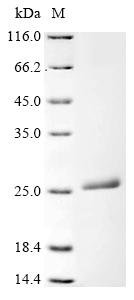
Recombinant Human Ferritin light chain (FTL) is a recombinant protein from Homo sapiens (Human), expressed in E.coli, covering amino acids 2-175aa, with N-terminal 6xHis-tagged tag, molecular weight 24.0kDa, purity Greater than 90% as determined by SDS-PAGE.. Suitable for ELISA and Western Blot applications.