Function
Modulates the RNA-binding activity of ACO1. May be involved in the cytoplasmic iron-sulfur protein biogenesis. May contribute to oxidative stress resistance and overall cell survival.
Biological Context
Subcellular Location: Cytoplasm, cytosol
Tissue Specificity: Expressed in the heart, peripheral blood lymphocytes and dermal fibroblasts
Disease Association: Friedreich ataxia (FRDA) : Autosomal recessive, progressive degenerative disease characterized by neurodegeneration and cardiomyopathy it is the most common inherited ataxia. The disorder is usually manifest before adolescence and is generally characterized by incoordination of limb movements, dysarthria, nystagmus, diminished or absent tendon reflexes, Babinski sign, impairment of position and vibratory senses, scoliosis, pes cavus, and hammer toe. In most patients, FRDA is due to GAA triplet repeat expansions in the first intron of the frataxin gene. But in some cases the disease is due to mutations in the coding region. [The disease is caused by variants affecting the gene represented in this entry]
Product Specifications
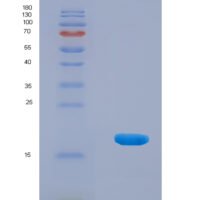
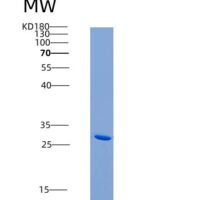
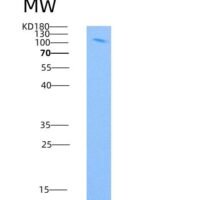
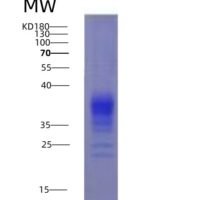
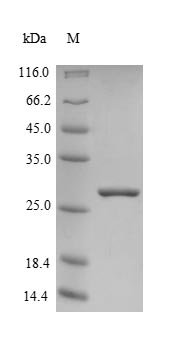
Recombinant Human Frataxin, mitochondrial (FxN) is a recombinant protein from Homo sapiens (Human), expressed in E.coli, covering amino acids 1-210aa, with N-terminal 10xHis-tagged and C-terminal Myc-tagged tag, molecular weight 28.1kDa, purity Greater than 85% as determined by SDS-PAGE.. Suitable for ELISA and Western Blot applications.