Function
Structural component of intermediate filaments in suprabasal keratinocytes of stratified epidermis. Forms heteropolymers with type I keratins (e.g., KRT10), assembling into keratin intermediate filament networks that support mechanical integrity and resilience of the differentiating epidermis. Contributes to terminal differentiation and cornification of keratinocytes and plays a role in establishing the epidermal barrier.
Biological Context
Subcellular Location: Cytoplasm
Tissue Specificity: Expressed in the upper spinous and granular suprabasal layers of normal adult epidermal tissues from most body sites including thigh, breast nipple, foot sole, penile shaft and axilla. Not present in foreskin, squamous metaplasias and carcinomas. Expression in hypertrophic and keloid scars begins in the deepest suprabasal layer. Weakly expressed in normal gingiva and tongue, however expression is induced in benign keratoses of lingual mucosa and in mild-to-moderate oral dysplasia with orthokeratinization
Disease Association: Ichthyosis bullosa of Siemens (IBS) : A rare autosomal dominant skin disorder displaying a type of epidermolytic hyperkeratosis characterized by generalized erythema and extensive blistering from birth. Large, dark gray hyperkeratoses are observed in later weeks. The skin of IBS patients is unusually fragile and has a tendency to shed the outer layers of the epidermis, producing localized denuded areas (molting effect). IBS usually improves with age so that in most middle-aged patients the hyperkeratosis and keratotic lichenification is limited to the flexural folds of the major joints. [The disease is caused by variants affecting the gene represented in this entry]
Product Specifications
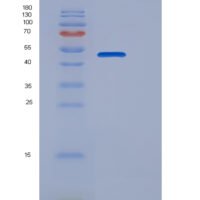
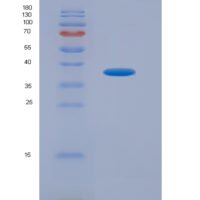
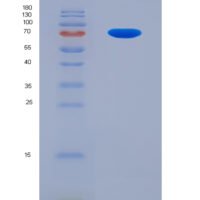
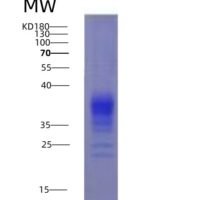
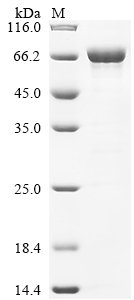
Recombinant Human Keratin, type II cytoskeletal 2 epidermal (KRT2) is a recombinant protein from Homo sapiens (Human), expressed in E.coli, covering amino acids 1-639aa, with N-terminal 10xHis-tagged and C-terminal Myc-tagged tag, molecular weight 72.9kDa, purity Greater than 90% as determined by SDS-PAGE.. Suitable for ELISA and Western Blot applications.