Recombinant Human Ragulator complex protein LAMTOR1 (LAMTOR1)

Recombinant Human Ragulator complex protein LAMTOR1 (LAMTOR1) — Key component of the Ragulator complex, a multiprotein complex involved in amino acid sensing and activation of mTORC1, a signaling complex promoting cell growth in response to growth factors, ener… Purity >90%.

SKU: BCRECP-001049 Category:

Product Specifications

Product SkuBCRECP-001049
Product DescriptionRecombinant Human Ragulator complex protein LAMTOR1 (LAMTOR1) Protein is expressed from E.coli with N-terminal 6xHis-tagged. It contains 2-161aa. [Accession | Q6IAA8].
Uniprot No.Q6IAA8
Gene NamesLAMTOR1
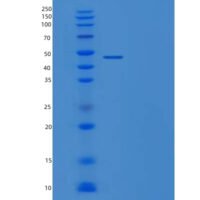
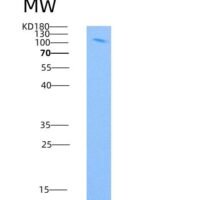
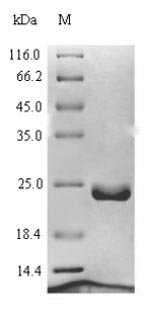
PurityGreater than 90% as determined by SDS-PAGE.
Expression SystemE.coli
Expression Region2-161aa
SpeciesHomo sapiens (Human)
Tag InfoN-terminal 6xHis-tagged
Molecular weight21.7kDa
ActivityPlease contact us to obtain bioactivity data.
BufferIf the delivery form is liquid, the default storage buffer is Tris/PBS-based buffer, 5%-50% glycerol. If the delivery form is lyophilized powder, the buffer before lyophilization is Tris/PBS-based buffer, 6% Trehalose.
StorageStore at -20°C/-80°C upon receipt, aliquoting is necessary for mutiple use. Avoid repeated freeze-thaw cycles.
Research AreasMetabolism

Function

Key component of the Ragulator complex, a multiprotein complex involved in amino acid sensing and activation of mTORC1, a signaling complex promoting cell growth in response to growth factors, energy levels, and amino acids. Activated by amino acids through a mechanism involving the lysosomal V-ATPase, the Ragulator plays a dual role for the small GTPases Rag (RagA/RRAGA, RagB/RRAGB, RagC/RRAGC and/or RagD/RRAGD): it (1) acts as a guanine nucleotide exchange factor (GEF), activating the small GTPases Rag and (2) mediates recruitment of Rag GTPases to the lysosome membrane. Activated Ragulator and Rag GTPases function as a scaffold recruiting mTORC1 to lysosomes where it is in turn activated.

Biological Context

Subcellular Location: Lysosome membrane (Lipid-anchor); Late endosome membrane (Lipid-anchor)

Product Specifications

Recombinant Human Ragulator complex protein LAMTOR1 (LAMTOR1) is a recombinant protein from Homo sapiens (Human), expressed in E.coli, covering amino acids 2-161aa, with N-terminal 6xHis-tagged tag, molecular weight 21.7kDa, purity Greater than 90% as determined by SDS-PAGE.. Suitable for ELISA and Western Blot applications.
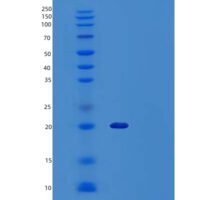
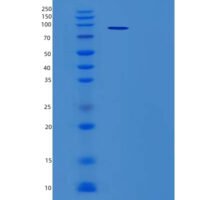
SDS-PAGE: Single band at expected molecular weight confirming purity.

ELISA: Suitable as coating antigen or detection standard.

Western Blot: Compatible with standard Western Blot protocols.

Protein Interaction: Validated for SPR (Surface Plasmon Resonance) and BLI (Bio-Layer Interferometry) studies.

Shipping: Shipped at ambient temperature. Lyophilized protein is stable during transit.

Storage: Store lyophilized protein at -20°C to -80°C. Reconstituted protein should be aliquoted and stored at -80°C. Avoid repeated freeze-thaw cycles.

Shelf Life: 12 months from date of receipt when stored as recommended.

Shipping Time: Orders placed before 2 PM EST ship same day. International orders typically deliver within 5-10 business days.

Protein Biology

Function

Key component of the Ragulator complex, a multiprotein complex involved in amino acid sensing and activation of mTORC1, a signaling complex promoting cell growth in response to growth factors, energy levels, and amino acids (PubMed:20381137, PubMed:22980980, PubMed:29158492). Activated by amino acids through a mechanism involving the lysosomal V-ATPase, the Ragulator plays a dual role for the small GTPases Rag (RagA/RRAGA, RagB/RRAGB, RagC/RRAGC and/or RagD/RRAGD): it (1) acts as a guanine nucleotide exchange factor (GEF), activating the small GTPases Rag and (2) mediates recruitment of Rag GTPases to the lysosome membrane (PubMed:22053050, PubMed:22980980, PubMed:28935770, PubMed:29158492, PubMed:30181260, PubMed:31001086, PubMed:32686708, PubMed:36476874). Activated Ragulator and Rag GTPases function as a scaffold recruiting mTORC1 to lysosomes where it is in turn activated (PubMed:20381137, PubMed:22980980, PubMed:29158492). LAMTOR1 is directly responsible for anchoring the Ragulator complex to the lysosomal membrane (PubMed:31001086, PubMed:32686708). LAMTOR1 wraps around the other subunits of the Ragulator complex to hold them in place and interacts with the Rag GTPases, thereby playing a key role in the recruitment of the mTORC1 complex to lysosomes (PubMed:28935770, PubMed:29107538, PubMed:29123114, PubMed:29285400). Also involved in the control of embryonic stem cells differentiation via non-canonical RagC/RRAGC and RagD/RRAGD activation: together with FLCN, it is necessary to recruit and activate RagC/RRAGC and RagD/RRAGD at the lysosomes, and to induce exit of embryonic stem cells from pluripotency via non-canonical, mTOR-independent TFE3 inactivation (By similarity). Also required for late endosomes/lysosomes biogenesis it may regulate both the recycling of receptors through endosomes and the MAPK signaling pathway through recruitment of some of its components to late endosomes (PubMed:20381137, PubMed:22980980). May be involved in cholesterol homeostasis regulating LDL uptake and cholesterol release from late endosomes/lysosomes (PubMed:20544018). May also play a role in RHOA activation (PubMed:19654316)

Subcellular Location

Lysosome membrane (Lipid-anchor); Late endosome membrane (Lipid-anchor)

Subunit

Part of the Ragulator complex composed of LAMTOR1, LAMTOR2, LAMTOR3, LAMTOR4 and LAMTOR5 (PubMed:20381137, PubMed:22980980, PubMed:28935770, PubMed:29107538, PubMed:29123114, PubMed:29158492, PubMed:29285400, PubMed:31601708, PubMed:32868926, PubMed:35338845, PubMed:36103527, PubMed:36697823). LAMTOR4 and LAMTOR5 form a heterodimer that interacts, through LAMTOR1, with a LAMTOR2, LAMTOR3 heterodimer (PubMed:20381137, PubMed:22980980). Interacts with LAMTOR2 and LAMTOR3; the interaction is direct (PubMed:20381137, PubMed:22980980). The Ragulator complex interacts with both the mTORC1 complex and heterodimers constituted of the Rag GTPases RagA/RRAGA, RagB/RRAGB, RagC/RRAGC and RagD/RRAGD; regulated by amino acid availability (PubMed:20381137, PubMed:22980980, PubMed:32868926). The Ragulator complex interacts with SLC38A9; the probable amino acid sensor (PubMed:22980980, PubMed:25561175, PubMed:25567906). Component of the lysosomal folliculin complex (LFC), composed of FLCN, FNIP1 (or FNIP2), RagA/RRAGA or RagB/RRAGB GDP-bound, RagC/RRAGC or RagD/RRAGD GTP-bound, and Ragulator (PubMed:31672913, PubMed:31704029). Associates with the lysosomal V-ATPase complex; interaction promotes the guanine nucleotide exchange factor (GEF) of the Ragulator complex (PubMed:36476874). Interacts with MMP14 (PubMed:19654316). Interacts with CDKN1B; prevents the interaction of CDKN1B with RHOA leaving RHOA in a form accessible to activation by ARHGEF2 (PubMed:19654316). Interacts with PIP4P1 (PubMed:29644770)

Gene: LAMTOR1  |  Organism: Homo sapiens  |  Synonyms: Late endosomal/lysosomal adaptor and MAPK and MTOR activator 1; Lipid raft adaptor protein p18; Protein associated with DRMs and endosomes; p27Kip1-releasing factor from RhoA
Key Publications

Frequently Asked Questions

How do I order or inquire about this product?

Fill out the Online Inquiry form with your required quantity and specifications. You can also email sales@biocrestsci.com. Our team typically responds within 4 business hours with a quote and availability confirmation.

What is the shipping and delivery time?

Orders placed before 2 PM EST ship the same day. Domestic (US) delivery typically takes 2-3 business days. International orders deliver within 5-10 business days. All products are shipped at ambient temperature with appropriate packaging to ensure stability.

How should I store this recombinant protein?

Lyophilized proteins should be stored at -20°C to -80°C upon receipt. After reconstitution, aliquot and store at -80°C. Avoid repeated freeze-thaw cycles. Shelf life is 12 months from date of receipt when stored as recommended.

What quality controls are performed on your products?

Each product undergoes SDS-PAGE purity analysis (typically >85-95%), endotoxin testing, and bioactivity validation. Products are validated for ELISA, Western Blot, and SPR/BLI applications as specified on this product page. A Certificate of Analysis (CoA) is available upon request.

Shopping Cart
Scroll to Top