Recombinant Human Microtubule-associated proteins 1A/1B light chain 3B (MAP1LC3B)

Recombinant Human Microtubule-associated proteins 1A/1B light chain 3B (MAP1LC3B) — Ubiquitin-like modifier involved in formation of autophagosomal vacuoles (autophagosomes). Purity >90%.

SKU: BCRECP-001119 Category:

Product Specifications

Product SkuBCRECP-001119
Product DescriptionRecombinant Human Microtubule-associated proteins 1A/1B light chain 3B (MAP1LC3B) Protein is expressed from Yeast with N-terminal 6xHis-tagged. It contains 1-120aa. [Accession | Q9GZQ8].
Uniprot No.Q9GZQ8
Gene NamesMAP1LC3B
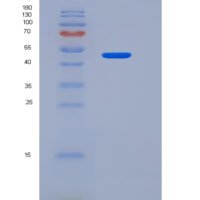
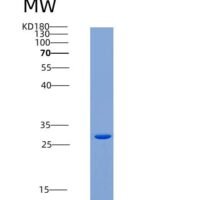
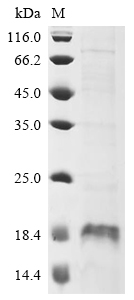
PurityGreater than 90% as determined by SDS-PAGE.
Expression SystemYeast
Expression Region1-120aa
SpeciesHomo sapiens (Human)
Tag InfoN-terminal 6xHis-tagged
Molecular weight15.2kDa
ActivityPlease contact us to obtain bioactivity data.
BufferIf the delivery form is liquid, the default storage buffer is Tris/PBS-based buffer, 5%-50% glycerol. If the delivery form is lyophilized powder, the buffer before lyophilization is Tris/PBS-based buffer, 6% Trehalose.
StorageStore at -20°C/-80°C upon receipt, aliquoting is necessary for mutiple use. Avoid repeated freeze-thaw cycles.
Research AreasCancer

Function

Ubiquitin-like modifier involved in formation of autophagosomal vacuoles (autophagosomes). Plays a role in mitophagy which contributes to regulate mitochondrial quantity and quality by eliminating the mitochondria to a basal level to fulfill cellular energy requirements and preventing excess ROS production. In response to cellular stress and upon mitochondria fission, binds C-18 ceramides and anchors autophagolysosomes to outer mitochondrial membranes to eliminate damaged mitochondria.

Biological Context

Subcellular Location: Cytoplasmic vesicle, autophagosome membrane (Lipid-anchor); Endomembrane system (Lipid-anchor); Mitochondrion membrane (Lipid-anchor); Cytoplasm, cytoskeleton; Cytoplasmic vesicle
Tissue Specificity: Most abundant in heart, brain, skeletal muscle and testis. Little expression observed in liver

Product Specifications

Recombinant Human Microtubule-associated proteins 1A/1B light chain 3B (MAP1LC3B) is a recombinant protein from Homo sapiens (Human), expressed in Yeast, covering amino acids 1-120aa, with N-terminal 6xHis-tagged tag, molecular weight 15.2kDa, purity Greater than 90% as determined by SDS-PAGE.. Suitable for ELISA and Western Blot applications.
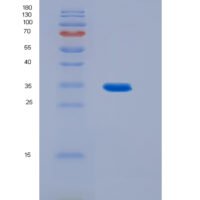
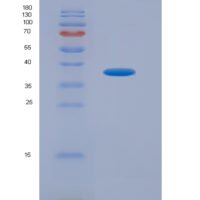
SDS-PAGE: Single band at expected molecular weight confirming purity.

ELISA: Suitable as coating antigen or detection standard.

Western Blot: Compatible with standard Western Blot protocols.

Protein Interaction: Validated for SPR (Surface Plasmon Resonance) and BLI (Bio-Layer Interferometry) studies.

Shipping: Shipped at ambient temperature. Lyophilized protein is stable during transit.

Storage: Store lyophilized protein at -20°C to -80°C. Reconstituted protein should be aliquoted and stored at -80°C. Avoid repeated freeze-thaw cycles.

Shelf Life: 12 months from date of receipt when stored as recommended.

Shipping Time: Orders placed before 2 PM EST ship same day. International orders typically deliver within 5-10 business days.

Protein Biology

Function

Ubiquitin-like modifier involved in formation of autophagosomal vacuoles (autophagosomes) (PubMed:20418806, PubMed:23209295, PubMed:28017329). Plays a role in mitophagy which contributes to regulate mitochondrial quantity and quality by eliminating the mitochondria to a basal level to fulfill cellular energy requirements and preventing excess ROS production (PubMed:23209295, PubMed:28017329). In response to cellular stress and upon mitochondria fission, binds C-18 ceramides and anchors autophagolysosomes to outer mitochondrial membranes to eliminate damaged mitochondria (PubMed:22922758). While LC3s are involved in elongation of the phagophore membrane, the GABARAP/GATE-16 subfamily is essential for a later stage in autophagosome maturation (PubMed:20418806, PubMed:23209295, PubMed:28017329). Promotes primary ciliogenesis by removing OFD1 from centriolar satellites via the autophagic pathway (PubMed:24089205). Through its interaction with the reticulophagy receptor TEX264, participates in the remodeling of subdomains of the endoplasmic reticulum into autophagosomes upon nutrient stress, which then fuse with lysosomes for endoplasmic reticulum turnover (PubMed:31006537, PubMed:31006538). Upon nutrient stress, directly recruits cofactor JMY to the phagophore membrane surfaces and promotes JMY's actin nucleation activity and autophagosome biogenesis during autophagy (PubMed:30420355)

Subcellular Location

Cytoplasmic vesicle, autophagosome membrane (Lipid-anchor); Endomembrane system (Lipid-anchor); Mitochondrion membrane (Lipid-anchor); Cytoplasm, cytoskeleton; Cytoplasmic vesicle

Tissue Specificity

Most abundant in heart, brain, skeletal muscle and testis. Little expression observed in liver

Subunit

(Microbial infection) Interacts with Hantaan hantavirus nucleoprotein; this interaction prevents the breakdown of the viral glycoprotein N by virus-triggered autophagy

Gene: MAP1LC3B  |  Organism: Homo sapiens  |  Synonyms: Autophagy-related protein LC3 B; Autophagy-related ubiquitin-like modifier LC3 B; MAP1 light chain 3-like protein 2; Microtubule-associated proteins 1A/1B light chain 3B
Key Publications

Frequently Asked Questions

How do I order or inquire about this product?

Fill out the Online Inquiry form with your required quantity and specifications. You can also email sales@biocrestsci.com. Our team typically responds within 4 business hours with a quote and availability confirmation.

What is the shipping and delivery time?

Orders placed before 2 PM EST ship the same day. Domestic (US) delivery typically takes 2-3 business days. International orders deliver within 5-10 business days. All products are shipped at ambient temperature with appropriate packaging to ensure stability.

How should I store this recombinant protein?

Lyophilized proteins should be stored at -20°C to -80°C upon receipt. After reconstitution, aliquot and store at -80°C. Avoid repeated freeze-thaw cycles. Shelf life is 12 months from date of receipt when stored as recommended.

What quality controls are performed on your products?

Each product undergoes SDS-PAGE purity analysis (typically >85-95%), endotoxin testing, and bioactivity validation. Products are validated for ELISA, Western Blot, and SPR/BLI applications as specified on this product page. A Certificate of Analysis (CoA) is available upon request.

Shopping Cart
Scroll to Top