Recombinant Human Mucin-2 (MUC2), partial

Recombinant Human Mucin-2 (MUC2), partial — Coats the epithelia of the intestines and other mucus membrane-containing organs to provide a protective, lubricating barrier against particles and infectious agents at mucosal surfaces. Purity >90%.

SKU: BCRECP-001200 Category:

Product Specifications

Product SkuBCRECP-001200
Product DescriptionRecombinant Human Mucin-2 (MUC2) Protein is expressed from E.coli with N-terminal 6xHis-SUMO-tagged. It contains 36-240aa. [Accession | Q02817].
Uniprot No.Q02817
Gene NamesMUC2
PurityGreater than 90% as determined by SDS-PAGE.
Expression SystemE.coli
Expression Region36-240aa
SpeciesHomo sapiens (Human)
Tag InfoN-terminal 6xHis-SUMO-tagged
Molecular weight38.8kDa
ActivityPlease contact us to obtain bioactivity data.
BufferIf the delivery form is liquid, the default storage buffer is Tris/PBS-based buffer, 5%-50% glycerol. If the delivery form is lyophilized powder, the buffer before lyophilization is Tris/PBS-based buffer, 6% Trehalose.
StorageStore at -20°C/-80°C upon receipt, aliquoting is necessary for mutiple use. Avoid repeated freeze-thaw cycles.
Research AreasSignal Transduction

Function

Coats the epithelia of the intestines and other mucus membrane-containing organs to provide a protective, lubricating barrier against particles and infectious agents at mucosal surfaces. Major constituent of the colon mucus, which is mainly formed by large polymeric networks of MUC2 secreted by goblet cells that cover the exposed surfaces of intestine. MUC2 networks form hydrogels that guard the underlying epithelium from pathogens and other hazardous matter entering from the outside world, while permitting nutrient absorption and gas exchange.

Biological Context

Subcellular Location: Secreted
Tissue Specificity: Colon, small intestine, colonic tumors, bronchus, cervix and gall bladder

Product Specifications

Recombinant Human Mucin-2 (MUC2), partial is a recombinant protein from Homo sapiens (Human), expressed in E.coli, covering amino acids 36-240aa, with N-terminal 6xHis-SUMO-tagged tag, molecular weight 38.8kDa, purity Greater than 90% as determined by SDS-PAGE.. Suitable for ELISA and Western Blot applications.
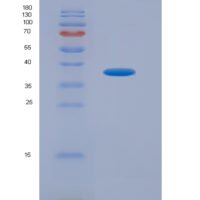
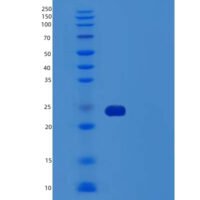
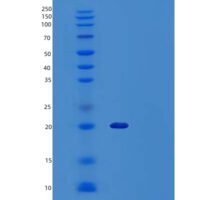
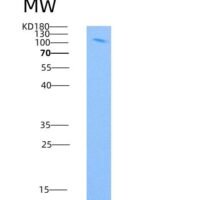
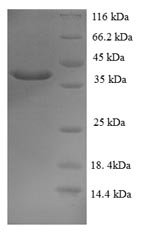
SDS-PAGE: Single band at expected molecular weight confirming purity.

ELISA: Suitable as coating antigen or detection standard.

Western Blot: Compatible with standard Western Blot protocols.

Protein Interaction: Validated for SPR (Surface Plasmon Resonance) and BLI (Bio-Layer Interferometry) studies.

Shipping: Shipped at ambient temperature. Lyophilized protein is stable during transit.

Storage: Store lyophilized protein at -20°C to -80°C. Reconstituted protein should be aliquoted and stored at -80°C. Avoid repeated freeze-thaw cycles.

Shelf Life: 12 months from date of receipt when stored as recommended.

Shipping Time: Orders placed before 2 PM EST ship same day. International orders typically deliver within 5-10 business days.

Protein Biology

Function

Coats the epithelia of the intestines and other mucus membrane-containing organs to provide a protective, lubricating barrier against particles and infectious agents at mucosal surfaces (PubMed:17058067, PubMed:19432394, PubMed:33031746). Major constituent of the colon mucus, which is mainly formed by large polymeric networks of MUC2 secreted by goblet cells that cover the exposed surfaces of intestine (PubMed:19432394, PubMed:33031746). MUC2 networks form hydrogels that guard the underlying epithelium from pathogens and other hazardous matter entering from the outside world, while permitting nutrient absorption and gas exchange (PubMed:33031746, PubMed:36206754). Acts as a divalent copper chaperone that protects intestinal cells from copper toxicity and facilitates nutritional copper unptake into cells (PubMed:36206754). Binds both Cu(2+) and its reduced form, Cu(1+), at two juxtaposed binding sites: Cu(2+), once reduced to Cu(1+) by vitamin C (ascorbate) or other dietary antioxidants, transits to the other binding site (PubMed:36206754). MUC2-bound Cu(1+) is protected from oxidation in aerobic environments, and can be released for nutritional delivery to cells (PubMed:36206754). Mucin gels store antimicrobial molecules that participate in innate immunity (PubMed:33031746). Mucin glycoproteins also house and feed the microbiome, lubricate tissue surfaces, and may facilitate the removal of contaminants and waste products from the body (PubMed:33031746). Goblet cells synthesize two forms of MUC2 mucin that differ in branched chain O-glycosylation and the site of production in the colon: a (1) 'thick' mucus that wraps the microbiota to form fecal pellets is produced in the proximal, ascending colon (By similarity). 'Thick' mucus transits along the descending colon and is lubricated by a (2) 'thin' MUC2 mucus produced in the distal colon which adheres to the 'thick' mucus (By similarity)

Subcellular Location

Secreted

Tissue Specificity

Colon, small intestine, colonic tumors, bronchus, cervix and gall bladder

Subunit

(Microbial infection) Interacts in vitro with L.monocytogenes internalin proteins InlB, InlC and InlJ; for InlC binding is slightly better at pH 5.5, (the pH of the intestine) than at pH 7.4

Gene: MUC2  |  Organism: Homo sapiens  |  Synonyms: Intestinal mucin-2
Key Publications

Frequently Asked Questions

How do I order or inquire about this product?

Fill out the Online Inquiry form with your required quantity and specifications. You can also email sales@biocrestsci.com. Our team typically responds within 4 business hours with a quote and availability confirmation.

What is the shipping and delivery time?

Orders placed before 2 PM EST ship the same day. Domestic (US) delivery typically takes 2-3 business days. International orders deliver within 5-10 business days. All products are shipped at ambient temperature with appropriate packaging to ensure stability.

How should I store this recombinant protein?

Lyophilized proteins should be stored at -20°C to -80°C upon receipt. After reconstitution, aliquot and store at -80°C. Avoid repeated freeze-thaw cycles. Shelf life is 12 months from date of receipt when stored as recommended.

What quality controls are performed on your products?

Each product undergoes SDS-PAGE purity analysis (typically >85-95%), endotoxin testing, and bioactivity validation. Products are validated for ELISA, Western Blot, and SPR/BLI applications as specified on this product page. A Certificate of Analysis (CoA) is available upon request.

Shopping Cart
Scroll to Top