Function
The PDCD1-mediated inhibitory pathway is exploited by tumors to attenuate anti-tumor immunity and escape destruction by the immune system, thereby facilitating tumor survival. The interaction with CD274/PDCD1L1 inhibits cytotoxic T lymphocytes (CTLs) effector function. The blockage of the PDCD1-mediated pathway results in the reversal of the exhausted T-cell phenotype and the normalization of the anti-tumor response, providing a rationale for cancer immunotherapy.
Biological Context
Subcellular Location: Cell membrane (Single-pass type I membrane protein)
Disease Association: Autoimmune disease, multisystem, infantile-onset, 4 (ADMIO4) : An autosomal recessive immunologic disorder characterized by lymphoproliferative autoimmunity and onset of various autoimmune diseases in early childhood. Death from autoimmune pneumonitis may occur. [The disease may be caused by variants affecting the gene represented in this entry. PDCD1 deficiency due to a homozygous frameshift mutation has been detected in a patient with severe tuberculosis and autoimmunity. The patient had depletion and dysfunction of multiple T and NK lymphocyte subsets and impaired gamma-IFN production]
Product Specifications
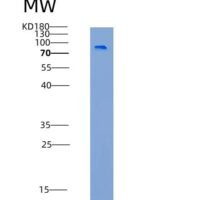
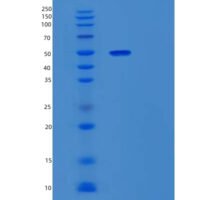
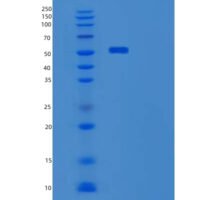
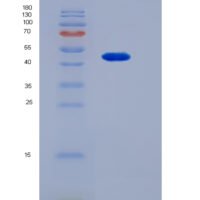
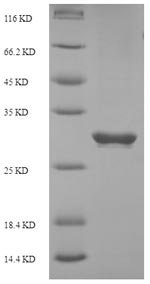
Recombinant Human Programmed cell death protein 1 (PDCD1), partial is a recombinant protein from Homo sapiens (Human), expressed in E.coli, covering amino acids 21-170aa, with N-terminal 6xHis-SUMO-tagged tag, molecular weight 32.8kDa, purity Greater than 90% as determined by SDS-PAGE.. Suitable for ELISA and Western Blot applications. Explore more CD proteins →