, ,

Recombinant Human Serine/threonine-protein kinase N1 (PKN1), partial

Recombinant Human Serine/threonine-protein kinase N1 (PKN1), partial — PKC-related serine/threonine-protein kinase involved in various processes such as regulation of the intermediate filaments of the actin cytoskeleton, cell migration, tumor cell invasion and transcr… Purity >85%.

SKU: BCRECP-001390 Categories: , ,

Product Specifications

Product SkuBCRECP-001390
Product DescriptionRecombinant Human Serine/threonine-protein kinase N1 (PKN1) Protein is expressed from E.coli with N-terminal 6xHis-tagged. It contains 190-467aa. [Accession | Q16512].
Uniprot No.Q16512
Gene NamesPKN1
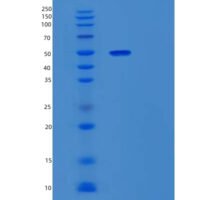
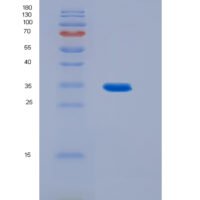
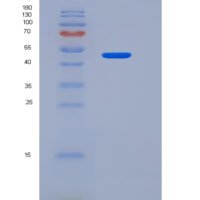
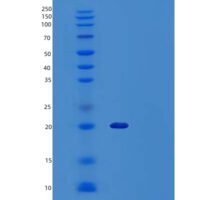
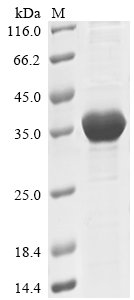
PurityGreater than 85% as determined by SDS-PAGE.
Expression SystemE.coli
Expression Region190-467aa
SpeciesHomo sapiens (Human)
Tag InfoN-terminal 6xHis-tagged
Molecular weight34.5kDa
ActivityPlease contact us to obtain bioactivity data.
BufferIf the delivery form is liquid, the default storage buffer is Tris/PBS-based buffer, 5%-50% glycerol. If the delivery form is lyophilized powder, the buffer before lyophilization is Tris/PBS-based buffer, 6% Trehalose.
StorageStore at -20°C/-80°C upon receipt, aliquoting is necessary for mutiple use. Avoid repeated freeze-thaw cycles.
Research AreasEpigenetics and Nuclear Signaling

Function

PKC-related serine/threonine-protein kinase involved in various processes such as regulation of the intermediate filaments of the actin cytoskeleton, cell migration, tumor cell invasion and transcription regulation. Part of a signaling cascade that begins with the activation of the adrenergic receptor ADRA1B and leads to the activation of MAPK14. Regulates the cytoskeletal network by phosphorylating proteins such as VIM and neurofilament proteins NEFH, NEFL and NEFM, leading to inhibit their polymerization.

Biological Context

Subcellular Location: Cytoplasm; Nucleus; Endosome; Cell membrane (Peripheral membrane protein); Cleavage furrow; Midbody
Tissue Specificity: Found ubiquitously. Expressed in heart, brain, placenta, lung, skeletal muscle, kidney and pancreas. Expressed in numerous tumor cell lines, especially in breast tumor cells

Product Specifications

Recombinant Human Serine/threonine-protein kinase N1 (PKN1), partial is a recombinant protein from Homo sapiens (Human), expressed in E.coli, covering amino acids 190-467aa, with N-terminal 6xHis-tagged tag, molecular weight 34.5kDa, purity Greater than 85% as determined by SDS-PAGE.. Suitable for ELISA and Western Blot applications.

SDS-PAGE: Single band at expected molecular weight confirming purity.

ELISA: Suitable as coating antigen or detection standard.

Western Blot: Compatible with standard Western Blot protocols.

Protein Interaction: Validated for SPR (Surface Plasmon Resonance) and BLI (Bio-Layer Interferometry) studies.

Shipping: Shipped at ambient temperature. Lyophilized protein is stable during transit.

Storage: Store lyophilized protein at -20°C to -80°C. Reconstituted protein should be aliquoted and stored at -80°C. Avoid repeated freeze-thaw cycles.

Shelf Life: 12 months from date of receipt when stored as recommended.

Shipping Time: Orders placed before 2 PM EST ship same day. International orders typically deliver within 5-10 business days.

Protein Biology

Function

PKC-related serine/threonine-protein kinase involved in various processes such as regulation of the intermediate filaments of the actin cytoskeleton, cell migration, tumor cell invasion and transcription regulation. Part of a signaling cascade that begins with the activation of the adrenergic receptor ADRA1B and leads to the activation of MAPK14. Regulates the cytoskeletal network by phosphorylating proteins such as VIM and neurofilament proteins NEFH, NEFL and NEFM, leading to inhibit their polymerization. Phosphorylates 'Ser-575', 'Ser-637' and 'Ser-669' of MAPT/Tau, lowering its ability to bind to microtubules, resulting in disruption of tubulin assembly. Acts as a key coactivator of androgen receptor (AR)-dependent transcription, by being recruited to AR target genes and specifically mediating phosphorylation of 'Thr-11' of histone H3 (H3T11ph), a specific tag for epigenetic transcriptional activation that promotes demethylation of histone H3 'Lys-9' (H3K9me) by KDM4C/JMJD2C. Phosphorylates HDAC5, HDAC7 and HDAC9, leading to impair their import in the nucleus. Phosphorylates 'Thr-38' of PPP1R14A, 'Ser-159', 'Ser-163' and 'Ser-170' of MARCKS, and GFAP. Able to phosphorylate RPS6 in vitro

Subcellular Location

Cytoplasm; Nucleus; Endosome; Cell membrane (Peripheral membrane protein); Cleavage furrow; Midbody

Tissue Specificity

Found ubiquitously. Expressed in heart, brain, placenta, lung, skeletal muscle, kidney and pancreas. Expressed in numerous tumor cell lines, especially in breast tumor cells

Subunit

(Microbial infection) Interacts (via the second REM repeat) with S.typhimurium E3 ubiquitin-protein ligase SspH1 (via the leucine-rich repeat region) (PubMed:16611232, PubMed:24248594)

Gene: PKN1  |  Organism: Homo sapiens  |  Synonyms: Protease-activated kinase 1; Protein kinase C-like 1; Protein kinase C-like PKN; Protein kinase PKN-alpha; Protein-kinase C-related kinase 1; Serine-threonine protein kinase N
Key Publications

Frequently Asked Questions

How do I order or inquire about this product?

Fill out the Online Inquiry form with your required quantity and specifications. You can also email sales@biocrestsci.com. Our team typically responds within 4 business hours with a quote and availability confirmation.

What is the shipping and delivery time?

Orders placed before 2 PM EST ship the same day. Domestic (US) delivery typically takes 2-3 business days. International orders deliver within 5-10 business days. All products are shipped at ambient temperature with appropriate packaging to ensure stability.

How should I store this recombinant protein?

Lyophilized proteins should be stored at -20°C to -80°C upon receipt. After reconstitution, aliquot and store at -80°C. Avoid repeated freeze-thaw cycles. Shelf life is 12 months from date of receipt when stored as recommended.

What quality controls are performed on your products?

Each product undergoes SDS-PAGE purity analysis (typically >85-95%), endotoxin testing, and bioactivity validation. Products are validated for ELISA, Western Blot, and SPR/BLI applications as specified on this product page. A Certificate of Analysis (CoA) is available upon request.

Shopping Cart
Scroll to Top