Recombinant Human Phospholipase A2 group V (PLA2G5)

Recombinant Human Phospholipase A2 group V (PLA2G5) — Secretory calcium-dependent phospholipase A2 that primarily targets extracellular phospholipids. Purity >90%.

SKU: BCRECP-001393 Category:

Product Specifications

Product SkuBCRECP-001393
Product DescriptionRecombinant Human Phospholipase A2 group V (PLA2G5) Protein is expressed from Yeast with N-terminal 6xHis-tagged. It contains 21-138aa. [Accession | P39877].
Uniprot No.P39877
Gene NamesPLA2G5
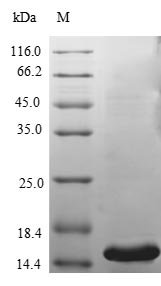
PurityGreater than 90% as determined by SDS-PAGE.
Expression SystemYeast
Expression Region21-138aa
SpeciesHomo sapiens (Human)
Tag InfoN-terminal 6xHis-tagged
Molecular weight15.6kDa
ActivityPlease contact us to obtain bioactivity data.
BufferIf the delivery form is liquid, the default storage buffer is Tris/PBS-based buffer, 5%-50% glycerol. If the delivery form is lyophilized powder, the buffer before lyophilization is Tris/PBS-based buffer, 6% Trehalose.
StorageStore at -20°C/-80°C upon receipt, aliquoting is necessary for mutiple use. Avoid repeated freeze-thaw cycles.
Research AreasCardiovascular

Function

Secretory calcium-dependent phospholipase A2 that primarily targets extracellular phospholipids. Hydrolyzes the ester bond of the fatty acyl group attached at sn-2 position of phospholipids (phospholipase A2 activity), preferentially releasing fatty acyl groups with a low degree of unsaturation such as oleoyl (C18:1) and linoleoyl (C18:2) groups. Hydrolyzes low-density lipoprotein (LDL) phospholipids releasing unsaturated fatty acids that drive macrophage polarization toward an M2 phenotype.

Biological Context

Subcellular Location: Secreted; Cell membrane; Cytoplasmic vesicle, phagosome; Recycling endosome; Golgi apparatus, cis-Golgi network; Golgi apparatus, trans-Golgi network
Tissue Specificity: Heart, placenta and less abundantly, in lung. Detected in the outer and inner plexiform layers of the retina (at protein level). Expressed in monocytes and macrophages
Disease Association: Fleck retina, familial benign (FRFB) : An autosomal recessive condition associated with a distinctive retinal appearance and no apparent visual or electrophysiologic deficits. Affected individuals are asymptomatic, but fundus examination reveals a striking pattern of diffuse, yellow-white, fleck-like lesions extending to the far periphery of the retina but sparing the foveal region. [The disease is caused by variants affecting the gene represented in this entry]
Pathway: Lipid metabolism; leukotriene C4 biosynthesis

Product Specifications

Recombinant Human Phospholipase A2 group V (PLA2G5) is a recombinant protein from Homo sapiens (Human), expressed in Yeast, covering amino acids 21-138aa, with N-terminal 6xHis-tagged tag, molecular weight 15.6kDa, purity Greater than 90% as determined by SDS-PAGE.. Suitable for ELISA and Western Blot applications.
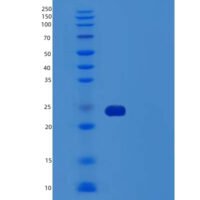
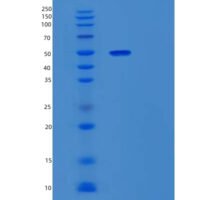
SDS-PAGE: Single band at expected molecular weight confirming purity.

ELISA: Suitable as coating antigen or detection standard.

Western Blot: Compatible with standard Western Blot protocols.

Protein Interaction: Validated for SPR (Surface Plasmon Resonance) and BLI (Bio-Layer Interferometry) studies.

Shipping: Shipped at ambient temperature. Lyophilized protein is stable during transit.

Storage: Store lyophilized protein at -20°C to -80°C. Reconstituted protein should be aliquoted and stored at -80°C. Avoid repeated freeze-thaw cycles.

Shelf Life: 12 months from date of receipt when stored as recommended.

Shipping Time: Orders placed before 2 PM EST ship same day. International orders typically deliver within 5-10 business days.

Protein Biology

Function

Secretory calcium-dependent phospholipase A2 that primarily targets extracellular phospholipids (PubMed:8300559). Hydrolyzes the ester bond of the fatty acyl group attached at sn-2 position of phospholipids (phospholipase A2 activity), preferentially releasing fatty acyl groups with a low degree of unsaturation such as oleoyl (C18:1) and linoleoyl (C18:2) groups (PubMed:14998370, PubMed:23533611, PubMed:8300559). Hydrolyzes low-density lipoprotein (LDL) phospholipids releasing unsaturated fatty acids that drive macrophage polarization toward an M2 phenotype (By similarity). May act in an autocrine and paracrine manner. Contributes to lipid remodeling of cellular membranes at different subcellular locations and generation of lipid mediators involved in pathogen clearance. Cleaves sn-2 fatty acyl chains of cardiolipin, a major component of the inner membrane of mitochondria and bacterial membranes (PubMed:23533611). Promotes phagocytosis of bacteria in macrophages through production of lysophosphatidylethanolamines (PubMed:25725101). Displays bactericidal activity against Gram-positive bacteria by directly hydrolyzing phospholipids of the bacterial membrane (PubMed:11694541). Promotes phagocytosis and killing of ingested fungi likely through controlling phagosome-lysosome fusion and phagosome maturation (By similarity). Plays a role in biosynthesis of cysteinyl leukotrienes (CysLTs) in myeloid cells (PubMed:12124392, PubMed:12796497). In eosinophils, triggers perinuclear arachidonate release and LTC4 synthesis in a PLA2G4A-independent way (PubMed:12796497). In neutrophils, amplifies CysLTs biosynthesis initiated by PLA2G4A (PubMed:12124392). Promotes immune complex clearance in macrophages via stimulating synthesis of CysLTs, which act through CYSLTR1 to trigger phagocytosis (By similarity). May regulate antigen processing in antigen-presenting cells (By similarity). In pulmonary macrophages regulates IL33 production required for activation of group 2 innate lymphoid cells (By similarity). May play a role in the biosynthesis of N-acyl ethanolamines that regulate energy metabolism. Hydrolyzes N-acyl phosphatidylethanolamines to N-acyl lysophosphatidylethanolamines, which are further cleaved by a lysophospholipase D to release N-acyl ethanolamines (PubMed:14998370)

Subcellular Location

Secreted; Cell membrane; Cytoplasmic vesicle, phagosome; Recycling endosome; Golgi apparatus, cis-Golgi network; Golgi apparatus, trans-Golgi network

Disease Association

Fleck retina, familial benign (FRFB) : An autosomal recessive condition associated with a distinctive retinal appearance and no apparent visual or electrophysiologic deficits. Affected individuals are asymptomatic, but fundus examination reveals a striking pattern of diffuse, yellow-white, fleck-like lesions extending to the far periphery of the retina but sparing the foveal region. [The disease is caused by variants affecting the gene represented in this entry]

Tissue Specificity

Heart, placenta and less abundantly, in lung. Detected in the outer and inner plexiform layers of the retina (at protein level) (PubMed:22137173). Expressed in monocytes and macrophages (PubMed:25725101)

Pathway

Lipid metabolism; leukotriene C4 biosynthesis

Gene: PLA2G5  |  Organism: Homo sapiens  |  Synonyms: PLA2-10; Phosphatidylcholine 2-acylhydrolase 5
Key Publications

Frequently Asked Questions

How do I order or inquire about this product?

Fill out the Online Inquiry form with your required quantity and specifications. You can also email sales@biocrestsci.com. Our team typically responds within 4 business hours with a quote and availability confirmation.

What is the shipping and delivery time?

Orders placed before 2 PM EST ship the same day. Domestic (US) delivery typically takes 2-3 business days. International orders deliver within 5-10 business days. All products are shipped at ambient temperature with appropriate packaging to ensure stability.

How should I store this recombinant protein?

Lyophilized proteins should be stored at -20°C to -80°C upon receipt. After reconstitution, aliquot and store at -80°C. Avoid repeated freeze-thaw cycles. Shelf life is 12 months from date of receipt when stored as recommended.

What quality controls are performed on your products?

Each product undergoes SDS-PAGE purity analysis (typically >85-95%), endotoxin testing, and bioactivity validation. Products are validated for ELISA, Western Blot, and SPR/BLI applications as specified on this product page. A Certificate of Analysis (CoA) is available upon request.

Shopping Cart
Scroll to Top