Function
Serine protease that cleaves the inactive precursor plasminogen at a specific Arg-Val peptide bond, converting it into active plasmin. Secreted as an inactive zymogen, it is recruited and activated at the cell surface through interaction with the urokinase plasminogen activator receptor (uPAR). Cell-surface activation enables localized, plasmin-dependent pericellular proteolysis, regulating extracellular matrix degradation in cell migration and tissue remodeling.
Biological Context
Subcellular Location: Secreted
Tissue Specificity: Expressed in the prostate gland and prostate cancers
Disease Association: Quebec platelet disorder (QPD) : An autosomal dominant bleeding disorder due to a gain-of-function defect in fibrinolysis. Although affected individuals do not exhibit systemic fibrinolysis, they show delayed onset bleeding after challenge, such as surgery. The hallmark of the disorder is markedly increased PLAU levels within platelets, which causes intraplatelet plasmin generation and secondary degradation of alpha-granule proteins. [The disease is caused by variants affecting the gene represented in this entry]
Product Specifications
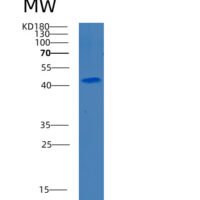
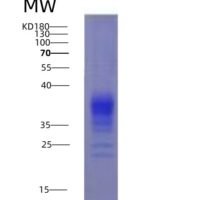
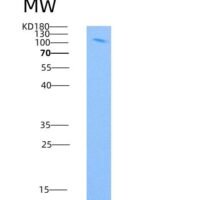
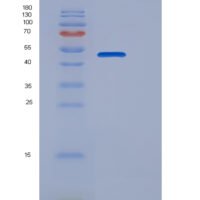
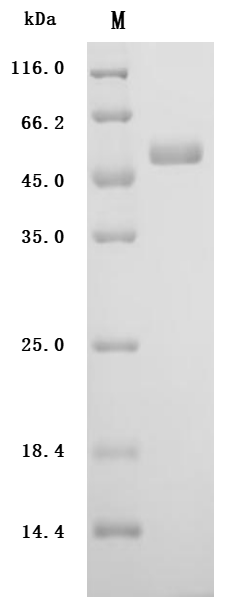
Recombinant Human Urokinase-type plasminogen activator (PLAU) (Active) is a recombinant protein from Homo sapiens (Human), expressed in Mammalian cell, covering amino acids 21-431aa, with C-terminal 10xHis-tagged tag, molecular weight 47.9kDa, purity Greater than 95% as determined by SDS-PAGE.. Suitable for ELISA and Western Blot applications. Explore more Kinase proteins →