Recombinant Human Patatin-like phospholipase domain-containing protein 2 (PNPLA2)

Recombinant Human Patatin-like phospholipase domain-containing protein 2 (PNPLA2) — Catalyzes the initial step in triglyceride hydrolysis in adipocyte and non-adipocyte lipid droplets. Purity >90%.

SKU: BCRECP-001411 Category:

Product Specifications

Product SkuBCRECP-001411
Product DescriptionRecombinant Human Patatin-like phospholipase domain-containing protein 2 (PNPLA2) Protein is expressed from E.coli with N-terminal 6xHis-SUMO-tagged. It contains 1-504aa. [Accession | Q96AD5].
Uniprot No.Q96AD5
Gene NamesPNPLA2
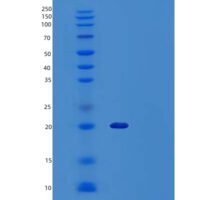
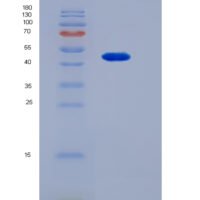
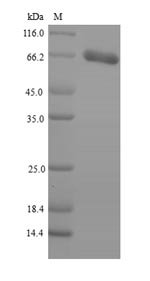
PurityGreater than 90% as determined by SDS-PAGE.
Expression SystemE.coli
Expression Region1-504aa
SpeciesHomo sapiens (Human)
Tag InfoN-terminal 6xHis-SUMO-tagged
Molecular weight71.3kDa
ActivityPlease contact us to obtain bioactivity data.
BufferIf the delivery form is liquid, the default storage buffer is Tris/PBS-based buffer, 5%-50% glycerol. If the delivery form is lyophilized powder, the buffer before lyophilization is Tris/PBS-based buffer, 6% Trehalose.
StorageStore at -20°C/-80°C upon receipt, aliquoting is necessary for mutiple use. Avoid repeated freeze-thaw cycles.
Research AreasCardiovascular

Function

Catalyzes the initial step in triglyceride hydrolysis in adipocyte and non-adipocyte lipid droplets. Exhibits a strong preference for the hydrolysis of long-chain fatty acid esters at the sn-2 position of the glycerol backbone and acts coordinately with LIPE/HLS and DGAT2 within the lipolytic cascade. Also possesses acylglycerol transacylase and phospholipase A2 activities.

Biological Context

Subcellular Location: Lipid droplet; Cell membrane (Multi-pass membrane protein); Cytoplasm
Tissue Specificity: Highest expression in adipose tissue. Also detected in heart, skeletal muscle, and portions of the gastrointestinal tract. Detected in normal retina and retinoblastoma cells. Detected in retinal pigment epithelium and, at lower intensity, in the inner segments of photoreceptors and in the ganglion cell layer of the neural retina (at protein level)
Disease Association: [Genetic variations in PNPLA2 may be associated with risk of diabetes mellitus type 2] | Neutral lipid storage disease with myopathy (NLSDM) : Neutral lipid storage disorder (NLSD) with myopathy but without ichthyosis. NLSDs are characterized by the presence of triglyceride-containing cytoplasmic droplets in leukocytes and in other tissues, including bone marrow, skin, and muscle. Individuals with NLSDM did not show obesity, in spite of a defect in triglyceride degradation in fibroblasts and in marked triglyceride storage in liver, muscles, and other visceral cells. [The disease is caused by variants affecting the gene represented in this entry]
Pathway: Glycerolipid metabolism; triacylglycerol degradation

Product Specifications

Recombinant Human Patatin-like phospholipase domain-containing protein 2 (PNPLA2) is a recombinant protein from Homo sapiens (Human), expressed in E.coli, covering amino acids 1-504aa, with N-terminal 6xHis-SUMO-tagged tag, molecular weight 71.3kDa, purity Greater than 90% as determined by SDS-PAGE.. Suitable for ELISA and Western Blot applications.
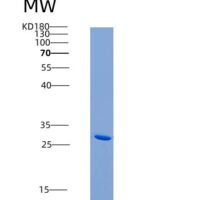
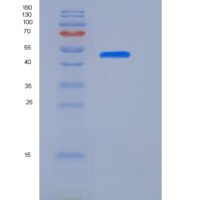
SDS-PAGE: Single band at expected molecular weight confirming purity.

ELISA: Suitable as coating antigen or detection standard.

Western Blot: Compatible with standard Western Blot protocols.

Protein Interaction: Validated for SPR (Surface Plasmon Resonance) and BLI (Bio-Layer Interferometry) studies.

Shipping: Shipped at ambient temperature. Lyophilized protein is stable during transit.

Storage: Store lyophilized protein at -20°C to -80°C. Reconstituted protein should be aliquoted and stored at -80°C. Avoid repeated freeze-thaw cycles.

Shelf Life: 12 months from date of receipt when stored as recommended.

Shipping Time: Orders placed before 2 PM EST ship same day. International orders typically deliver within 5-10 business days.

Protein Biology

Function

Catalyzes the initial step in triglyceride hydrolysis in adipocyte and non-adipocyte lipid droplets (PubMed:15364929, PubMed:15550674, PubMed:16150821, PubMed:16239926, PubMed:17603008, PubMed:34903883). Exhibits a strong preference for the hydrolysis of long-chain fatty acid esters at the sn-2 position of the glycerol backbone and acts coordinately with LIPE/HLS and DGAT2 within the lipolytic cascade (By similarity). Also possesses acylglycerol transacylase and phospholipase A2 activities (PubMed:15364929, PubMed:17032652, PubMed:17603008). Transfers fatty acid from triglyceride to retinol, hydrolyzes retinylesters, and generates 1,3-diacylglycerol from triglycerides (PubMed:17603008). Regulates adiposome size and may be involved in the degradation of adiposomes (PubMed:16239926). Catalyzes the formation of an ester bond between hydroxy fatty acids and fatty acids derived from triglycerides or diglycerides to generate fatty acid esters of hydroxy fatty acids (FAHFAs) in adipocytes (PubMed:35676490). Acts antagonistically with LDAH in regulation of cellular lipid stores (PubMed:28578400). Inhibits LDAH-stimulated lipid droplet fusion (PubMed:28578400). May play an important role in energy homeostasis (By similarity). May play a role in the response of the organism to starvation, enhancing hydrolysis of triglycerides and providing free fatty acids to other tissues to be oxidized in situations of energy depletion (By similarity)

Subcellular Location

Lipid droplet; Cell membrane (Multi-pass membrane protein); Cytoplasm

Disease Association

[Genetic variations in PNPLA2 may be associated with risk of diabetes mellitus type 2] | Neutral lipid storage disease with myopathy (NLSDM) : Neutral lipid storage disorder (NLSD) with myopathy but without ichthyosis. NLSDs are characterized by the presence of triglyceride-containing cytoplasmic droplets in leukocytes and in other tissues, including bone marrow, skin, and muscle. Individuals with NLSDM did not show obesity, in spite of a defect in triglyceride degradation in fibroblasts and in marked triglyceride storage in liver, muscles, and other visceral cells. [The disease is caused by variants affecting the gene represented in this entry]

Tissue Specificity

Highest expression in adipose tissue. Also detected in heart, skeletal muscle, and portions of the gastrointestinal tract. Detected in normal retina and retinoblastoma cells. Detected in retinal pigment epithelium and, at lower intensity, in the inner segments of photoreceptors and in the ganglion cell layer of the neural retina (at protein level)

Subunit

Interacts with ABHD5; this association stimulates PNPLA2 triglyceride hydrolase activity (By similarity). Interacts with SERPINF1; this interaction stimulates the phospholipase A2 activity of PNPLA2 (PubMed:17032652). Despite a colocalization in lipid droplets, it probably does not interact with PLIN (By similarity). Interacts with PLIN5; prevents interaction with ABHD5 (By similarity). Interacts with FAF2 (PubMed:23297223)

Pathway

Glycerolipid metabolism; triacylglycerol degradation

Gene: PNPLA2  |  Organism: Homo sapiens  |  Synonyms: Adipose triglyceride lipase; Calcium-independent phospholipase A2-zeta; Desnutrin; Pigment epithelium-derived factor receptor; TTS2.2; Transport-secretion protein 2
Key Publications

Frequently Asked Questions

How do I order or inquire about this product?

Fill out the Online Inquiry form with your required quantity and specifications. You can also email sales@biocrestsci.com. Our team typically responds within 4 business hours with a quote and availability confirmation.

What is the shipping and delivery time?

Orders placed before 2 PM EST ship the same day. Domestic (US) delivery typically takes 2-3 business days. International orders deliver within 5-10 business days. All products are shipped at ambient temperature with appropriate packaging to ensure stability.

How should I store this recombinant protein?

Lyophilized proteins should be stored at -20°C to -80°C upon receipt. After reconstitution, aliquot and store at -80°C. Avoid repeated freeze-thaw cycles. Shelf life is 12 months from date of receipt when stored as recommended.

What quality controls are performed on your products?

Each product undergoes SDS-PAGE purity analysis (typically >85-95%), endotoxin testing, and bioactivity validation. Products are validated for ELISA, Western Blot, and SPR/BLI applications as specified on this product page. A Certificate of Analysis (CoA) is available upon request.

Shopping Cart
Scroll to Top