Function
Protein C is a vitamin K-dependent serine protease that regulates blood coagulation by inactivating factors Va and VIIIa in the presence of calcium ions and phospholipids. Exerts a protective effect on the endothelial cell barrier function.
Biological Context
Subcellular Location: Secreted; Golgi apparatus; Endoplasmic reticulum
Tissue Specificity: Plasma; synthesized in the liver
Disease Association: Thrombophilia due to protein C deficiency, autosomal dominant (THPH3) : A hemostatic disorder characterized by impaired regulation of blood coagulation and a tendency to recurrent venous thrombosis. Individuals with decreased amounts of protein C are classically referred to as having type I protein C deficiency and those with normal amounts of a functionally defective protein as having type II deficiency. [The disease is caused by variants affecting the gene represented in this entry] | Thrombophilia due to protein C deficiency, autosomal recessive (THPH4) : A hemostatic disorder characterized by impaired regulation of blood coagulation and a tendency to recurrent venous thrombosis. It results in a thrombotic condition that can manifest as a severe neonatal disorder or as a milder disorder with late-onset thrombophilia. The severe form leads to neonatal death through massive neonatal venous thrombosis. Often associated with ecchymotic skin lesions which can turn necrotic called purpura fulminans, this disorder is very rare. [The disease is caused by variants affecting the gene represented in this entry]
Product Specifications
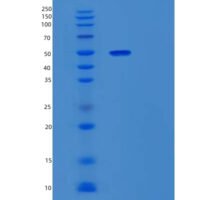
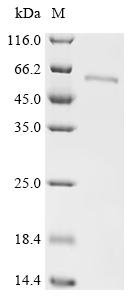
Recombinant Human Vitamin K-dependent protein C (PROC) is a recombinant protein from Homo sapiens (Human), expressed in E.coli, covering amino acids 43-461aa, with C-terminal 6xHis-tagged tag, molecular weight 54.2kDa, purity Greater than 95% as determined by SDS-PAGE.. Suitable for ELISA and Western Blot applications.