Recombinant Human Nuclear receptor ROR-alpha (RORA)

Recombinant Human Nuclear receptor ROR-alpha (RORA) — Nuclear receptor that binds DNA as a monomer to ROR response elements (RORE) containing a single core motif half-site 5′-AGGTCA-3′ preceded by a short A-T-rich sequence. Purity >85%.

SKU: BCRECP-001556 Category:

Product Specifications

Product SkuBCRECP-001556
Product DescriptionRecombinant Human Nuclear receptor ROR-alpha (RORA) Protein is expressed from E.coli with N-terminal 6xHis-tagged. It contains 1-468aa. [Accession | P35398].
Uniprot No.P35398
Gene NamesRORA
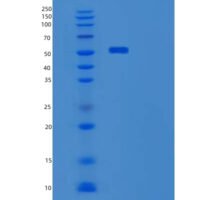
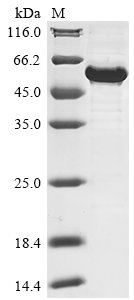
PurityGreater than 85% as determined by SDS-PAGE.
Expression SystemE.coli
Expression Region1-468aa
SpeciesHomo sapiens (Human)
Tag InfoN-terminal 6xHis-tagged
Molecular weight57.6kDa
ActivityPlease contact us to obtain bioactivity data.
BufferIf the delivery form is liquid, the default storage buffer is Tris/PBS-based buffer, 5%-50% glycerol. If the delivery form is lyophilized powder, the buffer before lyophilization is Tris/PBS-based buffer, 6% Trehalose.
StorageStore at -20°C/-80°C upon receipt, aliquoting is necessary for mutiple use. Avoid repeated freeze-thaw cycles.
Research AreasCancer

Function

Nuclear receptor that binds DNA as a monomer to ROR response elements (RORE) containing a single core motif half-site 5'-AGGTCA-3' preceded by a short A-T-rich sequence. Key regulator of embryonic development, cellular differentiation, immunity, circadian rhythm as well as lipid, steroid, xenobiotics and glucose metabolism. Considered to have intrinsic transcriptional activity, have some natural ligands like oxysterols that act as agonists (25-hydroxycholesterol) or inverse agonists (7-oxygenated sterols), enhancing or repressing the transcriptional activity, respectively.

Biological Context

Subcellular Location: Nucleus
Tissue Specificity: Widely expressed in a number of tissues. Expressed in both regulatory T-cells (Treg) and effector T-cells (Teff). Isoform 4: Highly expressed in the central nervous system, including in the cerebellum
Disease Association: Intellectual developmental disorder with or without epilepsy or cerebellar ataxia (IDDECA) : An autosomal dominant neurodevelopmental disorder that manifests with variable features of mild-to-severe intellectual disability, developmental delay, autism spectrum disorder, cerebellar ataxia and epilepsy. [The disease is caused by variants affecting the gene represented in this entry]

Product Specifications

Recombinant Human Nuclear receptor ROR-alpha (RORA) is a recombinant protein from Homo sapiens (Human), expressed in E.coli, covering amino acids 1-468aa, with N-terminal 6xHis-tagged tag, molecular weight 57.6kDa, purity Greater than 85% as determined by SDS-PAGE.. Suitable for ELISA and Western Blot applications.
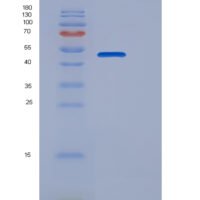
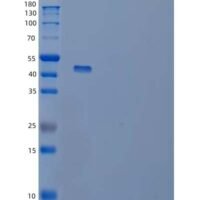
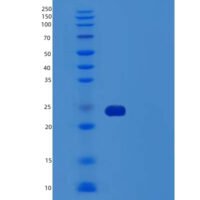
SDS-PAGE: Single band at expected molecular weight confirming purity.

ELISA: Suitable as coating antigen or detection standard.

Western Blot: Compatible with standard Western Blot protocols.

Protein Interaction: Validated for SPR (Surface Plasmon Resonance) and BLI (Bio-Layer Interferometry) studies.

Shipping: Shipped at ambient temperature. Lyophilized protein is stable during transit.

Storage: Store lyophilized protein at -20°C to -80°C. Reconstituted protein should be aliquoted and stored at -80°C. Avoid repeated freeze-thaw cycles.

Shelf Life: 12 months from date of receipt when stored as recommended.

Shipping Time: Orders placed before 2 PM EST ship same day. International orders typically deliver within 5-10 business days.

Protein Biology

Function

Nuclear receptor that binds DNA as a monomer to ROR response elements (RORE) containing a single core motif half-site 5'-AGGTCA-3' preceded by a short A-T-rich sequence. Key regulator of embryonic development, cellular differentiation, immunity, circadian rhythm as well as lipid, steroid, xenobiotics and glucose metabolism. Considered to have intrinsic transcriptional activity, have some natural ligands like oxysterols that act as agonists (25-hydroxycholesterol) or inverse agonists (7-oxygenated sterols), enhancing or repressing the transcriptional activity, respectively. Recruits distinct combinations of cofactors to target genes regulatory regions to modulate their transcriptional expression, depending on the tissue, time and promoter contexts. Regulates genes involved in photoreceptor development including OPN1SW, OPN1SM and ARR3 and skeletal muscle development with MYOD1. Required for proper cerebellum development (PubMed:29656859). Regulates SHH gene expression, among others, to induce granule cells proliferation as well as expression of genes involved in calcium-mediated signal transduction. Regulates the circadian expression of several clock genes, including CLOCK, BMAL1, NPAS2 and CRY1. Competes with NR1D1 for binding to their shared DNA response element on some clock genes such as BMAL1, CRY1 and NR1D1 itself, resulting in NR1D1-mediated repression or RORA-mediated activation of clock genes expression, leading to the circadian pattern of clock genes expression. Therefore influences the period length and stability of the clock. Regulates genes involved in lipid metabolism such as apolipoproteins APOA1, APOA5, APOC3 and PPARG. In liver, has specific and redundant functions with RORC as positive or negative modulator of expression of genes encoding phase I and phase II proteins involved in the metabolism of lipids, steroids and xenobiotics, such as CYP7B1 and SULT2A1. Induces a rhythmic expression of some of these genes. In addition, interplays functionally with NR1H2 and NR1H3 for the regulation of genes involved in cholesterol metabolism. Also involved in the regulation of hepatic glucose metabolism through the modulation of G6PC1 and PCK1. In adipose tissue, plays a role as negative regulator of adipocyte differentiation, probably acting through dual mechanisms. May suppress CEBPB-dependent adipogenesis through direct interaction and PPARG-dependent adipogenesis through competition for DNA-binding. Downstream of IL6 and TGFB and synergistically with RORC isoform 2, is implicated in the lineage specification of uncommitted CD4(+) T-helper (T(H)) cells into T(H)17 cells, antagonizing the T(H)1 program. Probably regulates IL17 and IL17F expression on T(H) by binding to the essential enhancer conserved non-coding sequence 2 (CNS2) in the IL17-IL17F locus. Involved in hypoxia signaling by interacting with and activating the transcriptional activity of HIF1A. May inhibit cell growth in response to cellular stress. May exert an anti-inflammatory role by inducing CHUK expression and inhibiting NF-kappa-B signaling

Subcellular Location

Nucleus

Disease Association

Intellectual developmental disorder with or without epilepsy or cerebellar ataxia (IDDECA) : An autosomal dominant neurodevelopmental disorder that manifests with variable features of mild-to-severe intellectual disability, developmental delay, autism spectrum disorder, cerebellar ataxia and epilepsy. [The disease is caused by variants affecting the gene represented in this entry]

Tissue Specificity

Widely expressed in a number of tissues. Expressed in both regulatory T-cells (Treg) and effector T-cells (Teff) (PubMed:18354202, PubMed:7916608). Isoform 4: Highly expressed in the central nervous system, including in the cerebellum (PubMed:29656859)

Subunit

Monomer. Interacts (via the DNA-binding domain) with HIF1A; the interaction enhances HIF1A transcription under hypoxia through increasing protein stability. Interacts with CEBPB; the interaction disrupts the interaction CEBPB:EP300. Interacts with the coactivators NCOA2, PPARGC1A (via LXXLL motif), EP300 and MED1. Interacts with the corepressor NCOR1. Interacts with MAGED1 and CTNNB1. Interacts with CRY1 and PER2. Interacts (via AF-2 motif) with PROX1 (By similarity). Interacts with NRIP1. Isoform 4 interacts (via AF-2 motif) with isoform 1 of FOXP3 (via LXXLL motif)

Gene: RORA  |  Organism: Homo sapiens  |  Synonyms: Nuclear receptor RZR-alpha; Nuclear receptor subfamily 1 group F member 1; RAR-related orphan receptor A; Retinoid-related orphan receptor-alpha
Key Publications

Frequently Asked Questions

How do I order or inquire about this product?

Fill out the Online Inquiry form with your required quantity and specifications. You can also email sales@biocrestsci.com. Our team typically responds within 4 business hours with a quote and availability confirmation.

What is the shipping and delivery time?

Orders placed before 2 PM EST ship the same day. Domestic (US) delivery typically takes 2-3 business days. International orders deliver within 5-10 business days. All products are shipped at ambient temperature with appropriate packaging to ensure stability.

How should I store this recombinant protein?

Lyophilized proteins should be stored at -20°C to -80°C upon receipt. After reconstitution, aliquot and store at -80°C. Avoid repeated freeze-thaw cycles. Shelf life is 12 months from date of receipt when stored as recommended.

What quality controls are performed on your products?

Each product undergoes SDS-PAGE purity analysis (typically >85-95%), endotoxin testing, and bioactivity validation. Products are validated for ELISA, Western Blot, and SPR/BLI applications as specified on this product page. A Certificate of Analysis (CoA) is available upon request.

Shopping Cart
Scroll to Top