Recombinant Human Mothers against decapentaplegic homolog 6 (SMAD6)

Recombinant Human Mothers against decapentaplegic homolog 6 (SMAD6) — Acts as an inhibitory regulator of signaling mediated by the TGF-beta superfamily, with strong selectivity toward BMP-dependent pathways. Purity >85%.

SKU: BCRECP-001662 Category:

Product Specifications

Product SkuBCRECP-001662
Product DescriptionRecombinant Human Mothers against decapentaplegic homolog 6 (SMAD6) Protein is expressed from E.coli with N-terminal 10xHis-tagged and C-terminal Myc-tagged. It contains 1-496aa. [Accession | O43541].
Uniprot No.O43541
Gene NamesSMAD6
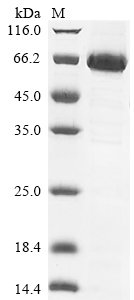
PurityGreater than 85% as determined by SDS-PAGE.
Expression SystemE.coli
Expression Region1-496aa
SpeciesHomo sapiens (Human)
Tag InfoN-terminal 10xHis-tagged and C-terminal Myc-tagged
Molecular weight60.9kDa
ActivityPlease contact us to obtain bioactivity data.
BufferIf the delivery form is liquid, the default storage buffer is Tris/PBS-based buffer, 5%-50% glycerol. If the delivery form is lyophilized powder, the buffer before lyophilization is Tris/PBS-based buffer, 6% Trehalose.
StorageStore at -20°C/-80°C upon receipt, aliquoting is necessary for mutiple use. Avoid repeated freeze-thaw cycles.
Research AreasEpigenetics and Nuclear Signaling

Function

Acts as an inhibitory regulator of signaling mediated by the TGF-beta superfamily, with strong selectivity toward BMP-dependent pathways. Suppresses IL1R-TLR signaling through its direct interaction with PEL1, preventing NF-kappa-B activation, nuclear translocation and NF-kappa-B-mediated expression of pro-inflammatory genes. Blocks the BMP-SMAD1 signaling pathway by competing with SMAD4 for receptor-activated SMAD1-binding.

Biological Context

Subcellular Location: Nucleus; Cytoplasm
Tissue Specificity: Expressed in the brain, heart, ovary, peripheral blood leukocytes, small intestine, spleen, thymus, bone marrow, fetal liver and lymph nodes
Disease Association: Aortic valve disease 2 (AOVD2) : A common defect in the aortic valve in which two rather than three leaflets are present. It is often associated with aortic valve calcification, stenosis and insufficiency. In extreme cases, the blood flow may be so restricted that the left ventricle fails to grow, resulting in hypoplastic left heart syndrome. [The disease is caused by variants affecting the gene represented in this entry. SMAD6 variants may contribute to increased risk of congenital cardiovascular malformations (CVM). CVM is a major cause of mortality and morbidity in childhood. In most sporadic cases that cannot be attributed to particular malformation syndromes or teratogenic exposures, there remains a substantial excess familial risk, indicating a significant genetic contribution to disease susceptibility ] | Craniosynostosis 7 (CRS7) : A form of craniosynostosis, a primary abnormality of skull growth involving premature fusion of one or more cranial sutures. The growth velocity of the skull often cannot match that of the developing brain resulting in an abnormal head shape and, in some cases, increased intracranial pressure, which must be treated promptly to avoid permanent neurodevelopmental disability. [Disease susceptibility is associated with variants affecting the gene represented in this entry. Rare heterozygous SMAD6 variants have been reported to be strongly associated with non-syndromic midline craniosynostosis, confering a very high risk for disease development in the presence of a common risk allele (rs1884302) near the BMP2 locus. The modifier role of rs1884302 SNP on craniosynostosis development associated with SMAD6 variants has not been confirmed in further studies ] | Radioulnar synostosis, non-syndromic (RUS) : An autosomal dominant disease characterized by proximal fusion of the radius and ulna resulting in extremely limited pronation and supination of the forearm. There are two disease forms. Radioulnar synostosis type 1 is characterized by a proximal fusion between the radius and ulna, and the radial head is absent. Radioulnar synostosis type 2 is characterized by a fusion just distal to the proximal radial epiphysis, and congenital dislocation of the radial head. In radioulnar synostosis type 2 there is also a restriction of extension at the elbow. [Disease susceptibility is associated with variants affecting the gene represented in this entry]

Product Specifications

Recombinant Human Mothers against decapentaplegic homolog 6 (SMAD6) is a recombinant protein from Homo sapiens (Human), expressed in E.coli, covering amino acids 1-496aa, with N-terminal 10xHis-tagged and C-terminal Myc-tagged tag, molecular weight 60.9kDa, purity Greater than 85% as determined by SDS-PAGE.. Suitable for ELISA and Western Blot applications.
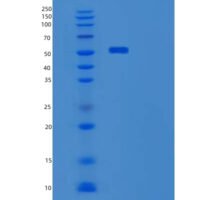
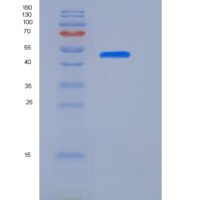
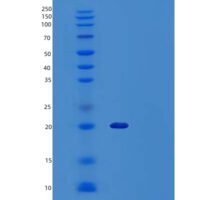
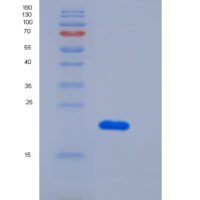
SDS-PAGE: Single band at expected molecular weight confirming purity.

ELISA: Suitable as coating antigen or detection standard.

Western Blot: Compatible with standard Western Blot protocols.

Protein Interaction: Validated for SPR (Surface Plasmon Resonance) and BLI (Bio-Layer Interferometry) studies.

Shipping: Shipped at ambient temperature. Lyophilized protein is stable during transit.

Storage: Store lyophilized protein at -20°C to -80°C. Reconstituted protein should be aliquoted and stored at -80°C. Avoid repeated freeze-thaw cycles.

Shelf Life: 12 months from date of receipt when stored as recommended.

Shipping Time: Orders placed before 2 PM EST ship same day. International orders typically deliver within 5-10 business days.

Protein Biology

Function

Acts as an inhibitory regulator of signaling mediated by the TGF-beta superfamily, with strong selectivity toward BMP-dependent pathways (PubMed:10647776, PubMed:10708948, PubMed:10708949, PubMed:16951688, PubMed:22275001, PubMed:30848080, PubMed:9436979, PubMed:9759503). Suppresses IL1R-TLR signaling through its direct interaction with PEL1, preventing NF-kappa-B activation, nuclear translocation and NF-kappa-B-mediated expression of pro-inflammatory genes (PubMed:16951688). Blocks the BMP-SMAD1 signaling pathway by competing with SMAD4 for receptor-activated SMAD1-binding (PubMed:30848080, PubMed:9436979). Associates with regulatory elements in target promoter regions (PubMed:16491121). Functions as an adapter protein that recruits ubiquitin ligases, including SMURF1 and, in some contexts, SMURF2, promoting proteasomal degradation of signaling components and transcription factors such as RUNX2, TBX6, BMPR1A and MYD88 (PubMed:16299379, PubMed:19561075, PubMed:28847510)

Subcellular Location

Nucleus; Cytoplasm

Disease Association

Aortic valve disease 2 (AOVD2) : A common defect in the aortic valve in which two rather than three leaflets are present. It is often associated with aortic valve calcification, stenosis and insufficiency. In extreme cases, the blood flow may be so restricted that the left ventricle fails to grow, resulting in hypoplastic left heart syndrome. [The disease is caused by variants affecting the gene represented in this entry. SMAD6 variants may contribute to increased risk of congenital cardiovascular malformations (CVM). CVM is a major cause of mortality and morbidity in childhood. In most sporadic cases that cannot be attributed to particular malformation syndromes or teratogenic exposures, there remains a substantial excess familial risk, indicating a significant genetic contribution to disease susceptibility (PubMed:22275001)] | Craniosynostosis 7 (CRS7) : A form of craniosynostosis, a primary abnormality of skull growth involving premature fusion of one or more cranial sutures. The growth velocity of the skull often cannot match that of the developing brain resulting in an abnormal head shape and, in some cases, increased intracranial pressure, which must be treated promptly to avoid permanent neurodevelopmental disability. [Disease susceptibility is associated with variants affecting the gene represented in this entry. Rare heterozygous SMAD6 variants have been reported to be strongly associated with non-syndromic midline craniosynostosis, confering a very high risk for disease development in the presence of a common risk allele (rs1884302) near the BMP2 locus (PubMed:27606499). The modifier role of rs1884302 SNP on craniosynostosis development associated with SMAD6 variants has not been confirmed in further studies (PubMed:32499606)] | Radioulnar synostosis, non-syndromic (RUS) : An autosomal dominant disease characterized by proximal fusion of the radius and ulna resulting in extremely limited pronation and supination of the forearm. There are two disease forms. Radioulnar synostosis type 1 is characterized by a proximal fusion between the radius and ulna, and the radial head is absent. Radioulnar synostosis type 2 is characterized by a fusion just distal to the proximal radial epiphysis, and congenital dislocation of the radial head. In radioulnar synostosis type 2 there is also a restriction of extension at the elbow. [Disease susceptibility is associated with variants affecting the gene represented in this entry]

Tissue Specificity

Expressed in the brain, heart, ovary, peripheral blood leukocytes, small intestine, spleen, thymus, bone marrow, fetal liver and lymph nodes

Subunit

Interacts with NEDD4L (By similarity). Interacts with WWP1 (By similarity). Interacts with STAMBP and PRKX. Interacts with RNF111 and AXIN1. Interacts with TGF-beta type I receptor superfamily members, including ACVR1B, BMPR1B and TGFBR1. In response to BMP2, but not to TGFB treatment, interacts with SMAD1, but not with SMAD2, nor with SMAD4; this interaction may inhibit SMAD1 binding to SMAD4. Interacts with HOXC8 and HOXC9. Interacts with PELI1; this interaction interferes with PELI1 complex formation with TRAF6, IRAK1, IRAK4 and MYD88 in response to IL1B and hence negatively regulates IL1R-TLR signaling. Interacts with TSC22D1/TSC-22 (PubMed:21791611). Interacts with RUNX2; this interaction promotes SMURF1-mediated proteasomal degradation of RUNX2 (PubMed:16299379). Interacts with BMPR1A; this interaction promotes SMURF1-mediated proteasomal degradation of BMPR1A (PubMed:28847510). Interacts with TBX6; this interaction promotes SMURF1-mediated proteasomal degradation of TBX6 (PubMed:19561075). Interacts with MYD88; this interaction promotes SMURF1-mediated proteasomal degradation of MYD88 (By similarity)

Gene: SMAD6  |  Organism: Homo sapiens  |  Synonyms: Mothers against decapentaplegic homolog 6
Key Publications

Frequently Asked Questions

How do I order or inquire about this product?

Fill out the Online Inquiry form with your required quantity and specifications. You can also email sales@biocrestsci.com. Our team typically responds within 4 business hours with a quote and availability confirmation.

What is the shipping and delivery time?

Orders placed before 2 PM EST ship the same day. Domestic (US) delivery typically takes 2-3 business days. International orders deliver within 5-10 business days. All products are shipped at ambient temperature with appropriate packaging to ensure stability.

How should I store this recombinant protein?

Lyophilized proteins should be stored at -20°C to -80°C upon receipt. After reconstitution, aliquot and store at -80°C. Avoid repeated freeze-thaw cycles. Shelf life is 12 months from date of receipt when stored as recommended.

What quality controls are performed on your products?

Each product undergoes SDS-PAGE purity analysis (typically >85-95%), endotoxin testing, and bioactivity validation. Products are validated for ELISA, Western Blot, and SPR/BLI applications as specified on this product page. A Certificate of Analysis (CoA) is available upon request.

Shopping Cart
Scroll to Top