Recombinant Human TAR DNA-binding protein 43 (TARDBP), partial

Recombinant Human TAR DNA-binding protein 43 (TARDBP), partial — RNA-binding protein that is involved in various steps of RNA biogenesis and processing. Purity >85%.

SKU: BCRECP-001737 Category:

Product Specifications

Product SkuBCRECP-001737
Product DescriptionRecombinant Human TAR DNA-binding protein 43 (TARDBP) Protein is expressed from E.coli with N-terminal 6xHis-tagged. It contains 25-181aa. [Accession | Q13148].
Uniprot No.Q13148
Gene NamesTARDBP
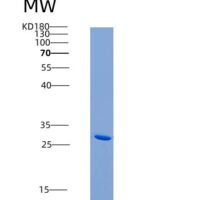
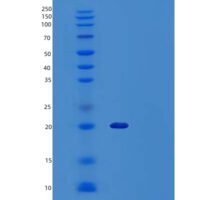
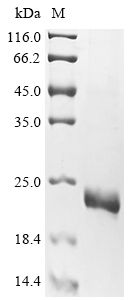
PurityGreater than 85% as determined by SDS-PAGE.
Expression SystemE.coli
Expression Region25-181aa
SpeciesHomo sapiens (Human)
Tag InfoN-terminal 6xHis-tagged
Molecular weight21.8kDa
ActivityPlease contact us to obtain bioactivity data.
BufferIf the delivery form is liquid, the default storage buffer is Tris/PBS-based buffer, 5%-50% glycerol. If the delivery form is lyophilized powder, the buffer before lyophilization is Tris/PBS-based buffer, 6% Trehalose.
StorageStore at -20°C/-80°C upon receipt, aliquoting is necessary for mutiple use. Avoid repeated freeze-thaw cycles.
Research AreasMicrobiology

Function

RNA-binding protein that is involved in various steps of RNA biogenesis and processing. Preferentially binds, via its two RNA recognition motifs RRM1 and RRM2, to GU-repeats on RNA molecules predominantly localized within long introns and in the 3'UTR of mRNAs. In turn, regulates the splicing of many non-coding and protein-coding RNAs including proteins involved in neuronal survival, as well as mRNAs that encode proteins relevant for neurodegenerative diseases.

Biological Context

Subcellular Location: Nucleus; Cytoplasm; Cytoplasm, Stress granule; Mitochondrion
Tissue Specificity: Ubiquitously expressed. In particular, expression is high in pancreas, placenta, lung, genital tract and spleen
Disease Association: Amyotrophic lateral sclerosis 10 (ALS10) : A neurodegenerative disorder affecting upper motor neurons in the brain and lower motor neurons in the brain stem and spinal cord, resulting in fatal paralysis. Sensory abnormalities are absent. The pathologic hallmarks of the disease include pallor of the corticospinal tract due to loss of motor neurons, presence of ubiquitin-positive inclusions within surviving motor neurons, and deposition of pathologic aggregates. The etiology of amyotrophic lateral sclerosis is likely to be multifactorial, involving both genetic and environmental factors. The disease is inherited in 5-10% of the cases. [The disease is caused by variants affecting the gene represented in this entry. Neurodegeneration is caused by activation of the cGAS-STING pathway: defects in TARDBP trigger mitochondrial DNA release into the cytosol via the permeability transition pore. Released mitochondrial DNA is then detected by CGAS, leading to activation of the cGAS-STING pathway, triggering type-I interferon production and autoinflammation ]

Product Specifications

Recombinant Human TAR DNA-binding protein 43 (TARDBP), partial is a recombinant protein from Homo sapiens (Human), expressed in E.coli, covering amino acids 25-181aa, with N-terminal 6xHis-tagged tag, molecular weight 21.8kDa, purity Greater than 85% as determined by SDS-PAGE.. Suitable for ELISA and Western Blot applications.
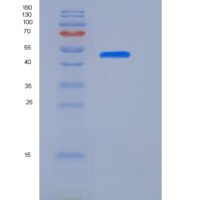
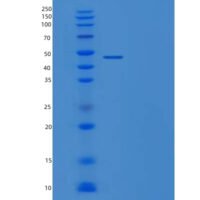
SDS-PAGE: Single band at expected molecular weight confirming purity.

ELISA: Suitable as coating antigen or detection standard.

Western Blot: Compatible with standard Western Blot protocols.

Protein Interaction: Validated for SPR (Surface Plasmon Resonance) and BLI (Bio-Layer Interferometry) studies.

Shipping: Shipped at ambient temperature. Lyophilized protein is stable during transit.

Storage: Store lyophilized protein at -20°C to -80°C. Reconstituted protein should be aliquoted and stored at -80°C. Avoid repeated freeze-thaw cycles.

Shelf Life: 12 months from date of receipt when stored as recommended.

Shipping Time: Orders placed before 2 PM EST ship same day. International orders typically deliver within 5-10 business days.

Protein Biology

Function

RNA-binding protein that is involved in various steps of RNA biogenesis and processing (PubMed:23519609). Preferentially binds, via its two RNA recognition motifs RRM1 and RRM2, to GU-repeats on RNA molecules predominantly localized within long introns and in the 3'UTR of mRNAs (PubMed:23519609, PubMed:24240615, PubMed:24464995). In turn, regulates the splicing of many non-coding and protein-coding RNAs including proteins involved in neuronal survival, as well as mRNAs that encode proteins relevant for neurodegenerative diseases (PubMed:21358640, PubMed:29438978). Plays a role in maintaining mitochondrial homeostasis by regulating the processing of mitochondrial transcripts (PubMed:28794432). Also regulates mRNA stability by recruiting CNOT7/CAF1 deadenylase on mRNA 3'UTR leading to poly(A) tail deadenylation and thus shortening (PubMed:30520513). In response to oxidative insult, associates with stalled ribosomes localized to stress granules (SGs) and contributes to cell survival (PubMed:19765185, PubMed:23398327). Also participates in the normal skeletal muscle formation and regeneration, forming cytoplasmic myo-granules and binding mRNAs that encode sarcomeric proteins (PubMed:30464263). Plays a role in the maintenance of the circadian clock periodicity via stabilization of the CRY1 and CRY2 proteins in a FBXL3-dependent manner (PubMed:27123980). Negatively regulates the expression of CDK6 (PubMed:19760257). Regulates the expression of HDAC6, ATG7 and VCP in a PPIA/CYPA-dependent manner (PubMed:25678563)

Subcellular Location

Nucleus; Cytoplasm; Cytoplasm, Stress granule; Mitochondrion

Disease Association

Amyotrophic lateral sclerosis 10 (ALS10) : A neurodegenerative disorder affecting upper motor neurons in the brain and lower motor neurons in the brain stem and spinal cord, resulting in fatal paralysis. Sensory abnormalities are absent. The pathologic hallmarks of the disease include pallor of the corticospinal tract due to loss of motor neurons, presence of ubiquitin-positive inclusions within surviving motor neurons, and deposition of pathologic aggregates. The etiology of amyotrophic lateral sclerosis is likely to be multifactorial, involving both genetic and environmental factors. The disease is inherited in 5-10% of the cases. [The disease is caused by variants affecting the gene represented in this entry. Neurodegeneration is caused by activation of the cGAS-STING pathway: defects in TARDBP trigger mitochondrial DNA release into the cytosol via the permeability transition pore (PubMed:33031745). Released mitochondrial DNA is then detected by CGAS, leading to activation of the cGAS-STING pathway, triggering type-I interferon production and autoinflammation (PubMed:33031745)]

Tissue Specificity

Ubiquitously expressed. In particular, expression is high in pancreas, placenta, lung, genital tract and spleen

Subunit

Homodimer (PubMed:20043239, PubMed:24464995). Homooligomer (via its N-terminal domain) (PubMed:28663553, PubMed:29438978). Interacts with BRDT (By similarity). Binds specifically to pyrimidine-rich motifs of TAR DNA and to single stranded TG repeated sequences. Binds to RNA, specifically to UG repeated sequences with a minimum of six contiguous repeats. Interacts with ATXN2; the interaction is RNA-dependent (PubMed:20740007). Interacts with MATR3 (PubMed:24686783). Interacts with UBQLN2 (PubMed:23541532). Interacts with HNRNPA2B1 (PubMed:19429692). Interacts with ZNF106 (By similarity). Interacts with CNOT7/CAF1 (PubMed:30520513). Interacts with CRY2 (PubMed:27123980). Interacts with PPIA/CYPA; the interaction is dependent on RNA-binding activity of TARDBP and PPIase activity of PPIA/CYPA and acetylation of PPIA/CYPA at 'Lys-125' favors the interaction (PubMed:25678563)

Gene: TARDBP  |  Organism: Homo sapiens
Key Publications

Frequently Asked Questions

How do I order or inquire about this product?

Fill out the Online Inquiry form with your required quantity and specifications. You can also email sales@biocrestsci.com. Our team typically responds within 4 business hours with a quote and availability confirmation.

What is the shipping and delivery time?

Orders placed before 2 PM EST ship the same day. Domestic (US) delivery typically takes 2-3 business days. International orders deliver within 5-10 business days. All products are shipped at ambient temperature with appropriate packaging to ensure stability.

How should I store this recombinant protein?

Lyophilized proteins should be stored at -20°C to -80°C upon receipt. After reconstitution, aliquot and store at -80°C. Avoid repeated freeze-thaw cycles. Shelf life is 12 months from date of receipt when stored as recommended.

What quality controls are performed on your products?

Each product undergoes SDS-PAGE purity analysis (typically >85-95%), endotoxin testing, and bioactivity validation. Products are validated for ELISA, Western Blot, and SPR/BLI applications as specified on this product page. A Certificate of Analysis (CoA) is available upon request.

Shopping Cart
Scroll to Top