Recombinant Human Toll-like receptor 4 (TLR4), partial

Recombinant Human Toll-like receptor 4 (TLR4), partial — Transmembrane receptor that functions as a pattern recognition receptor recognizing pathogen- and damage-associated molecular patterns (PAMPs and DAMPs) to induce innate immune responses via downst… Purity >85%.

SKU: BCRECP-001779 Category:

Product Specifications

Product SkuBCRECP-001779
Product DescriptionRecombinant Human Toll-like receptor 4 (TLR4) Protein is expressed from Baculovirus with N-terminal 6xHis-tagged. It contains 27-631aa. [Accession | O00206].
Uniprot No.O00206
Gene NamesTLR4
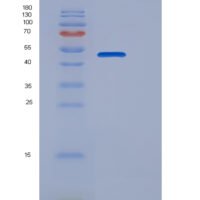
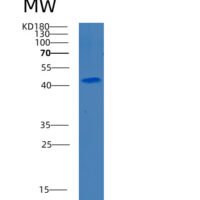
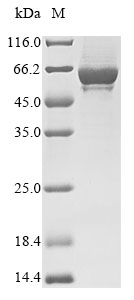
PurityGreater than 85% as determined by SDS-PAGE.
Expression SystemBaculovirus
Expression Region27-631aa
SpeciesHomo sapiens (Human)
Tag InfoN-terminal 6xHis-tagged
Molecular weight69.8kDa
ActivityPlease contact us to obtain bioactivity data.
BufferIf the delivery form is liquid, the default storage buffer is Tris/PBS-based buffer, 5%-50% glycerol. If the delivery form is lyophilized powder, the buffer before lyophilization is Tris/PBS-based buffer, 6% Trehalose.
StorageStore at -20°C/-80°C upon receipt, aliquoting is necessary for mutiple use. Avoid repeated freeze-thaw cycles.
Research AreasCardiovascular

Function

Transmembrane receptor that functions as a pattern recognition receptor recognizing pathogen- and damage-associated molecular patterns (PAMPs and DAMPs) to induce innate immune responses via downstream signaling pathways. At the plasma membrane, cooperates with LY96 to mediate the innate immune response to bacterial lipopolysaccharide (LPS). Also involved in LPS-independent inflammatory responses triggered by free fatty acids, such as palmitate, and Ni(2+).

Biological Context

Subcellular Location: Cell membrane (Single-pass type I membrane protein); Early endosome; Cell projection, ruffle
Tissue Specificity: Highly expressed in placenta, spleen and peripheral blood leukocytes. Detected in monocytes, macrophages, dendritic cells and several types of T-cells. Expressed in pancreatic cancer cells but not in normal pancreatic cells (at protein level)

Product Specifications

Recombinant Human Toll-like receptor 4 (TLR4), partial is a recombinant protein from Homo sapiens (Human), expressed in Baculovirus, covering amino acids 27-631aa, with N-terminal 6xHis-tagged tag, molecular weight 69.8kDa, purity Greater than 85% as determined by SDS-PAGE.. Suitable for ELISA and Western Blot applications.
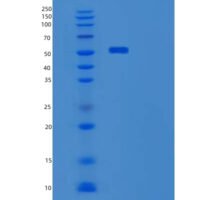
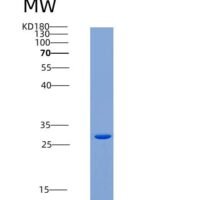
SDS-PAGE: Single band at expected molecular weight confirming purity.

ELISA: Suitable as coating antigen or detection standard.

Western Blot: Compatible with standard Western Blot protocols.

Protein Interaction: Validated for SPR (Surface Plasmon Resonance) and BLI (Bio-Layer Interferometry) studies.

Shipping: Shipped at ambient temperature. Lyophilized protein is stable during transit.

Storage: Store lyophilized protein at -20°C to -80°C. Reconstituted protein should be aliquoted and stored at -80°C. Avoid repeated freeze-thaw cycles.

Shelf Life: 12 months from date of receipt when stored as recommended.

Shipping Time: Orders placed before 2 PM EST ship same day. International orders typically deliver within 5-10 business days.

Protein Biology

Function

Transmembrane receptor that functions as a pattern recognition receptor recognizing pathogen- and damage-associated molecular patterns (PAMPs and DAMPs) to induce innate immune responses via downstream signaling pathways (PubMed:10835634, PubMed:15809303, PubMed:16622205, PubMed:17292937, PubMed:17478729, PubMed:20037584, PubMed:20711192, PubMed:23880187, PubMed:27022195, PubMed:29038465, PubMed:17803912, PubMed:15852007). At the plasma membrane, cooperates with LY96 to mediate the innate immune response to bacterial lipopolysaccharide (LPS) (PubMed:27022195). Also involved in LPS-independent inflammatory responses triggered by free fatty acids, such as palmitate, and Ni(2+) (PubMed:20711192). Mechanistically, acts via MYD88, TIRAP and TRAF6, leading to NF-kappa-B activation, cytokine secretion and the inflammatory response (PubMed:10835634, PubMed:21393102, PubMed:27022195, PubMed:36945827, PubMed:9237759). Alternatively, CD14-mediated TLR4 internalization via endocytosis is associated with the initiation of a MYD88-independent signaling via the TICAM1-TBK1-IRF3 axis leading to type I interferon production (PubMed:14517278). In addition to the secretion of proinflammatory cytokines, initiates the activation of NLRP3 inflammasome and formation of a positive feedback loop between autophagy and NF-kappa-B signaling cascade (PubMed:32894580). In complex with TLR6, promotes inflammation in monocytes/macrophages by associating with TLR6 and the receptor CD86 (PubMed:23880187). Upon ligand binding, such as oxLDL or amyloid-beta 42, the TLR4:TLR6 complex is internalized and triggers inflammatory response, leading to NF-kappa-B-dependent production of CXCL1, CXCL2 and CCL9 cytokines, via MYD88 signaling pathway, and CCL5 cytokine, via TICAM1 signaling pathway (PubMed:23880187). In myeloid dendritic cells, vesicular stomatitis virus glycoprotein G but not LPS promotes the activation of IRF7, leading to type I IFN production in a CD14-dependent manner (PubMed:15265881, PubMed:23880187). Required for the migration-promoting effects of ZG16B/PAUF on pancreatic cancer cells

Subcellular Location

Cell membrane (Single-pass type I membrane protein); Early endosome; Cell projection, ruffle

Tissue Specificity

Highly expressed in placenta, spleen and peripheral blood leukocytes (PubMed:9237759, PubMed:9435236). Detected in monocytes, macrophages, dendritic cells and several types of T-cells (PubMed:27022195, PubMed:9237759). Expressed in pancreatic cancer cells but not in normal pancreatic cells (at protein level) (PubMed:36232715)

Subunit

(Microbial infection) Interacts with ebolavirus protein GP; this interaction leads to the production of proinflammatory cytokines and suppressor of cytokine signaling 1/SOCS1

Gene: TLR4  |  Organism: Homo sapiens  |  Synonyms: hToll
Key Publications

Frequently Asked Questions

How do I order or inquire about this product?

Fill out the Online Inquiry form with your required quantity and specifications. You can also email sales@biocrestsci.com. Our team typically responds within 4 business hours with a quote and availability confirmation.

What is the shipping and delivery time?

Orders placed before 2 PM EST ship the same day. Domestic (US) delivery typically takes 2-3 business days. International orders deliver within 5-10 business days. All products are shipped at ambient temperature with appropriate packaging to ensure stability.

How should I store this recombinant protein?

Lyophilized proteins should be stored at -20°C to -80°C upon receipt. After reconstitution, aliquot and store at -80°C. Avoid repeated freeze-thaw cycles. Shelf life is 12 months from date of receipt when stored as recommended.

What quality controls are performed on your products?

Each product undergoes SDS-PAGE purity analysis (typically >85-95%), endotoxin testing, and bioactivity validation. Products are validated for ELISA, Western Blot, and SPR/BLI applications as specified on this product page. A Certificate of Analysis (CoA) is available upon request.

Shopping Cart
Scroll to Top