Function
Tubulin is the major constituent of microtubules, a cylinder consisting of laterally associated linear protofilaments composed of alpha- and beta-tubulin heterodimers. Microtubules grow by the addition of GTP-tubulin dimers to the microtubule end, where a stabilizing cap forms. Below the cap, tubulin dimers are in GDP-bound state, owing to GTPase activity of alpha-tubulin.
Biological Context
Subcellular Location: Cytoplasm, cytoskeleton
Tissue Specificity: High expression in brain, where it represents 30% of all beta-tubulins
Disease Association: Cortical dysplasia, complex, with other brain malformations 5 (CDCBM5) : A disorder of aberrant neuronal migration and disturbed axonal guidance. Clinical features include seizures, global developmental delay, and various brain malformations such as a diffuse simplified gyral pattern with reduced volume of white matter, globular basal ganglia, thin and dysmorphic corpus callosum, mild brainstem hypoplasia with a flat pons, mild cerebellar vermis hypoplasia, and mildly enlarged posterior fossa. [The disease is caused by variants affecting the gene represented in this entry]
Product Specifications
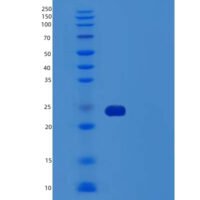
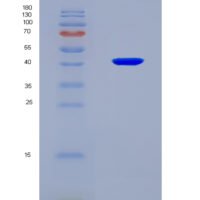
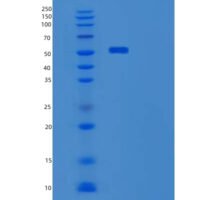
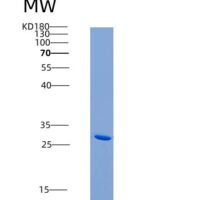
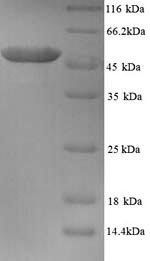
Recombinant Human Tubulin beta-2A chain (TUBB2A) is a recombinant protein from Homo sapiens (Human), expressed in Yeast, covering amino acids 1-445aa, with N-terminal 6xHis-tagged tag, molecular weight 51.9kDa, purity Greater than 90% as determined by SDS-PAGE.. Suitable for ELISA and Western Blot applications.