Function
Non-selective calcium permeant cation channel involved in osmotic sensitivity and mechanosensitivity. Activation by exposure to hypotonicity within the physiological range exhibits an outward rectification. Also activated by heat, low pH, citrate and phorbol esters.
Biological Context
Subcellular Location: Cell membrane; Apical cell membrane (Multi-pass membrane protein); Cell junction, adherens junction; Cell projection, cilium
Tissue Specificity: Detected in liver, kidney, heart, brain cortex, cerebellum and brainstem (at protein level). Expressed in salivary glands (at protein level). Expressed in heart, lung, spleen, liver, kidney, brain, skeletal muscle and testis. In the central nervous system, expressed in the lamina terminalis (arched vascular organ and neurons of the subfornical organ), median preoptic area, ventral hippocampal commissure, and ependymal cells of the choroid plexus. In the cochlea, expressed in both inner and outer hair cells, and in marginal cells of the cochlear stria vascularis. Expressed in large neurons of the trigeminal ganglion. In the kidney cortex, strongly expressed by epithelial cells of tubules and much weaker in glomeruli
Product Specifications
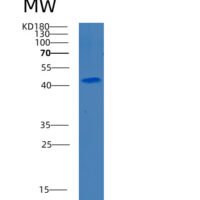
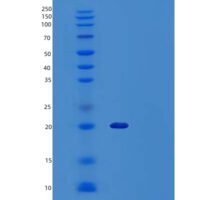
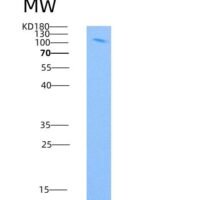
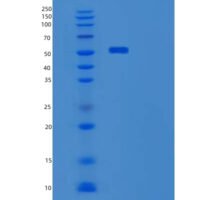
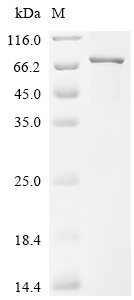
Recombinant Mouse Transient receptor potential cation channel subfamily V member 4 (Trpv4), partial is a recombinant protein from Mus musculus (Mouse), expressed in E.coli, covering amino acids 1-469aa, with N-terminal 6xHis-tagged tag, molecular weight 59.9kDa, purity Greater than 90% as determined by SDS-PAGE.. Suitable for ELISA and Western Blot applications.