Mouse anti-Human KRT6A Monoclonal Antibody

Mouse anti-Human KRT6A Monoclonal Antibody — Structural component of intermediate filaments in epithelial keratinocytes.

SKU: BCREC-000052MA Category:

Product Specifications

Uniprot No.P02538
Species ReactivityMouse
ImmunogenSynthetic Peptide
ConjugateNon-conjugated
IsotypeIgG
ClonalityMonoclonal
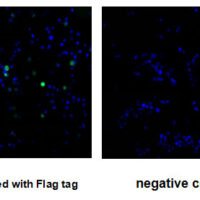
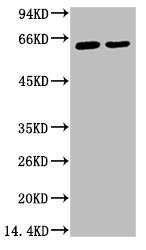
ApplicationsELISA,WB
BufferPBS, 50% glycerol, 0.05% Proclin 300, 0.05%BSA
StorageUpon receipt, store at -20°C or -80°C. Avoid repeated freeze.

Function

Structural component of intermediate filaments in epithelial keratinocytes. Forms heteropolymers with the type I keratins KRT16 and KRT17, assembling into keratin intermediate filament networks that contributes to the structural integrity and stress resilience of stratified epithelia, particularly in epidermis, nail bed and oral mucosa. Rapidly induced in wound-edge keratinocytes and participates in cytoskeletal reorganization during re-epithelialization.

Biological Context

Subcellular Location: Cytoplasm
Tissue Specificity: Expressed in the corneal epithelium (at protein level)
Disease Association: Pachyonychia congenita 3 (PC3) : An autosomal dominant genodermatosis characterized by hypertrophic nail dystrophy, painful and highly debilitating plantar keratoderma, oral leukokeratosis, and a variety of epidermal cysts. [The disease is caused by variants affecting the gene represented in this entry]

Product Specifications

Mouse anti-Human KRT6A Monoclonal Antibody is a recombinant protein. Suitable for ELISA and Western Blot applications.

Applications: ELISA,WB

Biological Activity: Not implied unless activity data are explicitly listed on this product page, the datasheet, or the CoA.

Storage: Upon receipt, store at -20°C or -80°C. Avoid repeated freeze.

Shipping & Lead Time: Availability, shipping conditions, and estimated lead time are confirmed in the formal quotation or order confirmation based on the product format, destination, and order requirements.

Protein Biology

Function

Structural component of intermediate filaments in epithelial keratinocytes. Forms heteropolymers with the type I keratins KRT16 and KRT17, assembling into keratin intermediate filament networks that contributes to the structural integrity and stress resilience of stratified epithelia, particularly in epidermis, nail bed and oral mucosa (PubMed:11886499, PubMed:17719747, PubMed:7545493). Rapidly induced in wound-edge keratinocytes and participates in cytoskeletal reorganization during re-epithelialization (By similarity). Negatively regulates collective keratinocyte migration by stabilizing non-muscle myosin MYH9 and desmoplakin, thereby altering cell-cell and cell-matrix adhesion and reducing the speed and directionality of epithelial sheet movement during wound repair (By similarity). Also limits epithelial migration by inhibiting SRC activity during wound repair (By similarity). Required for normal palmoplantar, nail unit and oral mucosa integrity (PubMed:11886499, PubMed:17719747, PubMed:7545493)

Subcellular Location

Cytoplasm

Disease Association

Pachyonychia congenita 3 (PC3) : An autosomal dominant genodermatosis characterized by hypertrophic nail dystrophy, painful and highly debilitating plantar keratoderma, oral leukokeratosis, and a variety of epidermal cysts. [The disease is caused by variants affecting the gene represented in this entry]

Tissue Specificity

Expressed in the corneal epithelium (at protein level)

Subunit

Heterodimers composed of one type I and one type II keratins; forms parallel coiled-coil heterodimers (By similarity). Heterodimers associate in an antiparallel manner to form heterotetramers, which further assemble into higher-order keratin intermediate filaments (By similarity). Associates with KRT16 and/or KRT17 (By similarity). Interacts with TCHP (PubMed:15731013). Interacts with IIA/MYH2; the interaction stabilizes MYH2 (By similarity)

Gene: KRT6A  |  Organism: Homo sapiens  |  Synonyms: Cytokeratin-6A; Cytokeratin-6D; Keratin-6A; Type-II keratin Kb6
Key Publications

Frequently Asked Questions

How do I order or inquire about this product?

Submit the Online Inquiry form with your required quantity and specifications, or email sales@biocrestsci.com. Available sizes, pricing, stock status, documentation, and estimated lead time are confirmed in the formal quotation.

What is the shipping and delivery time?

Availability, dispatch timing, shipping conditions, and delivery estimates depend on the product format, destination, and order requirements. These details are confirmed in the formal quotation or order confirmation.

How should this product be stored?

Follow the storage and handling instructions in the product-specific datasheet and Certificate of Analysis (CoA). Requirements may vary by product form and formulation; contact BioCrest Sci if product-specific guidance is needed.

What quality controls are performed on your products?

Quality-control data such as identity, purity, endotoxin level, or biological activity are provided only when specified on this product page, the datasheet, or Certificate of Analysis (CoA). Biological activity is not implied unless explicitly stated.

Shopping Cart
Scroll to Top