Function
Core component of nucleosome. Nucleosomes wrap and compact DNA into chromatin, limiting DNA accessibility to the cellular machineries which require DNA as a template. Histones thereby play a central role in transcription regulation, DNA repair, DNA replication and chromosomal stability.
Biological Context
Subcellular Location: Nucleus; Chromosome
Disease Association: Glioma (GLM) : Gliomas are benign or malignant central nervous system neoplasms derived from glial cells. They comprise astrocytomas and glioblastoma multiforme that are derived from astrocytes, oligodendrogliomas derived from oligodendrocytes and ependymomas derived from ependymocytes. [The gene represented in this entry is involved in disease pathogenesis. HIST1H3B mutations affecting residue Lys-28 involved in post-translational modifications of histone H3.1 are recurrent in malignant, aggressive gliomas including pediatric non-brain stem glioblastoma and diffuse intrinsic pontine glioma (DIPG). The mechanism through which mutations lead to tumorigenesis involves altered histone methylation, impaired regulation of Polycomb repressive complex 2 (PRC2) activity, and aberrant epigenetic regulation of gene expression ] | [HIST1H3B or HIST1H3C mutations affecting residue Lys-37 of histone H3.1 are involved in the pathogenesis of pediatric undifferentiated soft tissue sarcomas. The mechanism through which mutations lead to tumorigenesis involves altered histones methylation with gain of global H3K27 methylation, altered Polycomb repressive complex 1 (PRC1) activity, aberrant epigenetic regulation of gene expression and impaired differentiation of mesenchimal progenitor cells]
Product Specifications
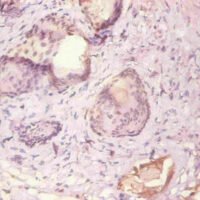
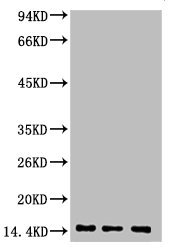
Mouse anti-Human/Mouse/Rat Dimethyl-Histone H3(K9) Monoclonal Antibody is a recombinant protein. Suitable for ELISA and Western Blot applications. Explore more Antibody products →