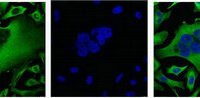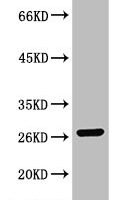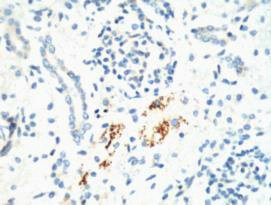
Function
Essential for hedgehog signaling regulation: acts both as a negative and positive regulator of sonic hedgehog (Shh) and Indian hedgehog (Ihh) pathways, acting downstream of SMO, through both SUFU-dependent and -independent mechanisms. Involved in the regulation of microtubular dynamics. Required for proper organization of the ciliary tip and control of ciliary localization of SUFU-GLI2 complexes.
Biological Context
Subcellular Location: Cell projection, cilium; Cytoplasm, cytoskeleton, cilium basal body
Tissue Specificity: Embryonic stem cells, melanotic melanoma and Jurkat T-cells. Expressed in heart, lung, liver, kidney, testis, retina, placenta, pancreas, colon, small intestin, prostate and thymus
Disease Association: [Ciliary dysfunction leads to a broad spectrum of disorders, collectively termed ciliopathies. The ciliopathy range of diseases includes Meckel-Gruber syndrome, Bardet-Biedl syndrome, Joubert syndrome, and hydrolethalus syndrome among others. Single-locus allelism is insufficient to explain the variable penetrance and expressivity of such disorders, leading to the suggestion that variations across multiple sites of the ciliary proteome influence the clinical outcome. Primary ciliopathy loci can be modulated by pathogenic lesions in other ciliary genes to either exacerbate overall severity or induce specific endophenotypes. KIF7 may be causally associated with diverse ciliopathies, and also acts as a modifier gene across the ciliopathy spectrum] | Bardet-Biedl syndrome (BBS) : A syndrome characterized by usually severe pigmentary retinopathy, early-onset obesity, polydactyly, hypogenitalism, renal malformation and intellectual disability. Secondary features include diabetes mellitus, hypertension and congenital heart disease. Bardet-Biedl syndrome inheritance is autosomal recessive, but three mutated alleles (two at one locus, and a third at a second locus) may be required for clinical manifestation of some forms of the disease. [The gene represented in this entry may act as a disease modifier. Heterozygous missense mutations in KIF7 may genetically interact with other BBS genes and contribute to disease manifestation and severity] | Hydrolethalus syndrome 2 (HLS2) : An embryonic lethal disorder characterized by hydrocephaly or anencephaly, postaxial polydactyly of the upper limbs, and pre- or postaxial polydactyly of the lower limbs. Duplication of the hallux is a common finding. [The disease is caused by variants affecting the gene represented in this entry] | Acrocallosal syndrome (ACLS) : An autosomal recessive syndrome characterized by hypogenesis or agenesis of the corpus callosum. Clinical features include postaxial polydactyly, hallux duplication, macrocephaly, craniofacial abnormalities, severe developmental delay and intellectual disability. [The disease is caused by variants affecting the gene represented in this entry] | Joubert syndrome 12 (JBTS12) : A disorder presenting with cerebellar ataxia, oculomotor apraxia, hypotonia, neonatal breathing abnormalities and psychomotor delay. Neuroradiologically, it is characterized by cerebellar vermian hypoplasia/aplasia, thickened and reoriented superior cerebellar peduncles, and an abnormally large interpeduncular fossa, giving the appearance of a molar tooth on transaxial slices (molar tooth sign). Additional variable features include retinal dystrophy and renal disease. [The disease is caused by variants affecting the gene represented in this entry] | Al-Gazali-Bakalinova syndrome (AGBK) : An autosomal recessive syndrome consisting of macrocephaly, multiple epiphyseal dysplasia and distinctive facial appearance. [The disease is caused by variants affecting the gene represented in this entry]
Product Specifications
Mouse anti-Human/Mouse/Rat KIF7 Monoclonal Antibody is a recombinant protein. Suitable for ELISA and Western Blot applications. Explore more Antibody products →