Mouse anti-Human/Mouse/Rat sapiens (Human) FBXO11 Monoclonal Antibody

Mouse anti-Human/Mouse/Rat sapiens (Human) FBXO11 Monoclonal Antibody — Substrate recognition component of a SCF (SKP1-CUL1-F-box protein) E3 ubiquitin-protein ligase complex which mediates the ubiquitination and subsequent proteasomal degradation of target proteins, s…

SKU: BCREC-000942MA Category:

Product Specifications

Uniprot No.Q86XK2
Target NamesFBXO11
Species ReactivityMouse
ImmunogenRecombinant Human FBXO11 protein
Immunogen SpeciesHomo sapiens (Human)
ConjugateNon-conjugated
IsotypeMouse IgG1
ClonalityMonoclonal
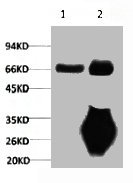
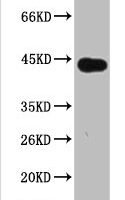
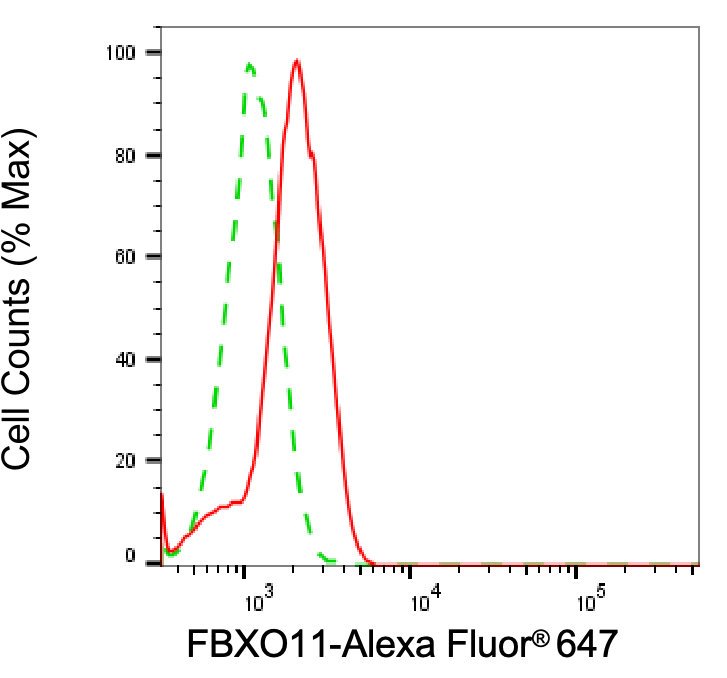
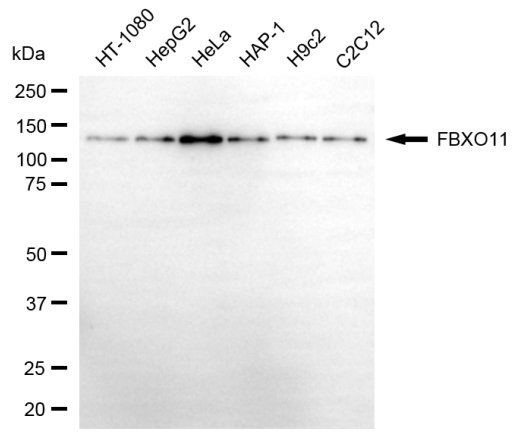
ApplicationsELISA, WB, FC
BufferPBS, 50% glycerol, 0.05% Proclin 300, 0.05%BSA
StorageUpon receipt, store at -20°C or -80°C. Avoid repeated freeze.

Function

Substrate recognition component of a SCF (SKP1-CUL1-F-box protein) E3 ubiquitin-protein ligase complex which mediates the ubiquitination and subsequent proteasomal degradation of target proteins, such as DTL/CDT2, BCL6, SNAI1 and PRDM1/BLIMP1. The SCF(FBXO11) complex mediates ubiquitination and degradation of BCL6, thereby playing a role in the germinal center B-cells terminal differentiation toward memory B-cells and plasma cells. The SCF(FBXO11) complex also mediates ubiquitination and degradation of DTL, an important step for the regulation of TGF-beta signaling, cell migration and the timing of the cell-cycle progression and exit.

Biological Context

Subcellular Location: Nucleus; Chromosome
Tissue Specificity: Isoform 5 is expressed in keratinocytes, fibroblasts and melanocytes
Disease Association: Intellectual developmental disorder with dysmorphic facies and behavioral abnormalities (IDDFBA) : An autosomal dominant developmental disorder with variable manifestations and onset in infancy or first years of life. Clinical features include intellectual disability, speech delay, hyperkinetic disorder, hyperactivity, seizures, pre- and postnatal growth retardation, microcephaly, and facial dysmorphism. [The disease is caused by variants affecting the gene represented in this entry] | [Defects in FBXO11 may be a cause of diffuse large B-cell lymphoma by allowing the accumulation of BCL6, an oncoprotein that has a critical role in lymphomas]
Pathway: Protein modification; protein ubiquitination

Product Specifications

Mouse anti-Human/Mouse/Rat sapiens (Human) FBXO11 Monoclonal Antibody is a recombinant protein. Suitable for ELISA and Western Blot applications.

SDS-PAGE: Single band at expected molecular weight confirming purity.

ELISA: Suitable as coating antigen or detection standard.

Western Blot: Compatible with standard Western Blot protocols.

Protein Interaction: Validated for SPR (Surface Plasmon Resonance) and BLI (Bio-Layer Interferometry) studies.

Shipping: Shipped at ambient temperature. Lyophilized protein is stable during transit.

Storage: Store lyophilized protein at -20°C to -80°C. Reconstituted protein should be aliquoted and stored at -80°C. Avoid repeated freeze-thaw cycles.

Shelf Life: 12 months from date of receipt when stored as recommended.

Shipping Time: Orders placed before 2 PM EST ship same day. International orders typically deliver within 5-10 business days.

Protein Biology

Function

Substrate recognition component of a SCF (SKP1-CUL1-F-box protein) E3 ubiquitin-protein ligase complex which mediates the ubiquitination and subsequent proteasomal degradation of target proteins, such as DTL/CDT2, BCL6, SNAI1 and PRDM1/BLIMP1 (PubMed:17098746, PubMed:22113614, PubMed:23478441, PubMed:23478445, PubMed:23892434, PubMed:24613396, PubMed:24968003, PubMed:25827072, PubMed:29059170). The SCF(FBXO11) complex mediates ubiquitination and degradation of BCL6, thereby playing a role in the germinal center B-cells terminal differentiation toward memory B-cells and plasma cells (PubMed:22113614). The SCF(FBXO11) complex also mediates ubiquitination and degradation of DTL, an important step for the regulation of TGF-beta signaling, cell migration and the timing of the cell-cycle progression and exit (PubMed:23478441, PubMed:23478445). The SCF(FBXO11) complex also catalyzes ubiquitination and degradation of GSK3B-phosphorylated SNAI1 (PubMed:25827072, PubMed:29059170). Binds to and neddylates phosphorylated p53/TP53, inhibiting its transcriptional activity (PubMed:17098746). Plays a role in the regulatiom of erythropoiesis but not myelopoiesis or megakaryopoiesis (PubMed:33156908). Mechanistically, activates erythroid genes by mediating the degradation of BAHD1, a heterochromatin-associated protein that recruits corepressors to H3K27me3 marks (PubMed:33156908). Participates in macrophage cell death and inflammation in response to bacterial toxins by regulating the expression of complement 5a receptor 1/C5AR1 and IL-1beta (PubMed:33156908). Acts as a critical regulator to determine the level of MHC-II by mediating the recognition of degron at the P/S/T domain of CIITA leading to its ubiquitination and subsequent degradation via the proteasome (PubMed:37279268). Participates in the antiviral repsonse by initiating the activation of TBK1-IRF3-IFN-I axis (PubMed:36897010). Mediates the 'Lys-63'-linked ubiquitination of TRAF3 to strengthen the interaction between TRAF3 and TBK1 (PubMed:36897010)

Subcellular Location

Nucleus; Chromosome

Disease Association

Intellectual developmental disorder with dysmorphic facies and behavioral abnormalities (IDDFBA) : An autosomal dominant developmental disorder with variable manifestations and onset in infancy or first years of life. Clinical features include intellectual disability, speech delay, hyperkinetic disorder, hyperactivity, seizures, pre- and postnatal growth retardation, microcephaly, and facial dysmorphism. [The disease is caused by variants affecting the gene represented in this entry] | [Defects in FBXO11 may be a cause of diffuse large B-cell lymphoma by allowing the accumulation of BCL6, an oncoprotein that has a critical role in lymphomas]

Tissue Specificity

Isoform 5 is expressed in keratinocytes, fibroblasts and melanocytes

Subunit

Component of the SCF(FBXO11) complex consisting of CUL1, RBX1, SKP1 and FBXO11 (PubMed:23478441, PubMed:23478445). Interacts with CIITA (PubMed:37279268)

Pathway

Protein modification; protein ubiquitination

Gene: FBXO11  |  Organism: Homo sapiens  |  Synonyms: Protein arginine N-methyltransferase 9; Vitiligo-associated protein 1

Frequently Asked Questions

How do I order or inquire about this product?

Fill out the Online Inquiry form with your required quantity and specifications. You can also email sales@biocrestsci.com. Our team typically responds within 4 business hours with a quote and availability confirmation.

What is the shipping and delivery time?

Orders placed before 2 PM EST ship the same day. Domestic (US) delivery typically takes 2-3 business days. International orders deliver within 5-10 business days. All products are shipped at ambient temperature with appropriate packaging to ensure stability.

How should I store this recombinant protein?

Lyophilized proteins should be stored at -20°C to -80°C upon receipt. After reconstitution, aliquot and store at -80°C. Avoid repeated freeze-thaw cycles. Shelf life is 12 months from date of receipt when stored as recommended.

What quality controls are performed on your products?

Each product undergoes SDS-PAGE purity analysis (typically >85-95%), endotoxin testing, and bioactivity validation. Products are validated for ELISA, Western Blot, and SPR/BLI applications as specified on this product page. A Certificate of Analysis (CoA) is available upon request.

Shopping Cart
Scroll to Top