Mouse anti-Human/Mouse/Rat sapiens (Human) FBXO22 Monoclonal Antibody

Mouse anti-Human/Mouse/Rat sapiens (Human) FBXO22 Monoclonal Antibody — Substrate-recognition component of the SCF (SKP1-CUL1-F-box protein)-type E3 ubiquitin ligase complex that is implicated in the control of various cellular processes such as cell cycle control, tra…

SKU: BCREC-000376MA Category:

Product Specifications

Uniprot No.Q8NEZ5
Target NamesFBXO22
Species ReactivityMouse
ImmunogenRecombinant Human FBXO22 protein
Immunogen SpeciesHomo sapiens (Human)
ConjugateNon-conjugated
IsotypeMouse IgG1
ClonalityMonoclonal
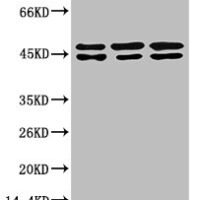
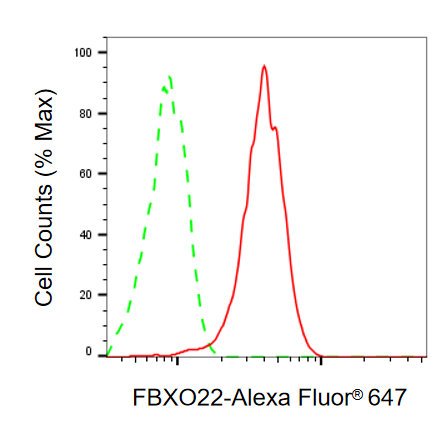
ApplicationsELISA, WB, FC
BufferPBS, 50% glycerol, 0.05% Proclin 300, 0.05%BSA
StorageUpon receipt, store at -20°C or -80°C. Avoid repeated freeze.

Function

Substrate-recognition component of the SCF (SKP1-CUL1-F-box protein)-type E3 ubiquitin ligase complex that is implicated in the control of various cellular processes such as cell cycle control, transcriptional regulation, DNA damage repair, and apoptosis. Promotes the proteasome-dependent degradation of key sarcomeric proteins, such as alpha-actinin (ACTN2) and filamin-C (FLNC), essential for maintenance of normal contractile function. Acts as a key regulator of histone methylation marks namely H3K9 and H3K36 methylation through the regulation of histone demethylase KDM4A protein levels.

Biological Context

Subcellular Location: Cytoplasm; Nucleus; Cytoplasm, myofibril, sarcomere, Z line
Tissue Specificity: Predominantly expressed in liver, also enriched in cardiac muscle
Disease Association: Tayoun-Maawali syndrome (TYMAS) : An autosomal recessive pleiotropic syndrome characterized by multiple abnormalities encompassing early growth restriction, neurodevelopmental delay, and craniofacial, cardiovascular, gastrointestinal, urinary and endocrine anomalies. [The disease is caused by variants affecting the gene represented in this entry]

Product Specifications

Mouse anti-Human/Mouse/Rat sapiens (Human) FBXO22 Monoclonal Antibody is a recombinant protein. Suitable for ELISA and Western Blot applications.

SDS-PAGE: Single band at expected molecular weight confirming purity.

ELISA: Suitable as coating antigen or detection standard.

Western Blot: Compatible with standard Western Blot protocols.

Protein Interaction: Validated for SPR (Surface Plasmon Resonance) and BLI (Bio-Layer Interferometry) studies.

Shipping: Shipped at ambient temperature. Lyophilized protein is stable during transit.

Storage: Store lyophilized protein at -20°C to -80°C. Reconstituted protein should be aliquoted and stored at -80°C. Avoid repeated freeze-thaw cycles.

Shelf Life: 12 months from date of receipt when stored as recommended.

Shipping Time: Orders placed before 2 PM EST ship same day. International orders typically deliver within 5-10 business days.

Protein Biology

Function

Substrate-recognition component of the SCF (SKP1-CUL1-F-box protein)-type E3 ubiquitin ligase complex that is implicated in the control of various cellular processes such as cell cycle control, transcriptional regulation, DNA damage repair, and apoptosis. Promotes the proteasome-dependent degradation of key sarcomeric proteins, such as alpha-actinin (ACTN2) and filamin-C (FLNC), essential for maintenance of normal contractile function. Acts as a key regulator of histone methylation marks namely H3K9 and H3K36 methylation through the regulation of histone demethylase KDM4A protein levels (PubMed:21768309). In complex with KDM4A, also regulates the abundance of TP53 by targeting methylated TP53 for degradation at the late senescent stage (PubMed:26868148). Under oxidative stress, promotes the ubiquitination and degradation of BACH1. Mechanistically, reactive oxygen species (ROS) covalently modify cysteine residues on the bZIP domain of BACH1, leading to its release from chromatin and making it accessible to FBXO22 (PubMed:39504958). Upon amino acid depletion, mediates 'Lys-27'-linked ubiquitination of MTOR and thereby inhibits substrate recruitment to mTORC1 (PubMed:37979583). Also inhibits SARS-CoV-2 replication by inducing NSP5 degradation (PubMed:39223933)

Subcellular Location

Cytoplasm; Nucleus; Cytoplasm, myofibril, sarcomere, Z line

Disease Association

Tayoun-Maawali syndrome (TYMAS) : An autosomal recessive pleiotropic syndrome characterized by multiple abnormalities encompassing early growth restriction, neurodevelopmental delay, and craniofacial, cardiovascular, gastrointestinal, urinary and endocrine anomalies. [The disease is caused by variants affecting the gene represented in this entry]

Tissue Specificity

Predominantly expressed in liver, also enriched in cardiac muscle

Subunit

(Microbial infection) Interacts with SARS_COV-2 protein NSP5; this interaction attenuates NSP5-mediated inhibition of innate immunity

Gene: FBXO22  |  Organism: Homo sapiens  |  Synonyms: F-box protein FBX22p44
Key Publications

Frequently Asked Questions

How do I order or inquire about this product?

Fill out the Online Inquiry form with your required quantity and specifications. You can also email sales@biocrestsci.com. Our team typically responds within 4 business hours with a quote and availability confirmation.

What is the shipping and delivery time?

Orders placed before 2 PM EST ship the same day. Domestic (US) delivery typically takes 2-3 business days. International orders deliver within 5-10 business days. All products are shipped at ambient temperature with appropriate packaging to ensure stability.

How should I store this recombinant protein?

Lyophilized proteins should be stored at -20°C to -80°C upon receipt. After reconstitution, aliquot and store at -80°C. Avoid repeated freeze-thaw cycles. Shelf life is 12 months from date of receipt when stored as recommended.

What quality controls are performed on your products?

Each product undergoes SDS-PAGE purity analysis (typically >85-95%), endotoxin testing, and bioactivity validation. Products are validated for ELISA, Western Blot, and SPR/BLI applications as specified on this product page. A Certificate of Analysis (CoA) is available upon request.

Shopping Cart
Scroll to Top