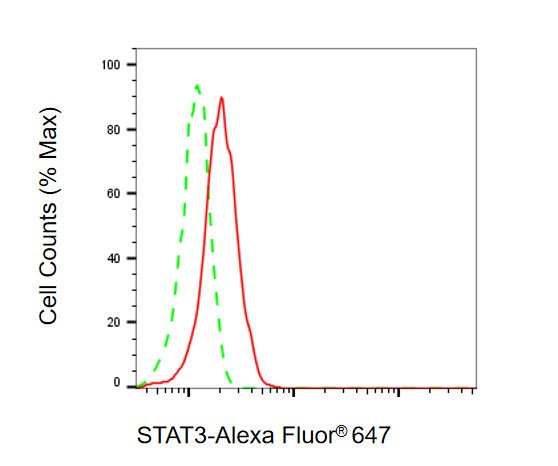
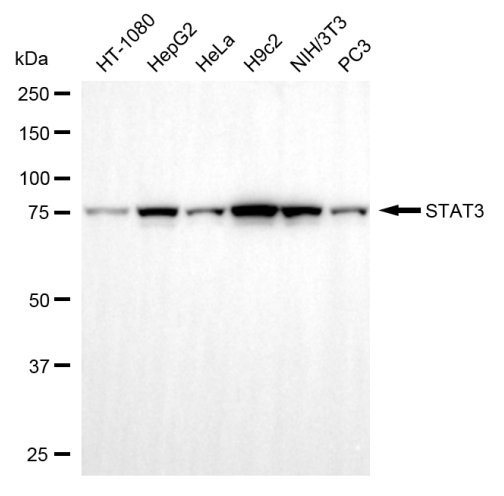
Function
Signal transducer and transcription activator that mediates cellular responses to interleukins, KITLG/SCF, LEP and other growth factors. Once activated, recruits coactivators, such as NCOA1 or MED1, to the promoter region of the target gene. May mediate cellular responses to activated FGFR1, FGFR2, FGFR3 and FGFR4.
Biological Context
Subcellular Location: Cytoplasm; Nucleus
Tissue Specificity: Heart, brain, placenta, lung, liver, skeletal muscle, kidney and pancreas. Expressed in naive CD4(+) T cells as well as T-helper Th17, Th1 and Th2 cells
Disease Association: Hyper-IgE syndrome 1, autosomal dominant, with recurrent infections (HIES1) : A rare disorder of immunity and connective tissue characterized by immunodeficiency, chronic eosinophilia, distinctive coarse facial appearance, abnormal dentition, hyperextensibility of the joints, and bone fractures. [The disease is caused by variants affecting the gene represented in this entry] | Autoimmune disease, multisystem, infantile-onset, 1 (ADMIO1) : A disorder characterized by early childhood onset of a spectrum of autoimmune manifestations affecting multiple organs, including insulin-dependent diabetes mellitus and autoimmune enteropathy or celiac disease. Other features include short stature, non-specific dermatitis, hypothyroidism, autoimmune arthritis, and delayed puberty. [The disease is caused by variants affecting the gene represented in this entry]
Product Specifications
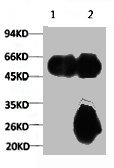
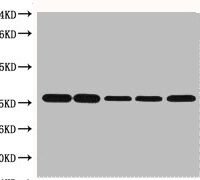
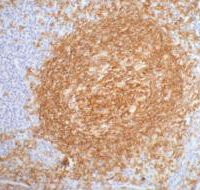
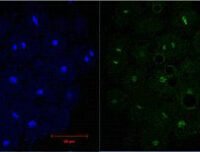
Mouse anti-Human/Mouse/Rat sapiens (Human) STAT3 Monoclonal Antibody is a recombinant protein. Suitable for ELISA and Western Blot applications. Explore more Antibody products →