Mouse anti-Human sapiens (Human) CFAP298 Monoclonal Antibody

Mouse anti-Human sapiens (Human) CFAP298 Monoclonal Antibody — Plays a role in motile cilium function, possibly by acting on outer dynein arm assembly.

SKU: BCREC-000840MA Category:

Product Specifications

Uniprot No.P57076
Target NamesCFAP298
Species ReactivityMouse
ImmunogenRecombinant Human CFAP298 protein
Immunogen SpeciesHomo sapiens (Human)
ConjugateNon-conjugated
IsotypeMouse IgG1
ClonalityMonoclonal
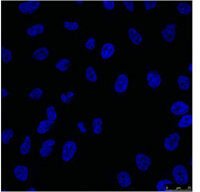
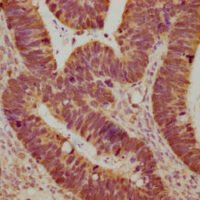
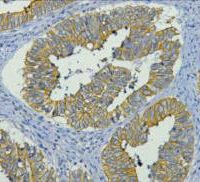
ApplicationsELISA, WB, FC, ICC
BufferPBS, 50% glycerol, 0.05% Proclin 300, 0.05%BSA
StorageUpon receipt, store at -20°C or -80°C. Avoid repeated freeze.

Function

Plays a role in motile cilium function, possibly by acting on outer dynein arm assembly. Seems to be important for initiation rather than maintenance of cilium motility. Required for correct positioning of the cilium at the apical cell surface, suggesting an additional role in the planar cell polarity (PCP) pathway.

Biological Context

Subcellular Location: Cytoplasm; Cytoplasm, cytoskeleton, cilium basal body
Disease Association: Ciliary dyskinesia, primary, 26 (CILD26) : A disorder characterized by abnormalities of motile cilia. Respiratory infections leading to chronic inflammation and bronchiectasis are recurrent, due to defects in the respiratory cilia. Patients may exhibit randomization of left-right body asymmetry and situs inversus, due to dysfunction of monocilia at the embryonic node. Primary ciliary dyskinesia associated with situs inversus is referred to as Kartagener syndrome. [The disease is caused by variants affecting the gene represented in this entry. Cilia in nasal epithelia show the absence of both outer and inner dynein-arm components and complete paralysis]

Product Specifications

Mouse anti-Human sapiens (Human) CFAP298 Monoclonal Antibody is a recombinant protein. Suitable for ELISA and Western Blot applications.

Applications: ELISA, WB, FC, ICC

Biological Activity: Not implied unless activity data are explicitly listed on this product page, the datasheet, or the CoA.

Storage: Upon receipt, store at -20°C or -80°C. Avoid repeated freeze.

Shipping & Lead Time: Availability, shipping conditions, and estimated lead time are confirmed in the formal quotation or order confirmation based on the product format, destination, and order requirements.

Protein Biology

Function

Plays a role in motile cilium function, possibly by acting on outer dynein arm assembly (PubMed:24094744). Seems to be important for initiation rather than maintenance of cilium motility (By similarity). Required for correct positioning of the cilium at the apical cell surface, suggesting an additional role in the planar cell polarity (PCP) pathway (By similarity). May suppress canonical Wnt signaling activity (By similarity)

Subcellular Location

Cytoplasm; Cytoplasm, cytoskeleton, cilium basal body

Disease Association

Ciliary dyskinesia, primary, 26 (CILD26) : A disorder characterized by abnormalities of motile cilia. Respiratory infections leading to chronic inflammation and bronchiectasis are recurrent, due to defects in the respiratory cilia. Patients may exhibit randomization of left-right body asymmetry and situs inversus, due to dysfunction of monocilia at the embryonic node. Primary ciliary dyskinesia associated with situs inversus is referred to as Kartagener syndrome. [The disease is caused by variants affecting the gene represented in this entry. Cilia in nasal epithelia show the absence of both outer and inner dynein-arm components and complete paralysis]

Subunit

Interacts with ZMYND10

Gene: CFAP298  |  Organism: Homo sapiens  |  Synonyms: Protein kurly homolog

Frequently Asked Questions

How do I order or inquire about this product?

Submit the Online Inquiry form with your required quantity and specifications, or email sales@biocrestsci.com. Available sizes, pricing, stock status, documentation, and estimated lead time are confirmed in the formal quotation.

What is the shipping and delivery time?

Availability, dispatch timing, shipping conditions, and delivery estimates depend on the product format, destination, and order requirements. These details are confirmed in the formal quotation or order confirmation.

How should this product be stored?

Follow the storage and handling instructions in the product-specific datasheet and Certificate of Analysis (CoA). Requirements may vary by product form and formulation; contact BioCrest Sci if product-specific guidance is needed.

What quality controls are performed on your products?

Quality-control data such as identity, purity, endotoxin level, or biological activity are provided only when specified on this product page, the datasheet, or Certificate of Analysis (CoA). Biological activity is not implied unless explicitly stated.

Shopping Cart
Scroll to Top