

Function
IFN-induced dsRNA-dependent serine/threonine-protein kinase that phosphorylates the alpha subunit of eukaryotic translation initiation factor 2 (EIF2S1/eIF-2-alpha) and plays a key role in the innate immune response to viral infection. Inhibits viral replication via the integrated stress response (ISR): EIF2S1/eIF-2-alpha phosphorylation in response to viral infection converts EIF2S1/eIF-2-alpha in a global protein synthesis inhibitor, resulting to a shutdown of cellular and viral protein synthesis, while concomitantly initiating the preferential translation of ISR-specific mRNAs, such as the transcriptional activator ATF4. Exerts its antiviral activity on a wide range of DNA and RNA viruses including hepatitis C virus (HCV), hepatitis B virus (HBV), measles virus (MV) and herpes simplex virus 1 (HHV-1).
Biological Context
Subcellular Location: Cytoplasm; Nucleus; Cytoplasm, perinuclear region
Tissue Specificity: Highly expressed in thymus, spleen and bone marrow compared to non-hematopoietic tissues such as small intestine, liver, or kidney tissues. Colocalizes with GSK3B and TAU in the Alzheimer disease (AD) brain. Elevated levels seen in breast and colon carcinomas, and which correlates with tumor progression and invasiveness or risk of progression
Disease Association: Leukoencephalopathy, developmental delay, and episodic neurologic regression syndrome (LEUDEN) : An autosomal dominant disorder characterized by global developmental delay apparent in early childhood, cognitive impairment, ataxia, poor or absent speech with dysarthria, hypotonia, hypertonia, extrapyramidal signs, tremor, and abnormal involuntary movements. Affected individuals also exhibit neurological regression in the setting of febrile illness or infection. Many patients have seizures. Brain imaging shows diffuse white matter abnormalities with poor myelination. [The disease may be caused by variants affecting the gene represented in this entry] | Dystonia 33 (DYT33) : A form of dystonia, a disorder defined by the presence of sustained involuntary muscle contraction, often leading to abnormal postures. DYT33 is a slowly progressive form characterized by onset of focal or generalized dystonia in the first decades of life. Disease manifestations are variable. Some patients show ambulation difficulties, dysarthria, or dysphagia. Some affected individuals may manifest motor delay, lower limb spasticity, and mild developmental delay with intellectual disability. DYT33 penetrance is incomplete. Inheritance can be autosomal dominant or recessive. [The disease is caused by variants affecting the gene represented in this entry]
Product Specifications
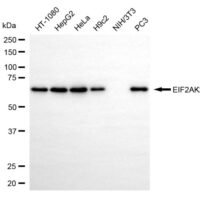
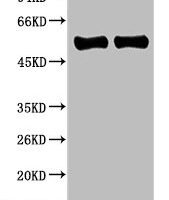
Mouse anti-Human sapiens (Human) EIF2AK2 Monoclonal Antibody is a recombinant protein. Suitable for ELISA and Western Blot applications. Explore more Antibody products →