Mouse anti-Human sapiens (Human) GBE1 Monoclonal Antibody

Mouse anti-Human sapiens (Human) GBE1 Monoclonal Antibody — Glycogen-branching enzyme participates in the glycogen biosynthetic process along with glycogenin and glycogen synthase.

SKU: BCREC-000881MA Category:

Product Specifications

Uniprot No.Q04446
Target NamesGBE1
Species ReactivityMouse
ImmunogenRecombinant Human GBE1 protein
Immunogen SpeciesHomo sapiens (Human)
ConjugateNon-conjugated
IsotypeMouse IgG1
ClonalityMonoclonal
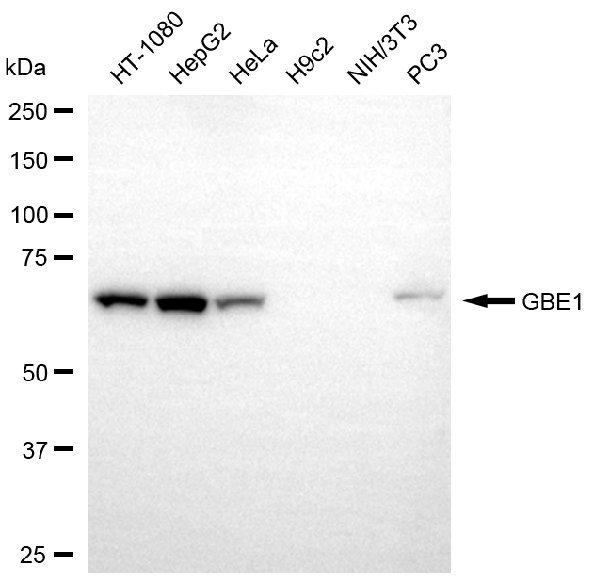
ApplicationsELISA, WB
BufferPBS, 50% glycerol, 0.05% Proclin 300, 0.05%BSA
StorageUpon receipt, store at -20°C or -80°C. Avoid repeated freeze.

Function

Glycogen-branching enzyme participates in the glycogen biosynthetic process along with glycogenin and glycogen synthase. Generates alpha-1,6-glucosidic branches from alpha-1,4-linked glucose chains, to increase solubility of the glycogen polymer.

Biological Context

Disease Association: Glycogen storage disease 4 (GSD4) : A metabolic disorder characterized by the accumulation of an amylopectin-like polysaccharide. The typical clinical manifestation is liver disease of childhood, progressing to lethal hepatic cirrhosis. Most children with this condition die before two years of age. However, the liver disease is not always progressive. No treatment apart from liver transplantation has been found to prevent progression of the disease. There is also a neuromuscular form of glycogen storage disease type 4 that varies in onset (perinatal, congenital, juvenile, or adult) and severity. [The disease is caused by variants affecting the gene represented in this entry] | [Neuromuscular perinatal glycogen storage disease type 4 is associated with non-immune hydrops fetalis, a generalized edema of the fetus with fluid accumulation in the body cavities due to non-immune causes. Non-immune hydrops fetalis is not a diagnosis in itself but a symptom, a feature of many genetic disorders, and the end-stage of a wide variety of disorders] | Polyglucosan body neuropathy, adult form (APBN) : A late-onset, slowly progressive disorder affecting the central and peripheral nervous systems. Patients typically present after age 40 years with a variable combination of cognitive impairment, pyramidal tetraparesis, peripheral neuropathy, and neurogenic bladder. Other manifestations include cerebellar dysfunction and extrapyramidal signs. The pathologic hallmark of APBN is the widespread accumulation of round, intracellular polyglucosan bodies throughout the nervous system, which are confined to neuronal and astrocytic processes. [The disease is caused by variants affecting the gene represented in this entry]
Pathway: Glycan biosynthesis; glycogen biosynthesis

Product Specifications

Mouse anti-Human sapiens (Human) GBE1 Monoclonal Antibody is a recombinant protein. Suitable for ELISA and Western Blot applications.

Applications: ELISA, WB

Biological Activity: Not implied unless activity data are explicitly listed on this product page, the datasheet, or the CoA.

Storage: Upon receipt, store at -20°C or -80°C. Avoid repeated freeze.

Shipping & Lead Time: Availability, shipping conditions, and estimated lead time are confirmed in the formal quotation or order confirmation based on the product format, destination, and order requirements.

Protein Biology

Function

Glycogen-branching enzyme participates in the glycogen biosynthetic process along with glycogenin and glycogen synthase. Generates alpha-1,6-glucosidic branches from alpha-1,4-linked glucose chains, to increase solubility of the glycogen polymer (PubMed:26199317, PubMed:8463281, PubMed:8613547)

Disease Association

Glycogen storage disease 4 (GSD4) : A metabolic disorder characterized by the accumulation of an amylopectin-like polysaccharide. The typical clinical manifestation is liver disease of childhood, progressing to lethal hepatic cirrhosis. Most children with this condition die before two years of age. However, the liver disease is not always progressive. No treatment apart from liver transplantation has been found to prevent progression of the disease. There is also a neuromuscular form of glycogen storage disease type 4 that varies in onset (perinatal, congenital, juvenile, or adult) and severity. [The disease is caused by variants affecting the gene represented in this entry] | [Neuromuscular perinatal glycogen storage disease type 4 is associated with non-immune hydrops fetalis, a generalized edema of the fetus with fluid accumulation in the body cavities due to non-immune causes. Non-immune hydrops fetalis is not a diagnosis in itself but a symptom, a feature of many genetic disorders, and the end-stage of a wide variety of disorders] | Polyglucosan body neuropathy, adult form (APBN) : A late-onset, slowly progressive disorder affecting the central and peripheral nervous systems. Patients typically present after age 40 years with a variable combination of cognitive impairment, pyramidal tetraparesis, peripheral neuropathy, and neurogenic bladder. Other manifestations include cerebellar dysfunction and extrapyramidal signs. The pathologic hallmark of APBN is the widespread accumulation of round, intracellular polyglucosan bodies throughout the nervous system, which are confined to neuronal and astrocytic processes. [The disease is caused by variants affecting the gene represented in this entry]

Subunit

Monomer

Pathway

Glycan biosynthesis; glycogen biosynthesis

Gene: GBE1  |  Organism: Homo sapiens  |  Synonyms: Brancher enzyme; Glycogen-branching enzyme
Key Publications

Frequently Asked Questions

How do I order or inquire about this product?

Submit the Online Inquiry form with your required quantity and specifications, or email sales@biocrestsci.com. Available sizes, pricing, stock status, documentation, and estimated lead time are confirmed in the formal quotation.

What is the shipping and delivery time?

Availability, dispatch timing, shipping conditions, and delivery estimates depend on the product format, destination, and order requirements. These details are confirmed in the formal quotation or order confirmation.

How should this product be stored?

Follow the storage and handling instructions in the product-specific datasheet and Certificate of Analysis (CoA). Requirements may vary by product form and formulation; contact BioCrest Sci if product-specific guidance is needed.

What quality controls are performed on your products?

Quality-control data such as identity, purity, endotoxin level, or biological activity are provided only when specified on this product page, the datasheet, or Certificate of Analysis (CoA). Biological activity is not implied unless explicitly stated.

Shopping Cart
Scroll to Top