
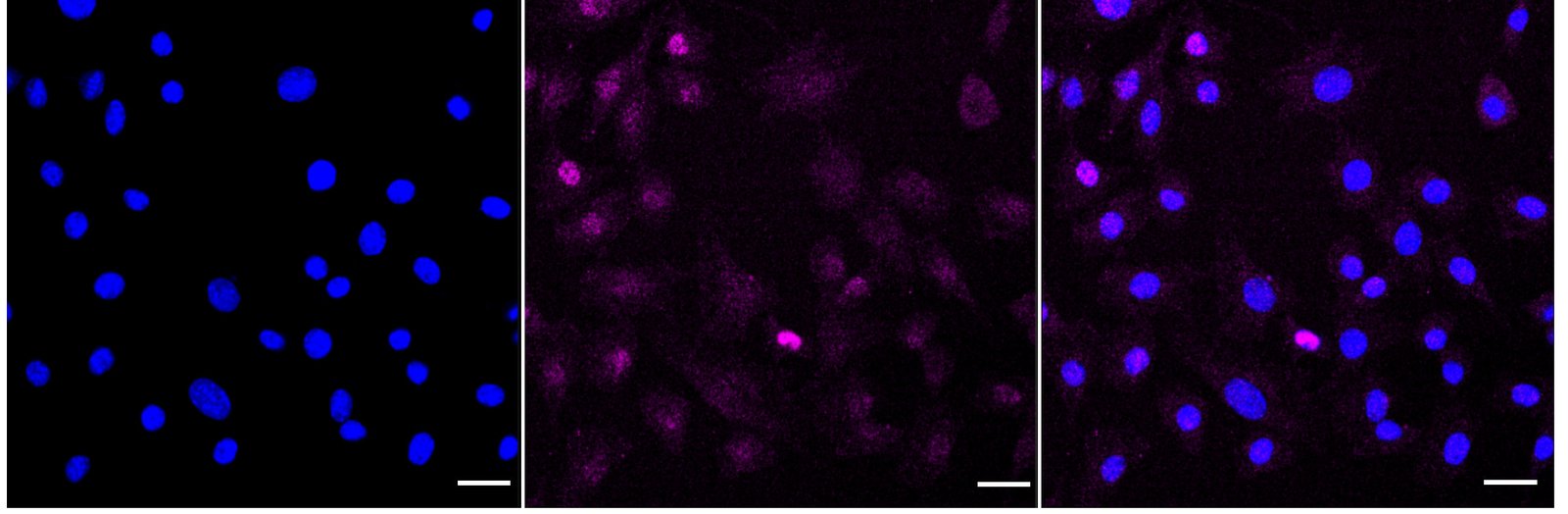
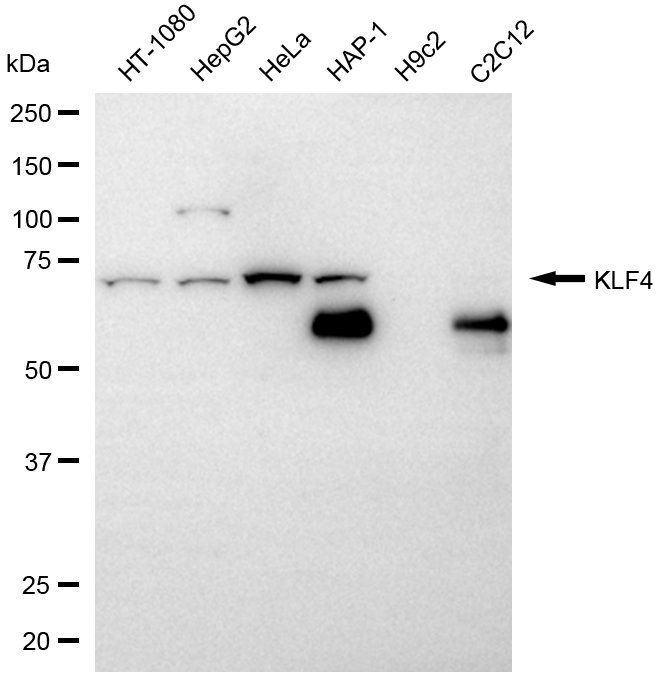
Mouse anti-Human sapiens (Human) KLF4 Monoclonal Antibody

Mouse anti-Human sapiens (Human) KLF4 Monoclonal Antibody — Transcription factor; can act both as activator and as repressor.

SKU: BCREC-000232MA Category:

Product Specifications

Uniprot No.O43474
Target NamesKLF4
Species ReactivityMouse
ImmunogenRecombinant Human KLF4 protein
Immunogen SpeciesHomo sapiens (Human)
ConjugateNon-conjugated
IsotypeMouse IgG2b kappa
ClonalityMonoclonal
ApplicationsELISA, WB, ICC
BufferPBS, 50% glycerol, 0.05% Proclin 300, 0.05%BSA
StorageUpon receipt, store at -20°C or -80°C. Avoid repeated freeze.

Function

Transcription factor; can act both as activator and as repressor. Binds the 5'-CACCC-3' core sequence. Binds to the promoter region of its own gene and can activate its own transcription.

Biological Context

Subcellular Location: Nucleus; Cytoplasm

Product Specifications

Mouse anti-Human sapiens (Human) KLF4 Monoclonal Antibody is a recombinant protein. Suitable for ELISA and Western Blot applications.

SDS-PAGE: Single band at expected molecular weight confirming purity.

ELISA: Suitable as coating antigen or detection standard.

Western Blot: Compatible with standard Western Blot protocols.

Protein Interaction: Validated for SPR (Surface Plasmon Resonance) and BLI (Bio-Layer Interferometry) studies.

Shipping: Shipped at ambient temperature. Lyophilized protein is stable during transit.

Storage: Store lyophilized protein at -20°C to -80°C. Reconstituted protein should be aliquoted and stored at -80°C. Avoid repeated freeze-thaw cycles.

Shelf Life: 12 months from date of receipt when stored as recommended.

Shipping Time: Orders placed before 2 PM EST ship same day. International orders typically deliver within 5-10 business days.

Protein Biology

Function

Transcription factor; can act both as activator and as repressor. Binds the 5'-CACCC-3' core sequence. Binds to the promoter region of its own gene and can activate its own transcription. Regulates the expression of key transcription factors during embryonic development. Plays an important role in maintaining embryonic stem cells, and in preventing their differentiation. Required for establishing the barrier function of the skin and for postnatal maturation and maintenance of the ocular surface. Involved in the differentiation of epithelial cells and may also function in skeletal and kidney development. Contributes to the down-regulation of p53/TP53 transcription

Subcellular Location

Nucleus; Cytoplasm

Subunit

Interacts with POU5F1/OCT4 and SOX2 (By similarity). Interacts with MUC1 (via the C-terminal domain) (PubMed:17308127). Interacts with MEIS2 isoform 4 and PBX1 isoform PBX1a (PubMed:21746878). Interacts with ZNF296 (By similarity). Interacts with GLIS1 (PubMed:21654807). Interacts with BTRC; this interaction leads to KLF4 ubiquitination and subsequent degradation (By similarity). Interacts with IPO7; the interaction facilitates nuclear translocation of KLF4 in dental papilla cells (By similarity). Interacts with FBXO32 (By similarity)

Gene: KLF4  |  Organism: Homo sapiens  |  Synonyms: Epithelial zinc finger protein EZF; Gut-enriched krueppel-like factor
Key Publications

Frequently Asked Questions

How do I order or inquire about this product?

Fill out the Online Inquiry form with your required quantity and specifications. You can also email sales@biocrestsci.com. Our team typically responds within 4 business hours with a quote and availability confirmation.

What is the shipping and delivery time?

Orders placed before 2 PM EST ship the same day. Domestic (US) delivery typically takes 2-3 business days. International orders deliver within 5-10 business days. All products are shipped at ambient temperature with appropriate packaging to ensure stability.

How should I store this recombinant protein?

Lyophilized proteins should be stored at -20°C to -80°C upon receipt. After reconstitution, aliquot and store at -80°C. Avoid repeated freeze-thaw cycles. Shelf life is 12 months from date of receipt when stored as recommended.

What quality controls are performed on your products?

Each product undergoes SDS-PAGE purity analysis (typically >85-95%), endotoxin testing, and bioactivity validation. Products are validated for ELISA, Western Blot, and SPR/BLI applications as specified on this product page. A Certificate of Analysis (CoA) is available upon request.

Shopping Cart
Scroll to Top