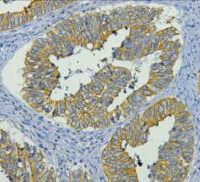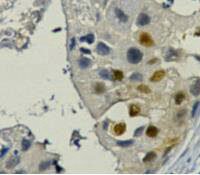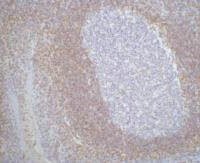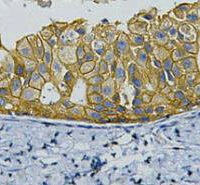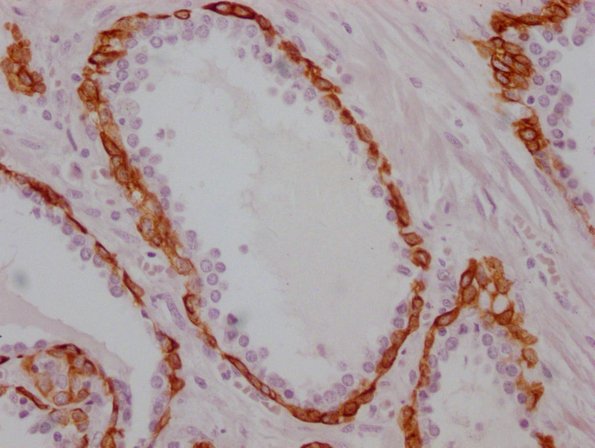
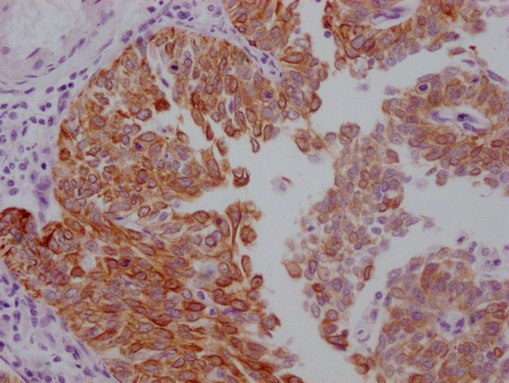
Mouse anti-Human sapiens (Human) KRT17 Monoclonal Antibody

Mouse anti-Human sapiens (Human) KRT17 Monoclonal Antibody — Type I keratin involved in the formation and maintenance of various skin appendages, specifically in determining shape and orientation of hair.

SKU: BCREC-000953MA Category:

Product Specifications

Uniprot No.Q04695
Target NamesKRT17
Species ReactivityMouse
ImmunogenSynthesized peptide derived from human Cytokeratin 17
Immunogen SpeciesHomo sapiens (Human)
ConjugateNon-conjugated
IsotypeIgG1, Kappa
ClonalityMonoclonal
ApplicationsELISA, IHC
BufferPBS, 50% glycerol, 0.05% Proclin 300, 0.05%BSA
StorageUpon receipt, store at -20°C or -80°C. Avoid repeated freeze.

Function

Type I keratin involved in the formation and maintenance of various skin appendages, specifically in determining shape and orientation of hair. Required for the correct growth of hair follicles, in particular for the persistence of the anagen (growth) state. Modulates the function of TNF in the specific context of hair cycling.

Biological Context

Subcellular Location: Cytoplasm
Tissue Specificity: Expressed in the outer root sheath and medulla region of hair follicle specifically from eyebrow and beard, digital pulp, nail matrix and nail bed epithelium, mucosal stratified squamous epithelia and in basal cells of oral epithelium, palmoplantar epidermis and sweat and mammary glands. Also expressed in myoepithelium of prostate, basal layer of urinary bladder, cambial cells of sebaceous gland and in exocervix (at protein level)
Disease Association: Pachyonychia congenita 2 (PC2) : An autosomal dominant ectodermal dysplasia characterized by hypertrophic nail dystrophy resulting in onchyogryposis (thickening and increase in curvature of the nail), palmoplantar keratoderma and hyperhidrosis, follicular hyperkeratosis, multiple epidermal cysts, absent/sparse eyebrow and body hair, and by the presence of natal teeth. [The disease is caused by variants affecting the gene represented in this entry] | Steatocystoma multiplex (SM) : Disease characterized by round or oval cystic tumors widely distributed on the back, anterior trunk, arms, scrotum, and thighs. [The disease is caused by variants affecting the gene represented in this entry] | [KRT16 and KRT17 are coexpressed only in pathological situations such as metaplasias and carcinomas of the uterine cervix and in psoriasis vulgaris] | [Defects in KRT17 may be the cause of a keratinization disorder with associated thrombocytopenia characterized by generalized harlequin ichthyosis that progress into palmoplantar keratoderma]

Product Specifications

Mouse anti-Human sapiens (Human) KRT17 Monoclonal Antibody is a recombinant protein. Suitable for ELISA and Western Blot applications.

SDS-PAGE: Single band at expected molecular weight confirming purity.

ELISA: Suitable as coating antigen or detection standard.

Western Blot: Compatible with standard Western Blot protocols.

Protein Interaction: Validated for SPR (Surface Plasmon Resonance) and BLI (Bio-Layer Interferometry) studies.

Shipping: Shipped at ambient temperature. Lyophilized protein is stable during transit.

Storage: Store lyophilized protein at -20°C to -80°C. Reconstituted protein should be aliquoted and stored at -80°C. Avoid repeated freeze-thaw cycles.

Shelf Life: 12 months from date of receipt when stored as recommended.

Shipping Time: Orders placed before 2 PM EST ship same day. International orders typically deliver within 5-10 business days.

Protein Biology

Function

Type I keratin involved in the formation and maintenance of various skin appendages, specifically in determining shape and orientation of hair (By similarity). Required for the correct growth of hair follicles, in particular for the persistence of the anagen (growth) state (By similarity). Modulates the function of TNF in the specific context of hair cycling. Regulates protein synthesis and epithelial cell growth through binding to the adapter protein SFN and by stimulating Akt/mTOR pathway (By similarity). Involved in tissue repair. May be a marker of basal cell differentiation in complex epithelia and therefore indicative of a certain type of epithelial 'stem cells'. Acts as a promoter of epithelial proliferation by acting a regulator of immune response in skin: promotes Th1/Th17-dominated immune environment contributing to the development of basaloid skin tumors (By similarity). May act as an autoantigen in the immunopathogenesis of psoriasis, with certain peptide regions being a major target for autoreactive T-cells and hence causing their proliferation

Subcellular Location

Cytoplasm

Disease Association

Pachyonychia congenita 2 (PC2) : An autosomal dominant ectodermal dysplasia characterized by hypertrophic nail dystrophy resulting in onchyogryposis (thickening and increase in curvature of the nail), palmoplantar keratoderma and hyperhidrosis, follicular hyperkeratosis, multiple epidermal cysts, absent/sparse eyebrow and body hair, and by the presence of natal teeth. [The disease is caused by variants affecting the gene represented in this entry] | Steatocystoma multiplex (SM) : Disease characterized by round or oval cystic tumors widely distributed on the back, anterior trunk, arms, scrotum, and thighs. [The disease is caused by variants affecting the gene represented in this entry] | [KRT16 and KRT17 are coexpressed only in pathological situations such as metaplasias and carcinomas of the uterine cervix and in psoriasis vulgaris] | [Defects in KRT17 may be the cause of a keratinization disorder with associated thrombocytopenia characterized by generalized harlequin ichthyosis that progress into palmoplantar keratoderma]

Tissue Specificity

Expressed in the outer root sheath and medulla region of hair follicle specifically from eyebrow and beard, digital pulp, nail matrix and nail bed epithelium, mucosal stratified squamous epithelia and in basal cells of oral epithelium, palmoplantar epidermis and sweat and mammary glands. Also expressed in myoepithelium of prostate, basal layer of urinary bladder, cambial cells of sebaceous gland and in exocervix (at protein level)

Subunit

Heterodimer of a type I and a type II keratin. KRT17 associates with KRT6 isomers (KRT6A or KRT6B). Interacts with TRADD and SFN (By similarity)

Gene: KRT17  |  Organism: Homo sapiens  |  Synonyms: 39.1; Cytokeratin-17; Keratin-17
Key Publications

Frequently Asked Questions

How do I order or inquire about this product?

Fill out the Online Inquiry form with your required quantity and specifications. You can also email sales@biocrestsci.com. Our team typically responds within 4 business hours with a quote and availability confirmation.

What is the shipping and delivery time?

Orders placed before 2 PM EST ship the same day. Domestic (US) delivery typically takes 2-3 business days. International orders deliver within 5-10 business days. All products are shipped at ambient temperature with appropriate packaging to ensure stability.

How should I store this recombinant protein?

Lyophilized proteins should be stored at -20°C to -80°C upon receipt. After reconstitution, aliquot and store at -80°C. Avoid repeated freeze-thaw cycles. Shelf life is 12 months from date of receipt when stored as recommended.

What quality controls are performed on your products?

Each product undergoes SDS-PAGE purity analysis (typically >85-95%), endotoxin testing, and bioactivity validation. Products are validated for ELISA, Western Blot, and SPR/BLI applications as specified on this product page. A Certificate of Analysis (CoA) is available upon request.

Shopping Cart
Scroll to Top