Mouse anti-Human sapiens (Human) KRT6A Monoclonal Antibody

Mouse anti-Human sapiens (Human) KRT6A Monoclonal Antibody — Structural component of intermediate filaments in epithelial keratinocytes.

SKU: BCREC-000898MA Category:

Product Specifications

Uniprot No.P02538
Target NamesKRT6A
Species ReactivityMouse
ImmunogenSynthesized peptide derived from human Cytokeratin 6
Immunogen SpeciesHomo sapiens (Human)
ConjugateNon-conjugated
IsotypeIgG1, Kappa
ClonalityMonoclonal
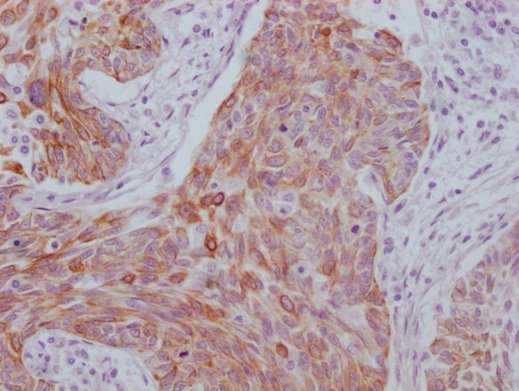
ApplicationsELISA, IHC
BufferPBS, 50% glycerol, 0.05% Proclin 300, 0.05%BSA
StorageUpon receipt, store at -20°C or -80°C. Avoid repeated freeze.

Function

Structural component of intermediate filaments in epithelial keratinocytes. Forms heteropolymers with the type I keratins KRT16 and KRT17, assembling into keratin intermediate filament networks that contributes to the structural integrity and stress resilience of stratified epithelia, particularly in epidermis, nail bed and oral mucosa. Rapidly induced in wound-edge keratinocytes and participates in cytoskeletal reorganization during re-epithelialization.

Biological Context

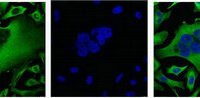
Subcellular Location: Cytoplasm
Tissue Specificity: Expressed in the corneal epithelium (at protein level)
Disease Association: Pachyonychia congenita 3 (PC3) : An autosomal dominant genodermatosis characterized by hypertrophic nail dystrophy, painful and highly debilitating plantar keratoderma, oral leukokeratosis, and a variety of epidermal cysts. [The disease is caused by variants affecting the gene represented in this entry]

Product Specifications

Mouse anti-Human sapiens (Human) KRT6A Monoclonal Antibody is a recombinant protein. Suitable for ELISA and Western Blot applications.

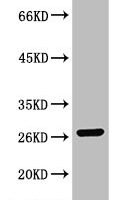
SDS-PAGE: Single band at expected molecular weight confirming purity.

ELISA: Suitable as coating antigen or detection standard.

Western Blot: Compatible with standard Western Blot protocols.

Protein Interaction: Validated for SPR (Surface Plasmon Resonance) and BLI (Bio-Layer Interferometry) studies.

Shipping: Shipped at ambient temperature. Lyophilized protein is stable during transit.

Storage: Store lyophilized protein at -20°C to -80°C. Reconstituted protein should be aliquoted and stored at -80°C. Avoid repeated freeze-thaw cycles.

Shelf Life: 12 months from date of receipt when stored as recommended.

Shipping Time: Orders placed before 2 PM EST ship same day. International orders typically deliver within 5-10 business days.

Protein Biology

Function

Structural component of intermediate filaments in epithelial keratinocytes. Forms heteropolymers with the type I keratins KRT16 and KRT17, assembling into keratin intermediate filament networks that contributes to the structural integrity and stress resilience of stratified epithelia, particularly in epidermis, nail bed and oral mucosa (PubMed:11886499, PubMed:17719747, PubMed:7545493). Rapidly induced in wound-edge keratinocytes and participates in cytoskeletal reorganization during re-epithelialization (By similarity). Negatively regulates collective keratinocyte migration by stabilizing non-muscle myosin MYH9 and desmoplakin, thereby altering cell-cell and cell-matrix adhesion and reducing the speed and directionality of epithelial sheet movement during wound repair (By similarity). Also limits epithelial migration by inhibiting SRC activity during wound repair (By similarity). Required for normal palmoplantar, nail unit and oral mucosa integrity (PubMed:11886499, PubMed:17719747, PubMed:7545493)

Subcellular Location

Cytoplasm

Disease Association

Pachyonychia congenita 3 (PC3) : An autosomal dominant genodermatosis characterized by hypertrophic nail dystrophy, painful and highly debilitating plantar keratoderma, oral leukokeratosis, and a variety of epidermal cysts. [The disease is caused by variants affecting the gene represented in this entry]

Tissue Specificity

Expressed in the corneal epithelium (at protein level)

Subunit

Heterodimers composed of one type I and one type II keratins; forms parallel coiled-coil heterodimers (By similarity). Heterodimers associate in an antiparallel manner to form heterotetramers, which further assemble into higher-order keratin intermediate filaments (By similarity). Associates with KRT16 and/or KRT17 (By similarity). Interacts with TCHP (PubMed:15731013). Interacts with IIA/MYH2; the interaction stabilizes MYH2 (By similarity)

Gene: KRT6A  |  Organism: Homo sapiens  |  Synonyms: Cytokeratin-6A; Cytokeratin-6D; Keratin-6A; Type-II keratin Kb6
Key Publications

Frequently Asked Questions

How do I order or inquire about this product?

Fill out the Online Inquiry form with your required quantity and specifications. You can also email sales@biocrestsci.com. Our team typically responds within 4 business hours with a quote and availability confirmation.

What is the shipping and delivery time?

Orders placed before 2 PM EST ship the same day. Domestic (US) delivery typically takes 2-3 business days. International orders deliver within 5-10 business days. All products are shipped at ambient temperature with appropriate packaging to ensure stability.

How should I store this recombinant protein?

Lyophilized proteins should be stored at -20°C to -80°C upon receipt. After reconstitution, aliquot and store at -80°C. Avoid repeated freeze-thaw cycles. Shelf life is 12 months from date of receipt when stored as recommended.

What quality controls are performed on your products?

Each product undergoes SDS-PAGE purity analysis (typically >85-95%), endotoxin testing, and bioactivity validation. Products are validated for ELISA, Western Blot, and SPR/BLI applications as specified on this product page. A Certificate of Analysis (CoA) is available upon request.

Shopping Cart
Scroll to Top