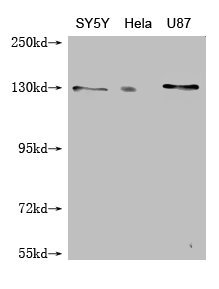
Mouse anti-Human sapiens (Human) MCM9 Monoclonal Antibody

Mouse anti-Human sapiens (Human) MCM9 Monoclonal Antibody — Component of the MCM8-MCM9 complex, which is involved in the repair of double-stranded DNA breaks (DBSs) and DNA interstrand cross-links (ICLs) by homologous recombination (HR).

SKU: BCREC-000820MA Category:

Product Specifications

Uniprot No.Q9NXL9
Target NamesMCM9
Species ReactivityMouse
ImmunogenRecombinant Human DNA helicase MCM9 protein (1-391AA)
Immunogen SpeciesHomo sapiens (Human)
ConjugateNon-conjugated
IsotypeIgG1
ClonalityMonoclonal
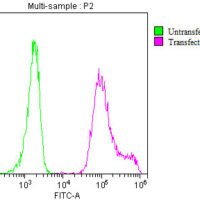
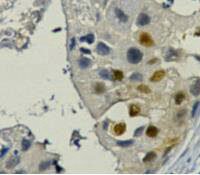
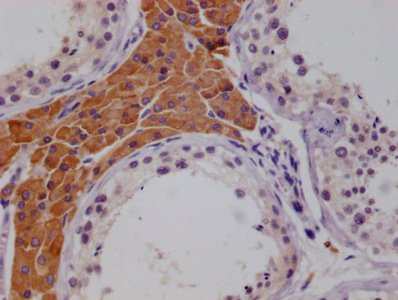
ApplicationsELISA, WB, IHC
BufferPBS, 50% glycerol, 0.05% Proclin 300, 0.05%BSA
StorageUpon receipt, store at -20°C or -80°C. Avoid repeated freeze.

Function

Component of the MCM8-MCM9 complex, which is involved in the repair of double-stranded DNA breaks (DBSs) and DNA interstrand cross-links (ICLs) by homologous recombination (HR). The MCM8-MCM9 complex is a 3'-5' DNA helicase and single-stranded (ss)DNA-stimulated ATPase which binds ssDNA in the presence of nucleoside triphosphates. Required for DNA resection by the MRE11-RAD50-NBN/NBS1 (MRN) complex by recruiting the MRN complex to the repair site and by promoting the complex nuclease activity.

Biological Context

Subcellular Location: Nucleus; Chromosome
Disease Association: Ovarian dysgenesis 4 (ODG4) : A form of ovarian dysgenesis, a disorder characterized by lack of spontaneous pubertal development, primary amenorrhea, uterine hypoplasia, and hypergonadotropic hypogonadism as a result of streak gonads. ODG4 is an autosomal recessive condition. [The disease is caused by variants affecting the gene represented in this entry]

Product Specifications

Mouse anti-Human sapiens (Human) MCM9 Monoclonal Antibody is a recombinant protein. Suitable for ELISA and Western Blot applications.

SDS-PAGE: Single band at expected molecular weight confirming purity.

ELISA: Suitable as coating antigen or detection standard.

Western Blot: Compatible with standard Western Blot protocols.

Protein Interaction: Validated for SPR (Surface Plasmon Resonance) and BLI (Bio-Layer Interferometry) studies.

Shipping: Shipped at ambient temperature. Lyophilized protein is stable during transit.

Storage: Store lyophilized protein at -20°C to -80°C. Reconstituted protein should be aliquoted and stored at -80°C. Avoid repeated freeze-thaw cycles.

Shelf Life: 12 months from date of receipt when stored as recommended.

Shipping Time: Orders placed before 2 PM EST ship same day. International orders typically deliver within 5-10 business days.

Protein Biology

Function

Component of the MCM8-MCM9 complex, which is involved in the repair of double-stranded DNA breaks (DBSs) and DNA interstrand cross-links (ICLs) by homologous recombination (HR) (PubMed:23401855). The MCM8-MCM9 complex is a 3'-5' DNA helicase and single-stranded (ss)DNA-stimulated ATPase which binds ssDNA in the presence of nucleoside triphosphates (PubMed:37309874). Required for DNA resection by the MRE11-RAD50-NBN/NBS1 (MRN) complex by recruiting the MRN complex to the repair site and by promoting the complex nuclease activity (PubMed:26215093). Indirectly regulates the recruitment of downstream effector RAD51 to DNA damage sites including DBSs and ICLs, probably by regulating the localization of the MNR complex (PubMed:23401855). Acts as a helicase in DNA mismatch repair (MMR) following DNA replication errors to unwind the mismatch containing DNA strand (PubMed:26300262). In addition, recruits MLH1, a component of the MMR complex, to chromatin (PubMed:26300262). The MCM8-MCM9 complex is dispensable for DNA replication and S phase progression (PubMed:23401855). Plays a key role during gametogenesis, probably by regulating HR (By similarity)

Subcellular Location

Nucleus; Chromosome

Disease Association

Ovarian dysgenesis 4 (ODG4) : A form of ovarian dysgenesis, a disorder characterized by lack of spontaneous pubertal development, primary amenorrhea, uterine hypoplasia, and hypergonadotropic hypogonadism as a result of streak gonads. ODG4 is an autosomal recessive condition. [The disease is caused by variants affecting the gene represented in this entry]

Subunit

Component of the MCM8-MCM9 complex, which forms a heterohexamer (PubMed:23401855, PubMed:26215093, PubMed:26300262, PubMed:34043945, PubMed:37309874) with a repeating heterodimer of trimers configuration (PubMed:34043945, PubMed:37309874). Interacts with the DNA mismatch repair (MMR) complex composed at least of MSH2, MSH3, MSH6, PMS1 and MLH1 (PubMed:26300262). Interacts with MLH1; the interaction recruits MLH1 to chromatin (PubMed:26300262). Interacts with MSH2; the interaction recruits MCM9 to chromatin (PubMed:26300262). Interacts with MSH6 (PubMed:26300262). Interacts with the MRN complex composed of MRE11, RAD50 and NBN/NBS1; the interaction recruits the MRN complex to DNA damage sites (PubMed:26215093). Interacts with RAD51; the interaction recruits RAD51 to DNA damage sites (PubMed:23401855). Interacts with HROB; the interaction recruits the MCM8-MCM9 complex to DNA damage sites (PubMed:31467087) and stimulates the helicase activity (PubMed:37535404)

Gene: MCM9  |  Organism: Homo sapiens  |  Synonyms: DNA 3'-5' helicase MCM9; Mini-chromosome maintenance deficient domain-containing protein 1; Minichromosome maintenance 9
Key Publications

Frequently Asked Questions

How do I order or inquire about this product?

Fill out the Online Inquiry form with your required quantity and specifications. You can also email sales@biocrestsci.com. Our team typically responds within 4 business hours with a quote and availability confirmation.

What is the shipping and delivery time?

Orders placed before 2 PM EST ship the same day. Domestic (US) delivery typically takes 2-3 business days. International orders deliver within 5-10 business days. All products are shipped at ambient temperature with appropriate packaging to ensure stability.

How should I store this recombinant protein?

Lyophilized proteins should be stored at -20°C to -80°C upon receipt. After reconstitution, aliquot and store at -80°C. Avoid repeated freeze-thaw cycles. Shelf life is 12 months from date of receipt when stored as recommended.

What quality controls are performed on your products?

Each product undergoes SDS-PAGE purity analysis (typically >85-95%), endotoxin testing, and bioactivity validation. Products are validated for ELISA, Western Blot, and SPR/BLI applications as specified on this product page. A Certificate of Analysis (CoA) is available upon request.

Shopping Cart
Scroll to Top