

Function
Accessory subunit of the mitochondrial membrane respiratory chain NADH dehydrogenase (Complex I), that is believed not to be involved in catalysis. Complex I functions in the transfer of electrons from NADH to the respiratory chain. The immediate electron acceptor for the enzyme is believed to be ubiquinone.
Biological Context
Subcellular Location: Mitochondrion inner membrane (Single-pass membrane protein)
Tissue Specificity: Ubiquitous
Disease Association: Linear skin defects with multiple congenital anomalies 3 (LSDMCA3) : A disorder characterized by dermal, ocular, neurological and cardiac abnormalities. LSDMCA3 clinical features include linear skin defects on face and neck at birth, lacrimal duct atresia, myopia, nystagmus, strabismus, cardiomyopathy, axial hypotonia, seizures, corpus callosum agenesis, and dilation of lateral ventricles. [The disease is caused by variants affecting the gene represented in this entry] | Mitochondrial complex I deficiency, nuclear type 30 (MC1DN30) : A form of mitochondrial complex I deficiency, the most common biochemical signature of mitochondrial disorders, a group of highly heterogeneous conditions characterized by defective oxidative phosphorylation, which collectively affects 1 in 5-10000 live births. Clinical disorders have variable severity, ranging from lethal neonatal disease to adult-onset neurodegenerative disorders. Phenotypes include macrocephaly with progressive leukodystrophy, non-specific encephalopathy, cardiomyopathy, myopathy, liver disease, Leigh syndrome, Leber hereditary optic neuropathy, and some forms of Parkinson disease. [The disease may be caused by variants affecting the gene represented in this entry]
Product Specifications
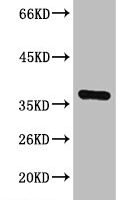
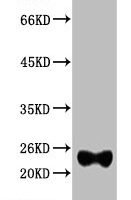
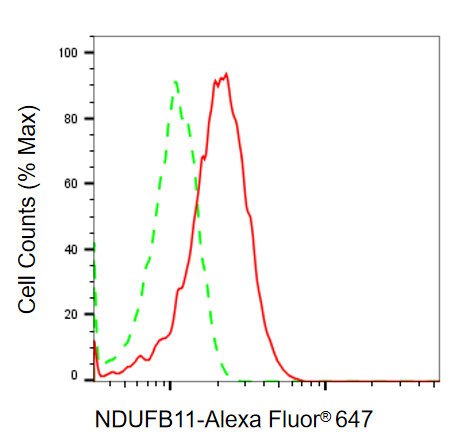
Mouse anti-Human sapiens (Human) NDUFB11 Monoclonal Antibody is a recombinant protein. Suitable for ELISA and Western Blot applications. Explore more Antibody products →