Function
Catalyzes the oxidation of methanethiol, an organosulfur compound known to be produced in substantial amounts by gut bacteria. Selenium-binding protein which may be involved in the sensing of reactive xenobiotics in the cytoplasm. May be involved in intra-Golgi protein transport.
Biological Context
Subcellular Location: Nucleus; Cytoplasm, cytosol; Membrane (Peripheral membrane protein)
Tissue Specificity: Widely expressed. Highly expressed in liver, lung, colon, prostate, kidney and pancreas. In brain, present both in neurons and glia (at protein level). Down-regulated in lung adenocarcinoma, colorectal carcinoma and ovarian cancer. Two-fold up-regulated in brain and blood from schizophrenia patients
Disease Association: Extraoral halitosis due to methanethiol oxidase deficiency (EHMTO) : An autosomal recessive malodor condition characterized by extraoral blood-borne halitosis resulting from the accumulation of sulfur-containing metabolites. In extraoral blood-borne halitosis, malodorant compounds are carried to the lungs, where they enter the breath. Affected individuals have a cabbage-like breath odor, high levels of methanethiol and dimethylsulfide in oral and nasal breath, and elevated urinary excretion of dimethylsulfoxide in the absence of intake of dimethylsulfide-containing food or use of sulfur-containing medication, lower-gastrointestinal problems, and known metabolic defects, such as methionine adenosyltransferase deficiency and tyrosinemia. [The disease is caused by variants affecting the gene represented in this entry]
Pathway: Organosulfur degradation
Product Specifications
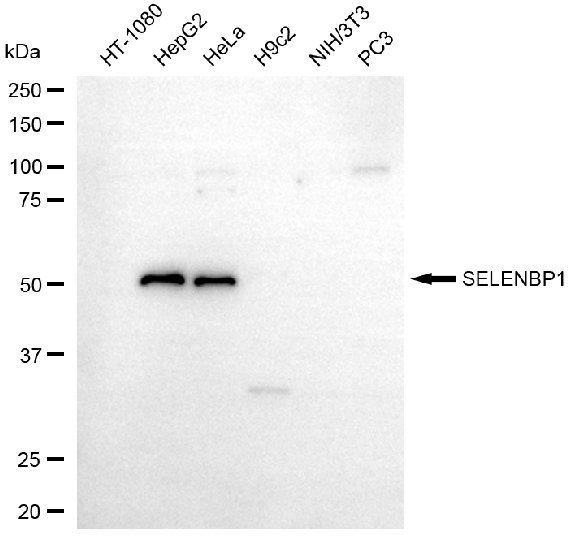
Mouse anti-Human sapiens (Human) SELENBP1 Monoclonal Antibody is a recombinant protein. Suitable for ELISA and Western Blot applications. Explore more Antibody products →