,

Mouse anti-SARS-CoV-2 S Monoclonal Antibody

Mouse anti-SARS-CoV-2 S Monoclonal Antibody — Subunit of the fusion protein that is processed upon entry into the host cell.

SKU: BCREC-000607MA Categories: ,

Product Specifications

Uniprot No.P0DTC2
Species ReactivityMouse
ImmunogenRecombinant Human Novel Coronavirus Spike glycoprotein (S) (319-541aa)
Immunogen SpeciesHuman Novel Coronavirus (SARS-CoV-2/ 2019-nCoV)
ConjugateNon-conjugated
ClonalityMonoclonal
ApplicationsELISA
BufferPBS, 50% glycerol, 0.05% Proclin 300, 0.05%BSA
StorageUpon receipt, store at -20°C or -80°C. Avoid repeated freeze.

Function

Subunit of the fusion protein that is processed upon entry into the host cell. Mediates fusion of the virion and cellular membranes by functioning as a class I viral fusion protein. Contains a viral fusion peptide that is unmasked after S2 cleavage.

Biological Context

Subcellular Location: Virion membrane (Single-pass type I membrane protein); Host endoplasmic reticulum-Golgi intermediate compartment membrane (Single-pass type I membrane protein); Host cell membrane (Single-pass type I membrane protein)

Product Specifications

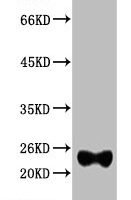
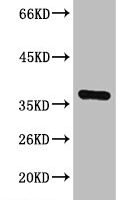
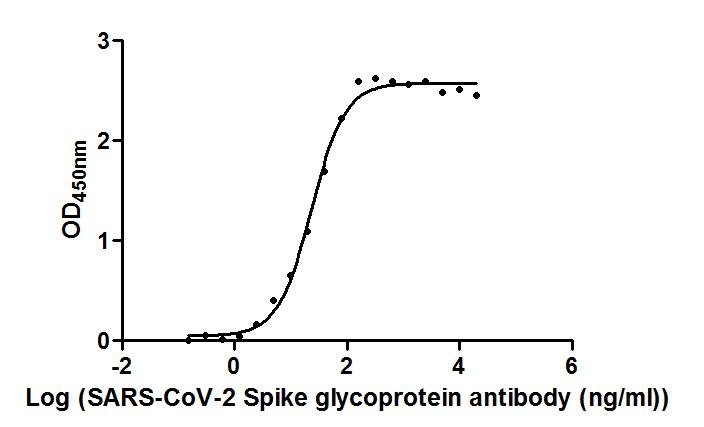
Mouse anti-SARS-CoV-2 S Monoclonal Antibody is a recombinant protein. Suitable for ELISA and Western Blot applications.

Catalog number: BCREC-000607MA.

Applications: ELISA

Biological Activity: Not implied unless activity data are explicitly listed on this product page, the datasheet, or the CoA.

Storage: Upon receipt, store at -20°C or -80°C. Avoid repeated freeze.

Shipping & Lead Time: Availability, shipping conditions, and estimated lead time are confirmed in the formal quotation or order confirmation based on the product format, destination, and order requirements.

Protein Biology

Function

Subunit of the fusion protein that is processed upon entry into the host cell. Mediates fusion of the virion and cellular membranes by functioning as a class I viral fusion protein. Contains a viral fusion peptide that is unmasked after S2 cleavage. This cleavage can occur at the cell membrane by host TMPRSS2 or during endocytosis by host CSTL (PubMed:32703818, PubMed:34159616). In either case, this triggers an extensive and irreversible conformational change that leads to fusion of the viral envelope with the cellular cytoplasmic membrane, releasing viral genomic RNA into the host cell cytoplasm (PubMed:34561887). Under the current model, the protein has at least three conformational states: pre-fusion native state, pre-hairpin intermediate state, and post-fusion hairpin state. During fusion of the viral and target cell membranes, the coiled coil regions (heptad repeats) adopt a trimer-of-hairpins structure and position the fusion peptide in close proximity to the C-terminal region of the ectodomain. Formation of this structure appears to promote apposition and subsequent fusion of viral and target cell membranes

Subcellular Location

Virion membrane (Single-pass type I membrane protein); Host endoplasmic reticulum-Golgi intermediate compartment membrane (Single-pass type I membrane protein); Host cell membrane (Single-pass type I membrane protein)

Subunit

Binds to host ACE2 (PubMed:32075877, PubMed:32132184, PubMed:32155444, PubMed:32221306, PubMed:32225175, PubMed:32225176, PubMed:33607086). RBD also interacts with the N-linked glycan on 'Asn-90' of ACE2 (PubMed:33607086). Cleavage of S generates a polybasic C-terminal sequence on S1 that binds to host Neuropilin-1 (NRP1) and Neuropilin-2 (NRP2) receptors (PubMed:33082293, PubMed:33082294). Interacts with host integrin alpha-5/beta-1 (ITGA5:ITGB1) and with ACE2 in complex with integrin alpha-5/beta-1 (ITGA5:ITGB1) (PubMed:33102950). May interact via cytoplasmic c-terminus with M protein (PubMed:33229438). May interact (via N-terminus) with host bilirubin and biliverdin, thereby preventing antibody binding to the SARS-CoV-2 spike NTD via an allosteric mechanism (PubMed:33888467). May interact with host LRRC15, thereby allowing attachment to host cells (PubMed:36735681)

Gene: S  |  Organism: Severe acute respiratory syndrome coronavirus 2  |  Synonyms: E2; Peplomer protein
Key Publications

Frequently Asked Questions

How do I order or inquire about this product?

Submit the Online Inquiry form with your required quantity and specifications, or email sales@biocrestsci.com. Available sizes, pricing, stock status, documentation, and estimated lead time are confirmed in the formal quotation.

What is the shipping and delivery time?

Availability, dispatch timing, shipping conditions, and delivery estimates depend on the product format, destination, and order requirements. These details are confirmed in the formal quotation or order confirmation.

How should this product be stored?

Follow the storage and handling instructions in the product-specific datasheet and Certificate of Analysis (CoA). Requirements may vary by product form and formulation; contact BioCrest Sci if product-specific guidance is needed.

What quality controls are performed on your products?

Quality-control data such as identity, purity, endotoxin level, or biological activity are provided only when specified on this product page, the datasheet, or Certificate of Analysis (CoA). Biological activity is not implied unless explicitly stated.

Shopping Cart
Scroll to Top