Recombinant Heteroscodra maculata Delta-theraphotoxin-Hm1a

Recombinant Heteroscodra maculata Delta-theraphotoxin-Hm1a — Gating-modifier toxin that potently inhibits inactivation of the mammalian Nav1. Purity >90%.

SKU: BCRECP-003648 Category:

Product Specifications

Product SkuBCRECP-003648
Product DescriptionRecombinant Heteroscodra maculata Delta-theraphotoxin-Hm1a Protein is expressed from E.coli with N-terminal 10xHis-SUMO-tagged and C-terminal Myc-tagged. It contains 1-35aa. [Accession | P60992].
Uniprot No.P60992
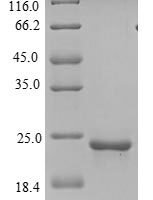
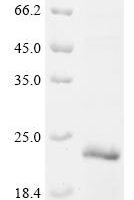
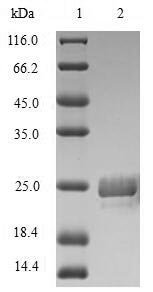
PurityGreater than 90% as determined by SDS-PAGE.
Expression SystemE.coli
Expression Region1-35aa
SpeciesHeteroscodra maculata (Togo starburst tarantula) (Togo starburst baboon spider)
Tag InfoN-terminal 10xHis-SUMO-tagged and C-terminal Myc-tagged
Molecular weight24.0kDa
ActivityPlease contact us to obtain bioactivity data.
BufferIf the delivery form is liquid, the default storage buffer is Tris/PBS-based buffer, 5%-50% glycerol. If the delivery form is lyophilized powder, the buffer before lyophilization is Tris/PBS-based buffer, 6% Trehalose.
StorageStore at -20°C/-80°C upon receipt, aliquoting is necessary for mutiple use. Avoid repeated freeze-thaw cycles.
Research AreasOthers

Function

Gating-modifier toxin that potently inhibits inactivation of the mammalian Nav1.1/SCN1A sodium channel (EC(50)=38 nM). Also moderately inhibits inactivation of Nav1.2/SCN2A (EC(50)=236 nM) and Nav1.3/SCN3A (EC(50)=220 nM) when the channels are expressed in oocytes without the beta-1 auxiliary subunit. Does not inhibit inactivation of Nav1.2/SCN2A when the channel is coexpressed with the beta-1 auxiliary subunit.

Product Specifications

Recombinant Heteroscodra maculata Delta-theraphotoxin-Hm1a is a recombinant protein, expressed in E.coli, covering amino acids 1-35aa, with N-terminal 10xHis-SUMO-tagged and C-terminal Myc-tagged tag, molecular weight 24.0kDa, purity Greater than 90% as determined by SDS-PAGE.. Suitable for ELISA and Western Blot applications.
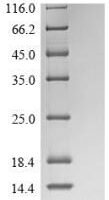
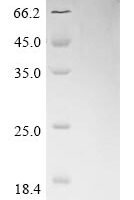
SDS-PAGE: Single band at expected molecular weight confirming purity.

ELISA: Suitable as coating antigen or detection standard.

Western Blot: Compatible with standard Western Blot protocols.

Protein Interaction: Validated for SPR (Surface Plasmon Resonance) and BLI (Bio-Layer Interferometry) studies.

Shipping: Shipped at ambient temperature. Lyophilized protein is stable during transit.

Storage: Store lyophilized protein at -20°C to -80°C. Reconstituted protein should be aliquoted and stored at -80°C. Avoid repeated freeze-thaw cycles.

Shelf Life: 12 months from date of receipt when stored as recommended.

Shipping Time: Orders placed before 2 PM EST ship same day. International orders typically deliver within 5-10 business days.

Protein Biology

Function

Gating-modifier toxin that potently inhibits inactivation of the mammalian Nav1.1/SCN1A sodium channel (EC(50)=38 nM) (PubMed:27281198, PubMed:30076230). Also moderately inhibits inactivation of Nav1.2/SCN2A (EC(50)=236 nM) and Nav1.3/SCN3A (EC(50)=220 nM) when the channels are expressed in oocytes without the beta-1 auxiliary subunit (PubMed:27281198). Does not inhibit inactivation of Nav1.2/SCN2A when the channel is coexpressed with the beta-1 auxiliary subunit (PubMed:30076230). When tested on Nav1.1/SCN1A channel, it enhances peak current amplitude and potently delays channel inactivation in a dose-dependent manner, leading to a large sustained current (PubMed:30076230). It has no effect on the voltage-dependence of steady-state activation, and induces a depolarizing shift in the voltage dependence of inactivation (PubMed:30076230). In addition, it does not modify the recovery from fast inactivation in Nav1.1/SCN1A (PubMed:30076230). The binding affinity and subtype selectivity of the toxin towards Nav1.1/SCN1A channel is determined by residues within both the S1-S2 and S3-S4 loops of the domain IV voltage sensor of the channel (PubMed:27281198). This toxin also weakly inhibits several subtypes of voltage-gated potassium channels (PubMed:27281198). It moderately blocks Kv2.1/KCNB1 (23% inhibition at 100 nM), Kv2.2/KCNB2 (19.7% at 100 nM and 51% at 300 nM), Kv4.1/KCND1 (IC(50)=280 nM), Kv4.2/KCND2 (39% at 300 nM) and Kv4.3/KCND3 (43% at 300 nM) (PubMed:12065754). In vivo, intracerebroventricular injection into mice elicits convulsions, spasms, tremors and rapid death (PubMed:12065754). When injected into mouse hindpaw, the toxin elicits an immediate and robust response to pain (PubMed:27281198). However, intraplantar injection of toxin does not cause neurogenic inflammation or alter sensitivity to heat, indicative of a modality-specific effect on mechanosensitive neurons (PubMed:27281198). In Dravet syndrome mice model, intracerebroventricular infusion of this peptide rescues mice from seizures and premature death (PubMed:30076230)

Organism: Heteroscodra maculata

Frequently Asked Questions

How do I order or inquire about this product?

Fill out the Online Inquiry form with your required quantity and specifications. You can also email sales@biocrestsci.com. Our team typically responds within 4 business hours with a quote and availability confirmation.

What is the shipping and delivery time?

Orders placed before 2 PM EST ship the same day. Domestic (US) delivery typically takes 2-3 business days. International orders deliver within 5-10 business days. All products are shipped at ambient temperature with appropriate packaging to ensure stability.

How should I store this recombinant protein?

Lyophilized proteins should be stored at -20°C to -80°C upon receipt. After reconstitution, aliquot and store at -80°C. Avoid repeated freeze-thaw cycles. Shelf life is 12 months from date of receipt when stored as recommended.

What quality controls are performed on your products?

Each product undergoes SDS-PAGE purity analysis (typically >85-95%), endotoxin testing, and bioactivity validation. Products are validated for ELISA, Western Blot, and SPR/BLI applications as specified on this product page. A Certificate of Analysis (CoA) is available upon request.

Shopping Cart
Scroll to Top