,

Recombinant Human 1-phosphatidylinositol 4,5-bisphosphate phosphodiesterase zeta-1 (PLCZ1)

Recombinant Human 1-phosphatidylinositol 4,5-bisphosphate phosphodiesterase zeta-1 (PLCZ1) — The production of the second messenger molecules diacylglycerol (DAG) and inositol 1,4,5-trisphosphate (IP3) is mediated by activated phosphatidylinositol-specific phospholipase C enzymes. Purity >90%.

SKU: BCRECP-001399 Categories: ,

Product Specifications

Product SkuBCRECP-001399
Product DescriptionRecombinant Human 1-phosphatidylinositol 4,5-bisphosphate phosphodiesterase zeta-1 (PLCZ1) Protein is expressed from E.coli with N-terminal 6xHis-SUMO-tagged. It contains 1-415aa. [Accession | Q86YW0].
Uniprot No.Q86YW0
Gene NamesPLCZ1
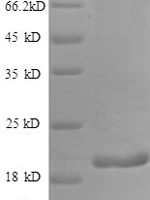
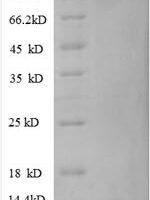
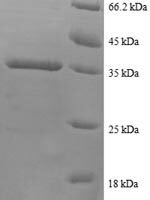
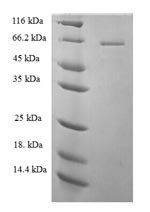
PurityGreater than 90% as determined by SDS-PAGE.
Expression SystemE.coli
Expression Region1-415aa
SpeciesHomo sapiens (Human)
Tag InfoN-terminal 6xHis-SUMO-tagged
Molecular weight64.5kDa
ActivityPlease contact us to obtain bioactivity data.
BufferIf the delivery form is liquid, the default storage buffer is Tris/PBS-based buffer, 5%-50% glycerol. If the delivery form is lyophilized powder, the buffer before lyophilization is Tris/PBS-based buffer, 6% Trehalose.
StorageStore at -20°C/-80°C upon receipt, aliquoting is necessary for mutiple use. Avoid repeated freeze-thaw cycles.
Research AreasCancer

Function

The production of the second messenger molecules diacylglycerol (DAG) and inositol 1,4,5-trisphosphate (IP3) is mediated by activated phosphatidylinositol-specific phospholipase C enzymes. In vitro, hydrolyzes PtdIns(4,5)P2 in a Ca(2+)-dependent manner. Triggers intracellular Ca(2+) oscillations in oocytes solely during M phase and is involved in inducing oocyte activation and initiating embryonic development up to the blastocyst stage.

Biological Context

Subcellular Location: Nucleus; Cytoplasm, perinuclear region; Cytoplasmic vesicle, secretory vesicle, acrosome
Tissue Specificity: Expressed specifically in testis and sperm. Weakly expressed in pancreatic-duct cells. Up-regulated in pancreatic-duct cells from patients with cystic fibrosis
Disease Association: Spermatogenic failure 17 (SPGF17) : An autosomal recessive infertility disorder due to failure of oocyte activation and fertilization by sperm that otherwise exhibits normal morphology. [The disease is caused by variants affecting the gene represented in this entry]

Product Specifications

Recombinant Human 1-phosphatidylinositol 4,5-bisphosphate phosphodiesterase zeta-1 (PLCZ1) is a recombinant protein from Homo sapiens (Human), expressed in E.coli, covering amino acids 1-415aa, with N-terminal 6xHis-SUMO-tagged tag, molecular weight 64.5kDa, purity Greater than 90% as determined by SDS-PAGE.. Suitable for ELISA and Western Blot applications.

SDS-PAGE: Single band at expected molecular weight confirming purity.

ELISA: Suitable as coating antigen or detection standard.

Western Blot: Compatible with standard Western Blot protocols.

Protein Interaction: Validated for SPR (Surface Plasmon Resonance) and BLI (Bio-Layer Interferometry) studies.

Shipping: Shipped at ambient temperature. Lyophilized protein is stable during transit.

Storage: Store lyophilized protein at -20°C to -80°C. Reconstituted protein should be aliquoted and stored at -80°C. Avoid repeated freeze-thaw cycles.

Shelf Life: 12 months from date of receipt when stored as recommended.

Shipping Time: Orders placed before 2 PM EST ship same day. International orders typically deliver within 5-10 business days.

Protein Biology

Function

The production of the second messenger molecules diacylglycerol (DAG) and inositol 1,4,5-trisphosphate (IP3) is mediated by activated phosphatidylinositol-specific phospholipase C enzymes. In vitro, hydrolyzes PtdIns(4,5)P2 in a Ca(2+)-dependent manner. Triggers intracellular Ca(2+) oscillations in oocytes solely during M phase and is involved in inducing oocyte activation and initiating embryonic development up to the blastocyst stage. Is therefore a strong candidate for the egg-activating soluble sperm factor that is transferred from the sperm into the egg cytoplasm following gamete membrane fusion. May exert an inhibitory effect on phospholipase-C-coupled processes that depend on calcium ions and protein kinase C, including CFTR trafficking and function

Subcellular Location

Nucleus; Cytoplasm, perinuclear region; Cytoplasmic vesicle, secretory vesicle, acrosome

Disease Association

Spermatogenic failure 17 (SPGF17) : An autosomal recessive infertility disorder due to failure of oocyte activation and fertilization by sperm that otherwise exhibits normal morphology. [The disease is caused by variants affecting the gene represented in this entry]

Tissue Specificity

Expressed specifically in testis and sperm. Weakly expressed in pancreatic-duct cells. Up-regulated in pancreatic-duct cells from patients with cystic fibrosis

Subunit

Interacts via its C2 domain with PtdIns(3)P and, to a lesser extent, PtdIns(5)P in vitro

Gene: PLCZ1  |  Organism: Homo sapiens  |  Synonyms: Phosphoinositide phospholipase C-zeta-1; Phospholipase C-zeta-1; Testis-development protein NYD-SP27
Key Publications

Frequently Asked Questions

How do I order or inquire about this product?

Fill out the Online Inquiry form with your required quantity and specifications. You can also email sales@biocrestsci.com. Our team typically responds within 4 business hours with a quote and availability confirmation.

What is the shipping and delivery time?

Orders placed before 2 PM EST ship the same day. Domestic (US) delivery typically takes 2-3 business days. International orders deliver within 5-10 business days. All products are shipped at ambient temperature with appropriate packaging to ensure stability.

How should I store this recombinant protein?

Lyophilized proteins should be stored at -20°C to -80°C upon receipt. After reconstitution, aliquot and store at -80°C. Avoid repeated freeze-thaw cycles. Shelf life is 12 months from date of receipt when stored as recommended.

What quality controls are performed on your products?

Each product undergoes SDS-PAGE purity analysis (typically >85-95%), endotoxin testing, and bioactivity validation. Products are validated for ELISA, Western Blot, and SPR/BLI applications as specified on this product page. A Certificate of Analysis (CoA) is available upon request.

Shopping Cart
Scroll to Top