Function
Cytosolic enzyme that catalyzes the carboxylation of acetyl-CoA to malonyl-CoA, the first and rate-limiting step of de novo fatty acid biosynthesis. This is a 2 steps reaction starting with the ATP-dependent carboxylation of the biotin carried by the biotin carboxyl carrier (BCC) domain followed by the transfer of the carboxyl group from carboxylated biotin to acetyl-CoA.
Biological Context
Subcellular Location: Cytoplasm, cytosol
Tissue Specificity: Expressed in brain, placenta, skeletal muscle, renal, pancreatic and adipose tissues; expressed at low level in pulmonary tissue; not detected in the liver
Disease Association: Acetyl-CoA carboxylase-alpha deficiency (ACACAD) : An autosomal recessive inborn error of de novo fatty acid synthesis associated with severe brain damage, persistent myopathy and poor growth. [The disease is caused by variants affecting the gene represented in this entry]
Pathway: Lipid metabolism; malonyl-CoA biosynthesis; malonyl-CoA from acetyl-CoA: step 1/1
Product Specifications
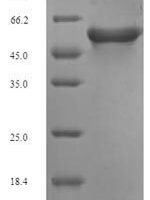
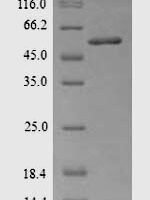
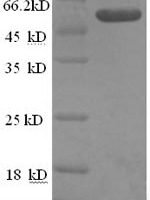
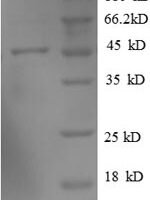
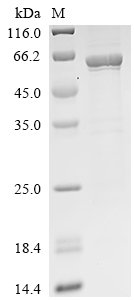
Recombinant Human Acetyl-CoA carboxylase 1 (ACACA), partial is a recombinant protein from Homo sapiens (Human), expressed in E.coli, covering amino acids 78-617aa, with C-terminal 6xHis-tagged tag, molecular weight 67.1kDa, purity Greater than 90% as determined by SDS-PAGE.. Suitable for ELISA and Western Blot applications.