Function
Adenosine deaminase that may contribute to the degradation of extracellular adenosine, a signaling molecule that controls a variety of cellular responses. Requires elevated adenosine levels for optimal enzyme activity. Binds to cell surfaces via proteoglycans and may play a role in the regulation of cell proliferation and differentiation, independently of its enzyme activity.
Biological Context
Subcellular Location: Secreted
Tissue Specificity: Detected in blood plasma (at protein level). Widely expressed, with most abundant expression in human adult heart, lung, lymphoblasts, and placenta as well as fetal lung, liver, and kidney. In embryo, expressed in the outflow tract and atrium of the developing heart, the VII/VIII cranial nerve ganglion, and the notochord
Disease Association: Vasculitis, autoinflammation, immunodeficiency, and hematologic defects syndrome (VAIHS) : An autosomal recessive, systemic necrotizing vasculitis that affects medium and small arteries. The ensuing tissue ischemia can affect any organ, including the skin, musculoskeletal system, kidneys, gastrointestinal tract, and the cardiovascular and nervous systems. Organ involvement and disease severity are highly variable. Clinical features include recurrent ischemic stroke affecting the small vessels of the brain and resulting in neurologic dysfunction, recurrent fever, myalgias, livedoid rash, gastrointestinal pain and hepatosplenomegaly. [The disease is caused by variants affecting the gene represented in this entry] | Sneddon syndrome (SNDNS) : An autosomal recessive, systemic non-inflammatory thrombotic vasculopathy characterized by the association of livedo racemosa, and in some cases livedo reticularis, with cerebrovascular disease. Livedo racemosa is a persistent net-like violaceous-cyanotic, mottled discoloration of the skin affecting the legs, the arms, the buttocks and the trunk; livedo reticularis is limited to the extremities and is visible only in the cold. Cerebrovascular features include recurrent transient ischemic attacks, infarcts, and rarely spinal strokes or intracranial or subarachnoid hemorrhages. Headache and vertigo may precede the onset of livedo racemosa and cerebrovascular manifestations by several years. Rare neurologic symptoms include seizures, chorea, or myelopathies. [The disease is caused by variants affecting the gene represented in this entry]
Product Specifications
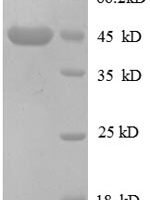
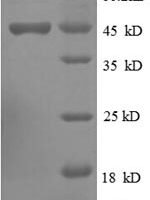
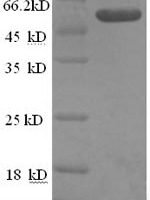
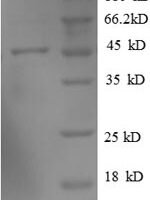
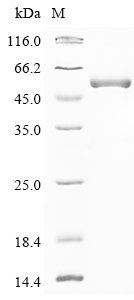
Recombinant Human Adenosine deaminase CECR1 (CECR1), partial is a recombinant protein from Homo sapiens (Human), expressed in E.coli, covering amino acids 254-453aa, with N-terminal 10xHis-GST-tagged and C-terminal Myc-tagged tag, molecular weight 57.5kDa, purity Greater than 90% as determined by SDS-PAGE.. Suitable for ELISA and Western Blot applications.